Dr Yasir Shafi, Homeopathy practitioner at the UAE-based holistic medical centre Wellth
FRIDAY
Men's Wellness Travel: A new path to mental health and connection
Men swaps pub crawls for cold plunges and mental health holidays, not just for Movember
Last updated:
7 MIN READ
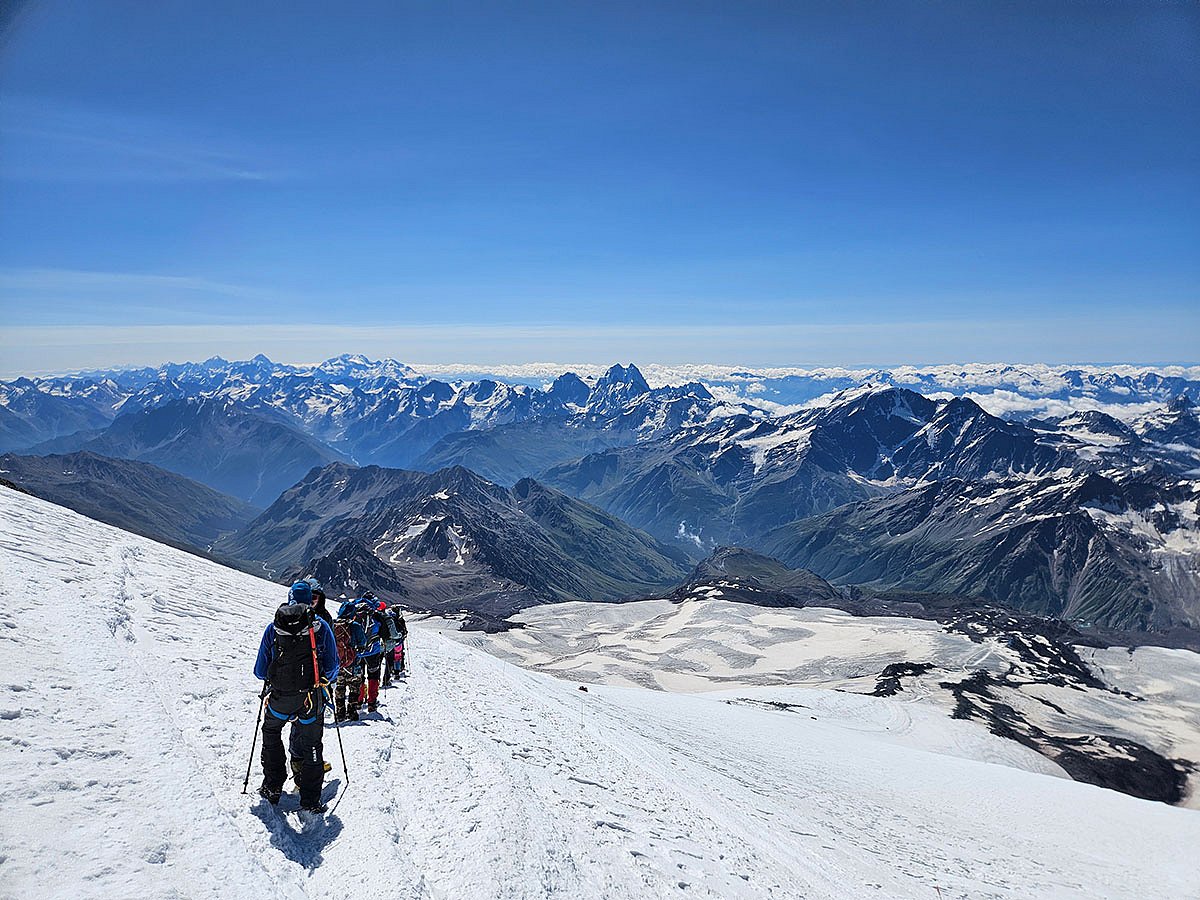
Sean Burgess knows firsthand how time away with his mates can do wonders for his mental health. “On the side of Kilimanjaro at 3am, battling cold and fatigue, nobody cares what car you drive or what you do for a living. It strips everything back, to the real conversations,” he says. Life drops back to the simplicity of eating, trekking and sleeping. “That rhythm helps quiet the noise in people’s heads and gives them a sense of presence.”
Burgess has led mountain expeditions and trips all over the world, including with school children and young people in his role as Managing Partner at Dubai-based Impact Adventures. Many are men-only trips, where school friends celebrate landmark birthdays, or where fathers and sons spend time connecting, or simply groups for teenage boys heading off on their own for the very first time. In each case, the trip serves as an opportunity to step away from everyday pressures and focus on personal growth.
Call it a return to form. The Stoic philosopher Seneca wrote about how a change of place imparts new vigour to the mind more than two thousand years ago. Millennia later, the goal remains identical. But today’s men are looking to repair body and mind by swapping marble pools for mineral springs and personal trainers for priests on trips that promise to help us unwind, clear our minds and perhaps regain a sense of control.
“For the school friends, it was about marking a milestone and stepping away from work and family pressures to reconnect with each other. For the father-and-son duos, it’s about creating something shared and meaningful - a challenge they’ll always remember. For the teenagers, it’s often their first real taste of independence, and camaraderie,” Burgess explains to Friday.
“Men often communicate best shoulder to shoulder, not face to face. Traditionally, that’s been in bars watching a game of sport, but as more men prioritise their health, we’re now seeing them choose more outdoor activities and adventure trips,” he adds.
Men’s wellness travel is having a moment in the sun – and that’s not just for Movember. The hote aggregator Booking.com identified men-only wellness retreats as a major trend this year, based on a survey of 27,000 respondents. The website called out a desire for ‘wellbeing, self-development and empowered vulnerability’ as against traditional bro-culture drivers such as ‘booze and bravado’.
Nearly half of those polled (47 per cent) said they would encourage one of the men in their life to go on a men-only trip, with the number jumping to 65 per cent for Gen Z and 58 per cent for millennials.
More than a quarter (28 per cent) look to men-only trips to make new friendships, with half that number specifically citing the need to overcome a sense of loneliness. And 20 per cent of respondents said they expected that getting away would help them improve relationship-building skills with friends and family.
Perhaps it’s too early to say if the trend is chipping away at years of social media messaging around toxic masculinity. Certainly, most men now prioritise mental health (95 per cent), separate research this year from the US-based Global Wellness Institute shows.
Wellness itself has bubbled up as a major reason to travel in the wake of the pandemic and looks set to continue soaking up attention in new ways. Data from Google and online travel agency Trip.com indicates that hybrid experiences could be the way forward in 2026, with searches for ‘golf and spa’ resorts up 300 per cent and ‘ski and spa holidays’ rising 250 per cent over the past few months. Whether as part of a group, or on their own, men are getting away more, often for health reasons.
“Immersive travel experiences – whether it’s a trek through the Himalayas, a desert retreat, or a few days in nature without constant connectivity – can act as a necessary reset,” says Dr Yasir Shafi, Homeopathy practitioner at the UAE-based holistic medical centre Wellth. “When men step outside their familiar routines… the body slows down, stress chemistry drops and clarity often returns. These experiences are especially powerful for burnout, emotional numbness, anxiety and loss of direction,” he adds.
The industry has been quick to respond, either by rolling out new kinds of wellness getaways or by customising current offerings to cater to men looking to step away from the grind – in both the physical and mental health space.
At the unapologetically physical end sits TIA Wellness Resort’s new Strength & Recovery retreat, in Da Nang Vietnam. It pairs private high-intensity interval training (HIIT) sessions and recovery treatments such as ice baths, steam and sauna sessions with wellness treatments, a high-protein plant-based meal plan and sport-focused sightseeing. Four- and seven-night packages are available, beginning at $2,753+ (about Dh10,111+). An example inclusion is a cardio stair-climbing sessions at the 67-metre tall Lady Buddha statue near the ancient city.
“As we age, strength training is key to staying strong and healthy, as muscle mass naturally decreases over time. This retreat directly addresses the importance of building muscle in a format that is sustainable,” says resort general manager Ramon Imper. The retreat targets people looking for a fitness intervention and aims at physical transformation, resilience and sustainable lifestyle change.
He makes a neat, measurable promise: “Retreat participants will benefit from enhanced physical performance, reduced tension, better sleep and mental clarity.”
Meanwhile, at Nihi Sumba in eastern Indonesia, horse whisperer Carol Sharpe leads entrepreneurs and executives through programmes focused on burnout recovery, grounding, clarity and reconnection. Mental health is typically a strong aspect of packages at the resort, which is one of the world’s only spas to have horses located on site for wellness. Sharpe’s focus is on emotional release, nervous system healing and inner leadership through deep work with horses, and she works with both men and women.
'Horse whisperer' Carol Sharpe runs programmes focused on burnout recovery at Nihi Sumba in Eastern Indonesia.
Likewise, in the village of Shillim in India’s western state of Maharashtra, three hours outside Mumbai, the independent wellness retreat Dharana combines ayurvedic and naturopathic traditions with modern scientific diagnostics at a 2,500-acre property.
“Through evidence-based assessments, personalised therapies and mindful practices, guests are guided to reconnect with themselves, develop resilience, and cultivate balance. Immersion in nature, guided meditation and structured wellness routines help restore physical stability and mental clarity, creating sustainable transformation,” says Dr Sagar Mahajan, the property’s Wellness Operation Manager. Guests typically look to address burnout, boost fitness and mental resilience and support weight management and retreats can be tailored to a man’s biomarkers, not just his desire for a cold plunge and scenic hike. Round-the-clock medical and wellness care ensures continuous support, he adds.
Closer home, the Zulal Wellness Resort by Chiva Som in Qatar focuses on rehabilitation issues, such as managing chronic pain, injury recovery and improving mobility at its spa, where the programme draws on complementary disciplines such as traditional Arabic and Islamic medicine. The property prioritises gut health, movement and nutrition for their role in building long-term wellbeing and treatments can range from low-impact water aerobics to bone density exercises, massages and hijama or cupping therapy.
Men visit the resort with two distinct wellness objectives: to improve performance and recovery between their thirties and fifties, and to address rehabilitation and long-term vitality in later years. “Younger male guests focus on peak physical performance, stress management, and athletic recovery, while older guests prioritise pain relief, mobility, rehabilitation and preventative health,” says resort naturopath Anand Peethambar. A three-night retreat stay starts from QR12,150 (approximately Dh12,150), based on twin sharing in a superior deluxe room.
However, whether it’s a week of spa treatments or something more intense, it’s worth taking a closer look at what you’re signing up for. In some cases, you may unwittingly end up at a sort of co-working retreat that doubles up as a fitness bootcamp. Some getaways are advertised for their purported wellness benefits but may not have been designed by healthcare professionals. So, if it’s a clinical pathway you want, ask what kind of doctors are avaiable on site, if therapists are trained and accredited, and what sort of medical tests are conducted.
When a retreat can promise a 24-hour medical and wellness presence onsite, that’s a plus for people with chronic health conditions. When operators promise follow-up through ongoing guidance and support, a weekend away becomes less of a one-off and more of a start towards something long-term. Finally, beware of marketing language around ‘building a generation of strong men’ – that may signal retreats that unwittingly reinforce masculine stereotypes.
Wissam Al Massadeh, a Clinical Psychologist at Medcare Camali Clinic
“Prioritising your well-being is not selfish. It positively affects your family, your friends, and even your work. However, it’s important to be cautious of programmes that make unrealistic promises, like boosting testosterone or using substances without proper safety measures,” cautions Wissam Al Massadeh, a Clinical Psychologist at Medcare Camali Clinic.
Overall, he says, it’s always worth unpacking your own goals first. That’s the unglamorous secret behind all this breathwork and biohacking. “Men looking for lasting, meaningful benefits should pick trips that align with their personal goals for relaxation and emotional growth,” he says. And make sure you’re not using a retreat as a way to avoid challenges. “That is not helpful at all and can make things worse,” Al Massadeh says.
Burgess swapped his corporate treadmill for mountain trails after losing his father, and it rewired his life. Since then, he’s helped hundreds test their limits and find calm and purpose. Now, he’s putting together an Open Men’s Trip to Kilimanjaro for 2026 to raise awareness and funds for men’s mental health and wants to make it an annual event.
“When you’re on a trek, away from modern distractions,” he says, “there’s space for silence, for laughter and for honest conversations.”
Sign up for the Daily Briefing
Get the latest news and updates straight to your inbox
Network Links
GN StoreAbout Gulf NewsTerms & ConditionsReach by GNSitemapContact usPrivacy PolicyGN FocusHave your sayWork with usAdvertise with usGulf News epaperPrinting Services
Download our app
© Al Nisr Publishing LLC 2026. All rights reserved.