X-Men Evolution: Jean Grey, Rogue and the X-Men series that got mutants right
The show used to air on Cartoon Network
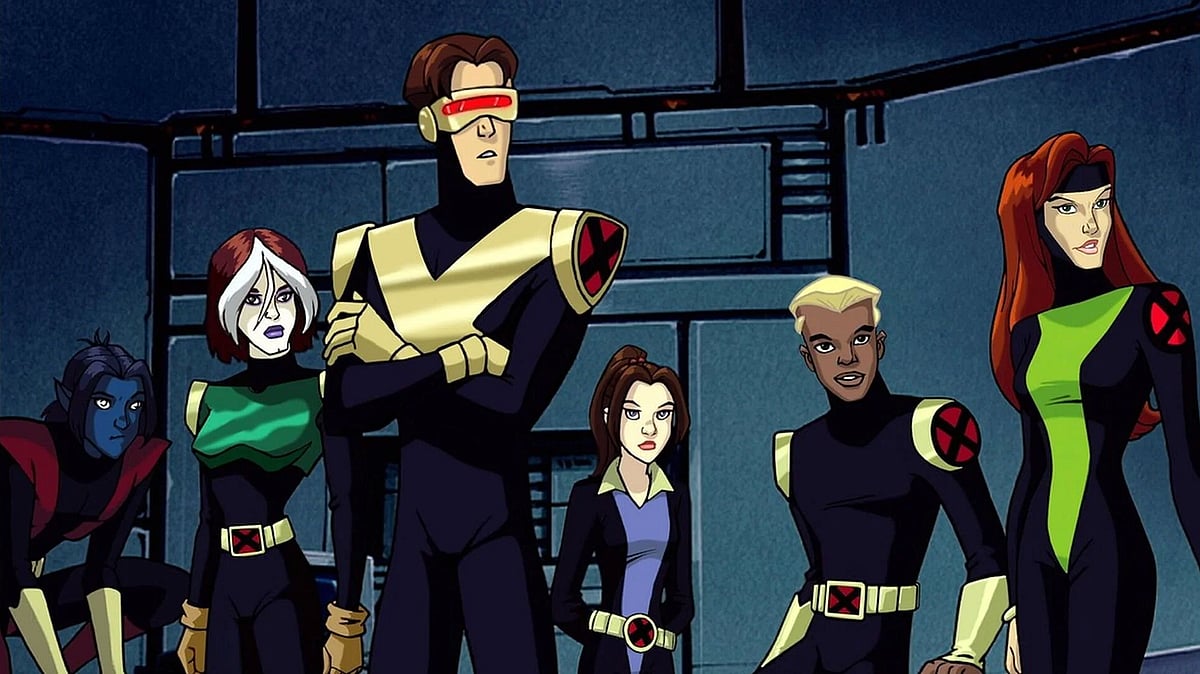
It was the 2000s, and the X-Men had arrived, again. Before the Bryan Singer trilogy, before the sequels and prequels and spin-offs, before Marvel tried to fold this whole tangled mythology into the MCU, there was an animated series that used to play on Cartoon Network: X-Men Evolution. Not the rugged, raw X-Men '97.
The X-Men Evolution: There's something particularly tragic about the X-Men as a concept: they were never allowed to be called superheroes. The comics made this explicit: Mutants are detested, loathed, isolated from society simply for having powers, even in a world where Iron Man, Spider-Man, and the Avengers roam freely. Evolution understood that tragedy, and it had something the films never had: Time.
The characters get room to breathe
Feature films move fast. A trilogy has maybe six hours, total, to service a dozen mutants. A weekly series doesn't have that problem, and Evolution used its runway well. There were dedicated episodes for Storm's nephew Spyke, who after a toxic energy drink accelerates his mutation beyond anything he can hide, leaves the X-Men to join the Morlocks, the underground community of mutants who can't "pass" as human.
There was Kitty Pryde's confused feelings for Lance, aka Avalanche. And, there was Jean Grey's power threatening to consume her even as her romance with Cyclops blossomed. There was Wolverine's slow, deliberate excavation of his own forgotten past.
And then the show would raise the stakes. Magneto, done waiting for Xavier's dream of coexistence to work sends Sentinels marching through the city. Mystique slips into Xavier's form to misdirect the X-Men, and only Cyclops notices something's wrong. The school itself gets destroyed in one episode.
Even Magneto, though, eventually meets something bigger than him: Apocalypse. Arguably the second-most-complicated storyline in X-Men lore after the Dark Phoenix saga, Apocalypse's arrival in Season 4 gave the show its darkest, eeriest stretch of animation, Storm and Xavier disintegrating in front of the team, the X-Men watching, helpless. For the first time, it felt like they could actually lose.
The age of Apocalypse had truly set in.
The Rogue question
If Apocalypse was the show's biggest swing, Rogue was its most careful one. A mutant who absorbs the life force and memories of anyone she touches, sometimes fatally, Rogue arrives goth-inflected, green-clad and visibly overwhelmed by a power she never asked for. She's misled early on by her adoptive mother, Mystique, before the X-Men win her over. Later, the team has to scramble to help her when the borrowed powers she's absorbed spiral out of control.
Evolution gave Rogue more interiority than the films ever managed. Her crushes, her friendship with the relentlessly sunny Kitty Pryde, her ability to hold her own in a fight, the slow-burn hint of something with Gambit — all of it got space here that the movies simply didn't have. Anna Paquin's Rogue is central to the first X-Men film, then pushed to the margins for the next two. The cartoon never lost track of her.
Staying close to the comics, sometimes closer than Marvel itself
What's most striking about Evolution, in hindsight, is how faithfully it followed comic-book continuity at points where the comics themselves would later abandon it. The show depicted Wanda Maximoff, Scarlet Witch, as the daughter Magneto locked away and left behind, a storyline Marvel later retconned out of existence. The cartoon kept it.
In one episode, a seething Wanda confronts her father directly:
"Hello, father. You locked me away."
"You couldn't control your powers when you were angry," he answers.
"You haven't seen angry — until now."
She attacks him.
For a generation that grew up on the films first, X-Men Evolution worked almost like a decoder ring for the comics, funnier and lighter in places, but willing to go somewhere genuinely dark when it needed to.
Network Links
GN StoreDownload our app
© Al Nisr Publishing LLC 2026. All rights reserved.