'The material chooses you'
'Wuthering Heights' is a perfect match for director Andrea Arnold
Andrea Arnold was recently asked to mount a retrospective of her work for a film festival, a rather unusual request for a director who has made only three features: Red Road (2006), Fish Tank (2009) and her savage new version of Wuthering Heights. Her immediate response was one of concern. "I thought, ‘That poor audience, watching those films together.' I almost felt like I shouldn't do it. Or that I should say, ‘Don't watch them back-to-back. Leave a week in between'."
Still, she doesn't have much time for critics who label her work bleak. "I wonder whether my bleak-o-meter is set differently from other people's."
The 50-year-old, Dartford-born filmmaker is huddled inside a navy-blue duffel coat as she sips tea in the library of a London hotel. "I have such passion for what I do that I can't see it as bleak. When people use that word, or ‘grim' or ‘gritty', I just think, ‘Oh, come on, look a bit deeper.' My films don't give you an easy ride. The sense I get is that people have quite a physical experience with them. They feel afterwards that they've really been through something."
Anyone familiar with Red Road, her debut, will consider that an understatement. The film was an unbearably tense thriller about a woman stalking the ex-convict who destroyed her life, following him into the depths of a Glasgow housing estate. A merit badge was in order for those viewers who stayed the course: "I Survived Red Road."
Arnold's second film, Fish Tank, was set on another housing estate, this time in Essex, where a 15-year-old girl is drawn into a hazardous dalliance with her mother's boyfriend. Both films won the jury prize at Cannes, more than ratifying what had been a change of career for Arnold.
She had started out as a teenage dancer on Top of the Pops before becoming a mainstay of 1980s' Saturday-morning children's TV: She played a rollerskating flibbertigibbet on Number 73, and presented Motormouth. "I was getting uncomfortable in front of the camera and starting to feel I was in the wrong place. I had this desire to do my own thing," she says.
Arnold enrolled on a year-long filmmaking course at the American Film Institute in Los Angeles before returning to Britain to make short films. One of these, Wasp, won her an Oscar. Since then, she has established a distinctive voice with a slim body of work: In modern British cinema, only Lynne Ramsay (We Need to Talk About Kevin) and Steve McQueen (Hunger) might be said to have had a comparable impact. Three films in, and we already know what an Andrea Arnold film might entail: visual poetry blooming in the harshest terrain; brutalised souls achieving emotional catharsis; and animals, lots of animals, the better to point up the underlying savagery of human experience.
Wuthering Heights forsakes Arnold's beloved housing estates altogether — though even the most forbidding of these would resemble Paris in springtime next to the rain-lashed moors near the Pennine Way where Arnold filmed her adaptation. "We all knew it would be a difficult location, but we weren't prepared for how tough it was. It was so muddy that your feet sank wherever you walked. We were shooting in a house that kept collecting water. We ate lunch huddled around this metal heater in a stinky old sheep-house."
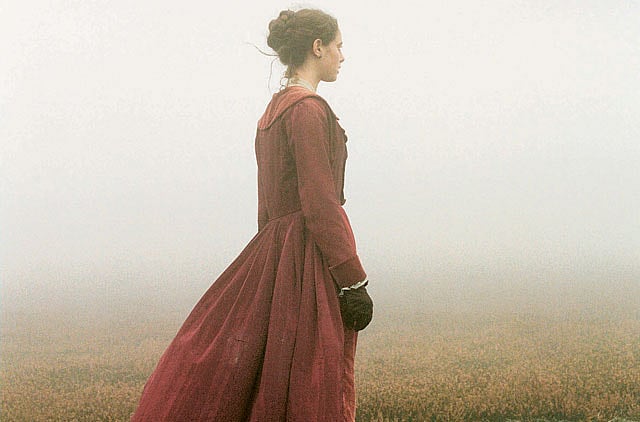
The harshness of the shoot translates to the screen, where the tortured passion between Cathy and her adoptive brother Heathcliff is mirrored by the fiercely elemental backdrop.
Arnold seems almost surprised at having wrapped on Wuthering Heights. She had, after all, professed that she would never make a period piece and had no interest in adapting a novel. "It's almost like you don't have a choice," she shrugs. "The material chooses you."
Sign up for the Daily Briefing
Get the latest news and updates straight to your inbox
Network Links
GN StoreDownload our app
© Al Nisr Publishing LLC 2026. All rights reserved.