Sonu Nigam claims T-Series and Zee Music 'banned' him after he raised royalty rights
The singer claims his push for royalty rights led 2 major music labels to stop hiring him
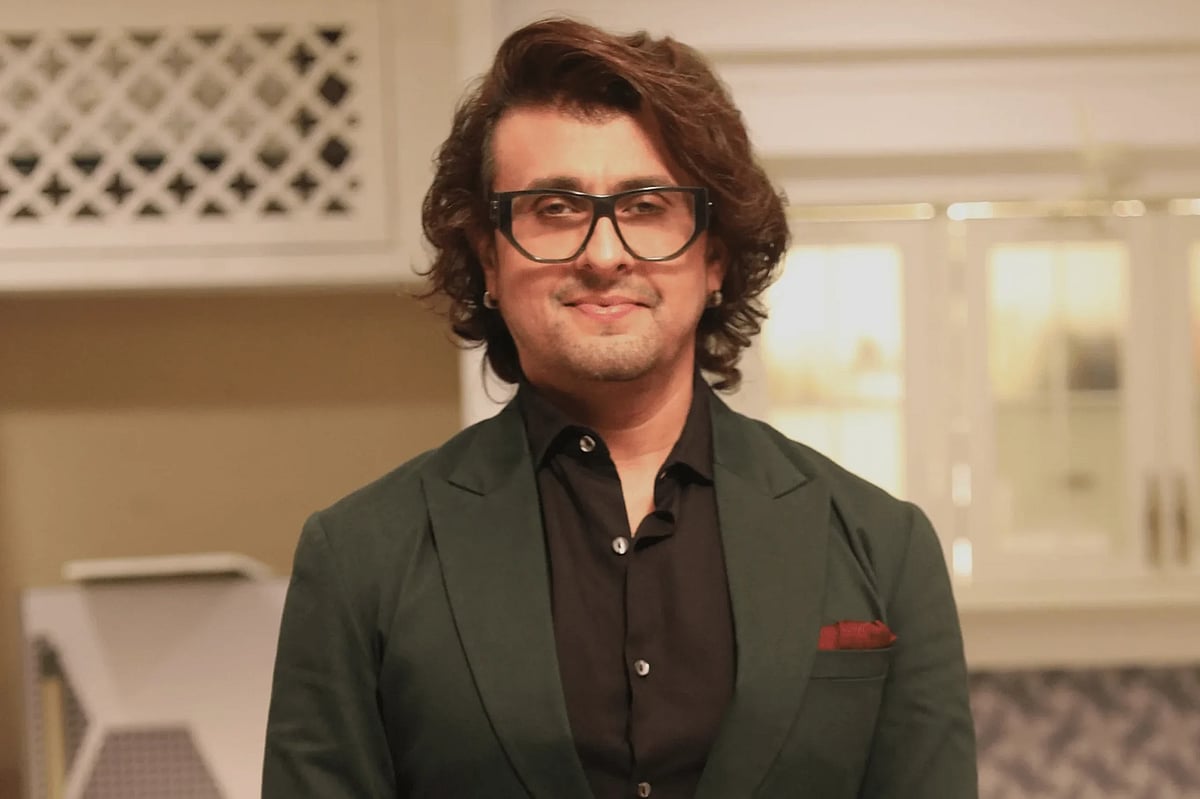
Dubai: There was a stretch in the early 2000s when you could not get through a wedding, a road trip or a shopping mall without hearing Sonu Nigam. His albums sold, his film songs ran on loop, and his posters, as he likes to point out, sold too.
Then the work slowed down, and for years nobody outside the industry quite understood why.
He has now given his own account of it. Two of India's biggest music labels, he claims, stopped working with him after he started asking uncomfortable questions about copyright and royalties for singers. Neither T-Series nor Zee Music has responded publicly to the claim. Gulf News couldn't independently verify the singer's claims.
What he said
Speaking on Komal Nahta's podcast Game Changers, the singer described the arc of it plainly.
"My time came, then it passed, and now it has come back again. It's all a matter of time," he said in the podcast, recalling the years when the albums were selling in volume and the love from audiences was at its peak.
Then came the turn. "I raised the copyright issue. T-Series banned me. Zee Music also stopped working with me. They said, 'He's become an activist.'"
He did not expect it to go that far. "I never thought I would be banned. I believed we would eventually resolve the issue, but things only kept getting worse."
What kept him working was the one part of the business the labels did not control. As he put it, they could stop giving him songs, but they could not stop him performing on stage.
The law that changed underneath the argument
The substance of the dispute was not abstract. For decades, Indian singers signed away rights to their recordings and received a fee for the session and nothing afterwards, however long a song went on earning.
That shifted with the Copyright (Amendment) Act of 2012, which strengthened performers' rights and established royalty protections for singers and other creators. Adoption across the industry was slow, but it did come.
Nigam's account is that the legislation eventually vindicated the position he had taken. "Today, things have changed. Those very music labels are paying royalties to singers. We now meet with affection, sit together and even share meals. Someone had to bell the cat."The Lata thread
Nigam does not claim to have started any of this. He says he was picking up something Lata Mangeshkar had put down, a fight she began and never got to finish.
She really did begin it. Back in the 1960s, at the absolute summit of her career, with producers queuing for her and an entire industry arranged around her voice, Mangeshkar pushed for playback singers to be paid royalties on the songs they made famous. It reportedly cost her working relationships, including some she never fully repaired.
There was no legal framework behind her, no precedent, no other voice loud enough at that time to make the argument stick. She was simply a woman at the top of her profession deciding that the arrangement everyone had accepted for thirty years was not good enough.
Six decades later, the singers collecting royalty cheques are collecting them partly because she said something first.
Nigam's version of inheriting that is characteristically dramatic. He describes it as a challenge handed to him, one that would cost him his career at its peak, and one nobody else would have had the nerve to take on. Once the laws changed, he says, the labels came round to accepting he had never been wrong, and that nothing he had asked for was unreasonable.
This is not the first flashpoint
That summer in 2020, in the weeks after Sushant Singh Rajput's death reopened a broader argument about how the Hindi film industry treats people, Nigam posted a video claiming Bollywood music was effectively controlled by two labels operating as a monopoly with arbitrary power over which singers got work.
He named T-Series chairman Bhushan Kumar directly. A public row followed, with Kumar's wife, the actor and director Divya Khosla Kumar, accusing him of falsehoods and of seeking publicity, and pointing out that T-Series had given him his break.
Speaking to Gulf News that August, ahead of a Dubai concert, Nigam said he had no regrets about taking on what he called the music mafia and described an unofficial truce with Kumar at that point. His position then was that he would not tolerate interference in his space.
What he is doing now
Nigam headlines a concert at the OVO Arena Wembley in London on 23 August, under the Revolution banner.
The Revolution India Tour 2026 follows in October, taking in Bengaluru, Pune, Surat, Indore, Bhopal, Nagpur, Lucknow, Chandigarh and Jodhpur before wrapping in March 2027.
Sonu Nigam is performing in the UAE on August 21, 2026, starting his global The Revolution Tour at the Etihad Arena on Yas Island, Abu Dhabi.
Network Links
GN StoreDownload our app
© Al Nisr Publishing LLC 2026. All rights reserved.