James Cameron at Megacampus Dubai: AI, Avatar and why technology should serve the story
At Megacampus, James Cameron on Avatar, AI, and why acting is the thing that never changes
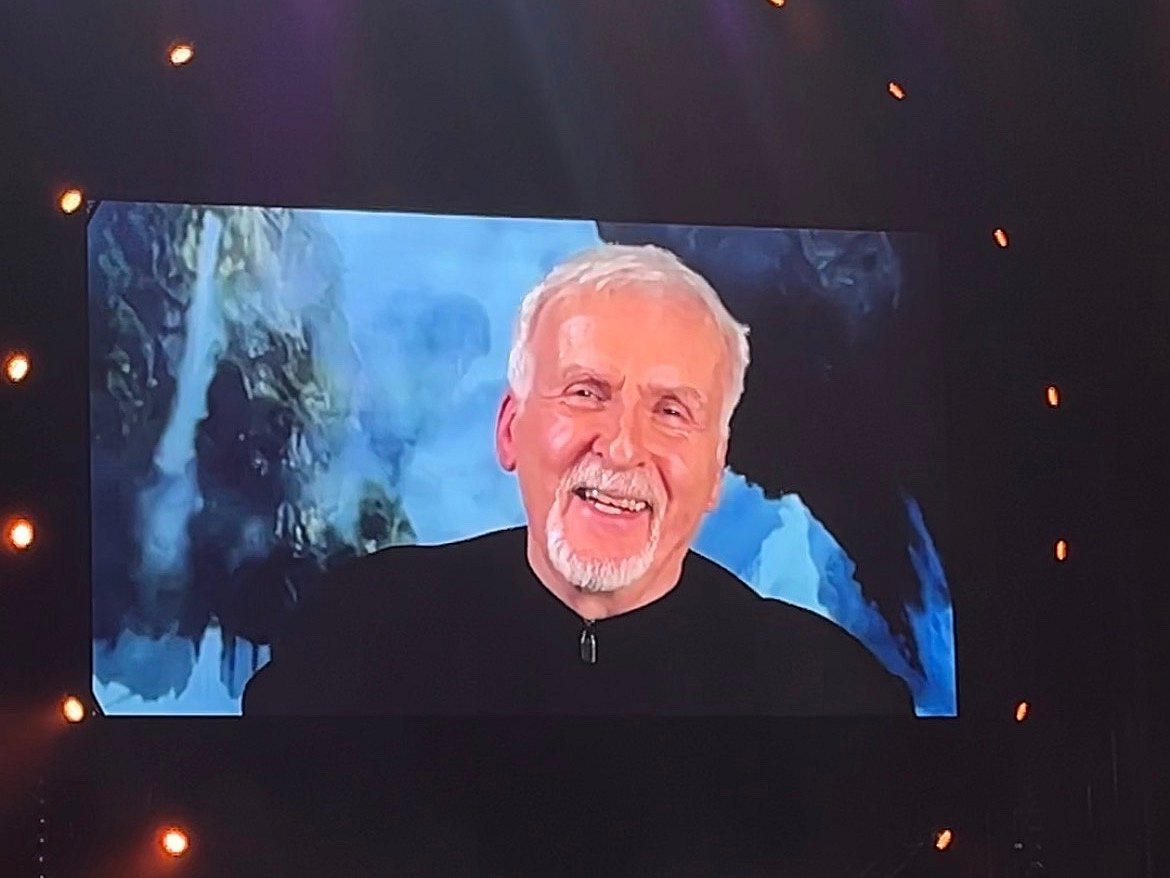
James Cameron has spent his career building tools that didn’t exist yet, so a room full of Dubai entrepreneurs had good reason to ask him how he decides between pioneering new technology and using what’s already available. Speaking at the Megacampus Summit in a virtual conversation, Cameron spoke about AI and how it can solve the story.
'You create the technology to solve the story'
His rule: “You never create a story to push the technology. You create the technology to solve the story.”
His early films worked that way. For Terminator, he imagined an endoskeleton that couldn’t be a suit on a performer, so his team solved it with puppeteers and animatronic people off camera. For The Abyss, he wanted a liquid water figure that formed faces and expressions and had no idea how to create it. People convinced him it could be done with computer graphics, and tests looked promising.
That led to the next step. Having successfully finished the Abyss, he realised the liquid metal man he’d imagined for Terminator 2 was now possible. After Terminator 2, he and Stan Winston agreed that CG was the future and started Digital Domain, an all-digital visual effects company.
The exception: Avatar
Then came the film that broke his own rule. The start of Avatar. His technical people told him they weren’t ready, because the tools couldn’t be created within a single production cycle. The film was resurrected almost ten years later.
He called what followed “a grand provocation.” He challenged his team to solve the hardest problems in CG, which were human facial emotion and empathy. They solved them in about three and a half years. It was risky, he said, because it was an environmental film and no big, clearly themed Hollywood environmental film had succeeded before.
Funding took trust. He said he couldn’t have raised the money without the success of Titanic, and even then he asked for money to make a two-minute test. It gave investors “a little glimpse through the keyhole” of the film in 3D. Hollywood, he said, follows algorithms and rules, but people will still go for a crazily ambitious vision.
Ideas, dreams and generative AI
AI came up in a more playful way. Cameron suggested that “we’re all like generative AI kind of diffusion programs". We form ideas from every film we’ve seen, book we’ve read and experiences we’ve had. And sometimes, that surfaces as dreams. The chrome skeleton emerging from a fire that inspired Terminator was one and of walking through a glowing forest, appeared in Avatar almost three decades later.
If he were starting today
Asked what he would do differently as a new filmmaker, he said he’d figure out how all the new tools work and how they serve the ideas in his mind. He pointed out that nothing he used in the early 80s is used today. But the basics of storytelling haven’t changed: characters we want to follow, suspense and pathos.
He’s excited about young filmmakers getting images from their minds onto a screen, but offered a caution. In his view, actors are “your gold,” and conveying emotion from human to human is the part that never changes.
He also joked that someday we might see what a James Cameron interpretation of Jurassic Park would look like “using AI and whatnot.”
Cameron’s advice to the room: find a problem that intrigues you, follow it, and let technology serve what the story needs.
Network Links
GN StoreDownload our app
© Al Nisr Publishing LLC 2026. All rights reserved.