Did Tom Clancy’s Jack Ryan predict Venezuela’s fall years before the US raid on President Nicolas Maduro?
The clip isn’t explosive combat or a cinematic coup. It’s a quiet, unnerving monologue
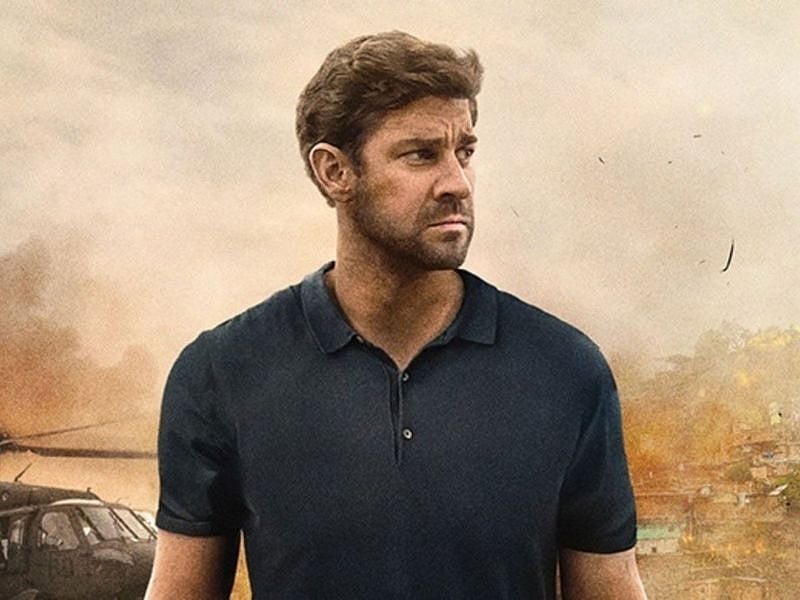
Dubai: When US forces swept into Venezuela before dawn on January 3, detained President Nicolas Maduro, and flew him out of the country in handcuffs, the internet didn’t react with shock alone. It reacted with déjà vu.
Within hours, a six-year-old clip from Tom Clancy’s Jack Ryan Season 2 began circulating wildly across social platforms. Released in 2019, the scene feels less like television now and more like an uncomfortably accurate briefing memo that leaked ahead of time.
The clip isn’t explosive combat or a cinematic coup. It’s a quiet, unnerving monologue.
In it, CIA analyst Jack Ryan—played by John Krasinski—addresses a room of Washington insiders and poses a simple question: What’s the world’s biggest threat?
The room offers the expected answers. Russia. China. North Korea.
Then Ryan changes the subject.
“Any Venezuela takers?” he asks.
At the time, critics dismissed the moment as heavy-handed, politically charged, even absurd. In 2026, it’s being watched with the kind of silence reserved for things that suddenly make too much sense.
A Scene That Refused to Stay Fictional
Ryan’s argument in the show is blunt: Venezuela isn’t dangerous because it’s weak. It’s dangerous because it’s rich.
He walks the room through the country’s staggering natural wealth—oil reserves larger than Saudi Arabia’s, Iran’s or Iraq’s, vast gold deposits, immense mineral resources—and then lands on the contradiction that drives the entire plot: how does a nation sitting on so much wealth collapse into humanitarian ruin?
His answer is unsettlingly simple. Venezuela isn’t a failed experiment. It’s a prize.
Back in 2019, reviewers labelled the scene “neocon fantasy” and “war propaganda dressed as prestige TV.” Venezuelan officials dismissed the series outright as US imperial myth-making.
Six years later, with Maduro in US custody, the monologue is being replayed not as provocation—but as context.
Fiction Meets January 2026
In Jack Ryan, the antagonist is President Nicolás Reyes, a barely disguised stand-in for Maduro: authoritarian, corrupt, deeply entangled with criminal networks, presiding over economic collapse and electoral farce.
Fast-forward to January 4, 2026.
The White House says the real-life raid was necessary to dismantle a narco-state allegedly run by the Cartel de los Soles—an accusation that has followed Maduro for years and gained legal weight after his US indictment in 2020. That indictment, once symbolic, is now the legal foundation of his capture.
In the show, Ryan warns that the media will call Venezuela a “crisis,” but world powers will call it something else entirely: a failed state. That language—once contested—is now openly being used by Washington to justify intervention.
The collapse of Venezuela’s economy, the mass exodus of millions, and the hollowing-out of institutions created a vacuum. The US has decided to step into it—forcefully.
A Real Operation With Clancy-Style Stakes
After overnight airstrikes across Caracas and other regions, President Trump confirmed that Maduro had been captured and flown to the United States to face long-standing drug trafficking charges.
Images of the Venezuelan leader blindfolded and restrained ricocheted across global media—an extraordinary visual that instantly joined the canon of modern regime-change moments.
Network Links
GN StoreDownload our app
© Al Nisr Publishing LLC 2026. All rights reserved.