Butler's triumph
The Scottish-born star is box-office gold, despite being vilified for his film roles and private life. In fact, these are the secret of his success, writes Paul Harris
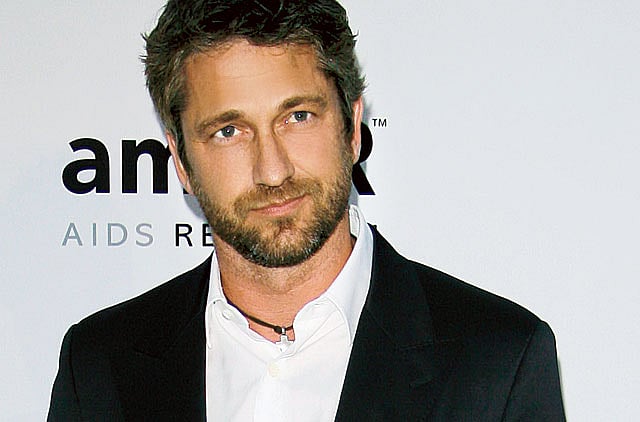
When a recent edition of Architectural Digest dropped through letter boxes across the United States, people were overjoyed. On its cover - barefoot, grinning and lounging in a comfy armchair - was Hollywood's hottest leading man. Yes, that's Gerard Butler, the craggily handsome Scottish actor who has emerged from obscurity to star opposite the leading actresses of our time, and whose presence in Hollywood is now as ubiquitous as paparazzi and high heels.
Just how far Butler has come from his roots in Paisley was revealed by the magazine's glamourous shots of his New York loft and the gushing prose that accompanied the photographs. The spread of pictures revealed a massive apartment filled with pillars, limestone lion statues and crystal chandeliers hanging from the high ceilings. Butler himself did not shy away from bragging about his surroundings, which were created by designer Elvis Restaino. "I wanted something elegant and gorgeous and at the same time rather masculine and raw," Butler said, before adding confusingly: "I guess I would describe the apartment as bohemianold-world rustic chateau with a taste of baroque."
Glasgow it is not. But then Butler has travelled a long way from his native land. He was last seen in The Bounty Hunter, playing the role of romantic interest for Jennifer Aniston, perhaps the most bankable female star in Hollywood. Before that he was cast in The Ugly Truth, opposite Katherine Heigl, who is often touted as Aniston's successor. Butler movies seem to keep coming in an endless procession, including four alone in 2009. They are action films, romantic comedies, thrillers and even voice-overs in animated pictures.
Yet Butler is a far from conventional star. Fame has arrived for him late, at the age of 40. A Brit, he is better known in America than at home. And he is famed for his outspokenness, especially about his love life, which has led to him being vilified and teased by US gossip columnists. Many of his films have bombed critically, even as they have racked up millions of dollars.
It is fair to say that Butler's success has come despite the lack of critical approval, rather than because of it.
"He is living every man's dream and he's enjoying it," said top Hollywood publicist and manager Eileen Koch.
Certainly the American public loves him, no matter what the American press says about him. "Butler goes out of his way to be transparent in the media spotlight. While some reporters criticise that, the public appears to appreciate it," said Ashley Dos Santos, a popular culture analyst at Crosby-Volmer International Communications. "There's no mystery or hidden scandal. With Butler, what you see is what you get and he is one of the few Hollywood personalities who fit that mould."
Perhaps that bluntness and honesty isa product of his humble roots. Butler was born in Glasgow, though his parents moved to Canada shortly thereafter. However, the strains of being struggling immigrants resulted in divorce and Butler and his mother moved backed to Scotland. His childhood was solid but poor, yet Butler's family was strictly Catholic and put a huge onus on education. He won a place at Glasgow University and graduated to become a lawyer. It was not a good match. "I never felt fulfilled. I partied a lot and abused the privileges of my firm," he once told an interviewer.
He resigned on a whim before he could get fired and, after seeing a screening of the movie Trainspotting, he moved to London to try his hand at acting. That worked. His tall, brooding presence won him a series of stage and screen roles, including small parts in big budget flicks like the James Bond movie Tomorrow Never Dies. The roles landed him the lead in the The Phantom of the Opera, which took him to his huge breakthrough movie, 300.
Playing the chiselled hero Leonidas of Sparta was a move that saw him crack the US market wide open. It was a role that suited Butler well. The movie was as masculine as it is possible to be. Butler, with a six-pack stomach that looked as if it were made of concrete, was a huge hit as the warrior king slicing and dicing people like a human meat tenderiser. The movie was a financial triumph and delighted both fans of the original comic strip and action movie addicts. It even becamea cult hit among US soldiers in Iraq who loved the bloody, martial action.
"He has this masculine halo around him because of 300. That made him the man's man," said Michelle Lee, editor of celebrity magazine In Touch.
That could have defined Butler. But, in a career path that is either extremely canny or extremely lucky, he moved into romantic comedies.
His leading males are often not dreamy paragons of virtue, but rather caveman-like. In The Ugly Truth he was a sexist TV presenter. In The Bounty Hunter he chases Aniston with a gun and bundles her into the boot of his car. "He is not a dreamy lead. There is an element of being a jerk," said Lee. The take on masculinity has not been a critical success.
Both films have been slammed by critics. "Formulaic, stupid, and unfunny in all the usual ways. Is there no more ingenuity in Hollywood? Can no one think of new ways for movies to be irritating and pointless?" wrote Eric Snider about The Ugly Truth at Film.com.
Not that it mattered. The movie racked up $90m at the box office. The Bounty Hunter had been similarly panned, but it brought in more cash than it cost to make.
And when it comes to Hollywood success, most movie executives are not concerned with critical plaudits. They want cash at the box office and Butler is delivering, in part because of his presentation of the modern male and, perhaps, the knock-on effect of his real-life romances.
The relentless marketing campaign for The Bounty Hunter was based around an endless supply of rumours and photographs speculating if Butler and Aniston were romantically linked in real life. Neither star did anything to shake off the rumours, especially not Butler.
Few stars have so cleverly manipulated the media. "He knows he is playing the role of the cad," said Lee.
In fact, in an age when public figures are expected to behave modestly, it is left to the resolutely single Butler to complain that he's not lucky enough with women. "He is single. He can do whatever he wants," said Koch.
Perhaps Butler's success can be summed up by a quote at the end of the piece in Architectural Digest. There is a brief interview with Restaino, who says: "Gerry's place is a ride, man, it's a ride." That could be a description of Butler's home or his whole career to date. It is a ride that looks set to keep on going.
Sign up for the Daily Briefing
Get the latest news and updates straight to your inbox
Network Links
GN StoreDownload our app
© Al Nisr Publishing LLC 2026. All rights reserved.