Renate Reinsve in a scene from "Backrooms."
Backrooms review: A stunning liminal horror lost in its own maze
A creepy descent into liminal horror that struggles to stick the landing
Last updated:
4 MIN READ
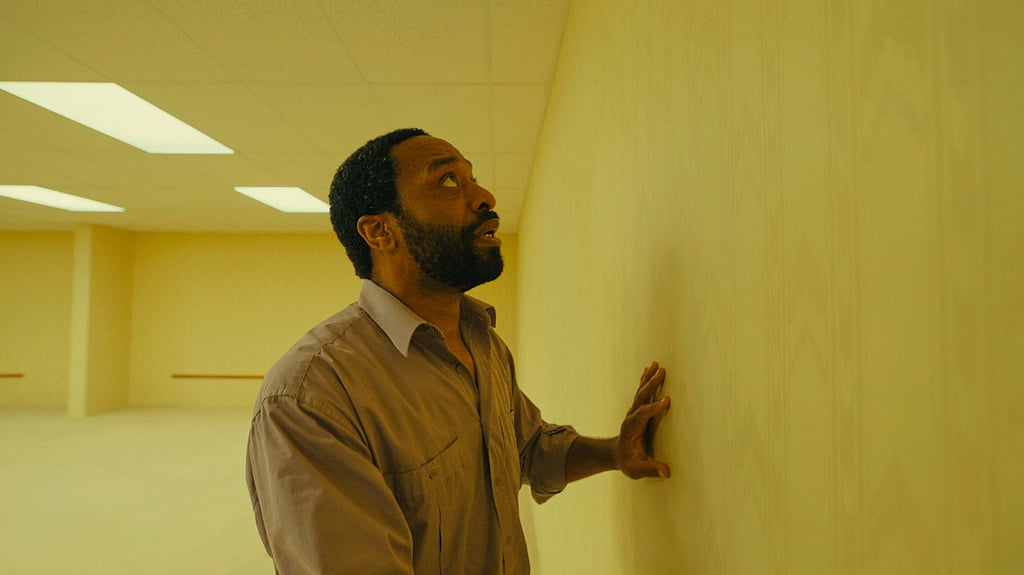
Chiwetel Ejiofor in a scene from "Backrooms."
A24
Dubai: As someone who has spent years fascinated by the Backrooms mythos, liminal horror, and the sheer existential dread of endless fluorescent hallways, I walked into Backrooms with incredibly high expectations. Unfortunately, I walked out feeling much like the characters themselves: lost, confused, and wondering if there was actually an exit somewhere that I missed.
The biggest issue is that it constantly feels like it's building towards something bigger, deeper, and more profound than what it ultimately delivers.
The film follows furniture store owner Clark, played by Chiwetel Ejiofor, and psychologist Dr. Mary Kline, played by Renate Reinsve, as they become entangled in the strange labyrinth beneath Clark's furniture showroom. Alongside them are Bobby (Finn Bennett), Kat (Lukita Maxwell), and the mysteriously underused Naren Warne, played by Avan Jogia.
While the cast is solid across the board, the screenplay never seems quite as interested in the characters as the actors are. Clark and Mary's personal histories are explored extensively, particularly Mary's difficult childhood and relationship with her mother, yet these threads never feel fully resolved by the time the credits roll. The deeper the film digs into their trauma, the more it feels like it's setting up revelations that never arrive.
Mary's backstory, in particular, feels strangely unfinished. We spend so much time learning about her past that you expect some emotional payoff, only for the narrative to rush past it in favour of bigger mysteries. By the end, I wasn't frustrated because things were left ambiguous. I was frustrated because they felt incomplete.
And then there's Avan Jogia. For an actor whose casting generated a fair bit of excitement, Naren Warne ends up feeling like a footnote than an actual character. His appearance and storyline left me with more questions than answers, which unfortunately becomes a recurring theme throughout the film.
Ironically, the thing Backrooms does best is the one thing it absolutely had to get right: the Backrooms themselves.
The actual liminal spaces are fantastic. Kane Parsons understands what makes the original concept so unnerving. The endless yellow corridors, the impossible architecture, the overwhelming feeling of isolation and wrongness, all of it works. There are sequences where nothing particularly scary is happening, yet I found myself deeply uncomfortable simply because of the environment. The film captures that uniquely internet-born fear of endlessness and the unknown remarkably well. Even without jump scares, the Backrooms feel hostile.
The problem is that the monsters don't.
For a film built around a terrifying entity, the creature itself ends up being one of the least scary things on screen. The pirate version of Clark, while obviously intended as a manifestation of his trauma, never quite lands visually. Rather than feeling like a nightmare dragged from the subconscious, it often looks like a special effect that escaped from a different movie.
Oddly enough, some of the film's secondary horrors are far creepier. The red-haired wife figure, the unsettling man in the lamp-wheelchair, and several of the background entities generated far more dread than the movie's central monster. I found myself wishing the film had leaned closer to the shadowy, incomprehensible terror seen in Parsons' original work rather than giving us what essentially amounts to haunted Captain Clark.
I understand what the movie is trying to say. The pirate entity is clearly tied to Clark's guilt, regret, and inability to let go of his past. Human Clark being consumed by Pirate Clark is a striking visual metaphor. But symbolism only gets you so far when the surrounding story doesn't support it.
If the Backrooms are a manifestation of personal trauma, and Clark's fate is tied to surrendering to it, then what exactly happened to Bobby and Kat? Why do they suffer the same fate? What role do they play in the film's psychological framework? The movie never provides a satisfying answer. Instead, it raises these questions and leaves them hanging somewhere in the fluorescent void.
One aspect I loved was the decision to centre the story around a furniture store. Long before the movie existed, internet sleuths became obsessed with tracking down the location that inspired the original Backrooms image, with it being traced back to a former furniture showroom. Whether intentional or not, seeing Kane Parsons build an entire narrative around a furniture store feels like a clever nod to that corner of Backrooms lore.
Ultimately, Backrooms succeeds as an atmosphere piece far more than it does as a narrative. The environments are unsettling. The sense of scale is impressive. The film absolutely nails the feeling of being trapped in a place that shouldn't exist.
But for a movie so obsessed with memory, trauma, identity and endless corridors, the story never quite finds its way home.
I don't mind ambiguous endings. Some of my favourite horror films leave questions unanswered. What I do mind is when a film spends two hours setting up ideas that feel only partially explored. By the final scenes, I wasn't left pondering the mystery. I was left feeling unfulfilled.
Backrooms isn't a bad movie. But somewhere between the yellow hallways, the psychological symbolism and the pirate monster, it loses sight of the emotional storyline it spent so long trying to reach.
Rating: 3/5 - Visually brilliant, narratively frustrating, and proof that endless hallways are somehow scarier than giant pirate men.
Sign up for the Daily Briefing
Get the latest news and updates straight to your inbox
Network Links
GN StoreAbout Gulf NewsTerms & ConditionsReach by GNSitemapContact usPrivacy PolicyGN FocusHave your sayWork with usAdvertise with usGulf News epaperPrinting Services
Download our app
© Al Nisr Publishing LLC 2026. All rights reserved.