Peak summer demand, higher airfares and a range of additional travel expenses are pushing up the cost of overseas holidays for many UAE residents.
Why a Dh3,000 holiday often ends up costing Dh8,000: Here's where UAE travellers are spending
From visas and hotels to airport spending, here's what pushes summer travel costs higher
Last updated:
5 MIN READ
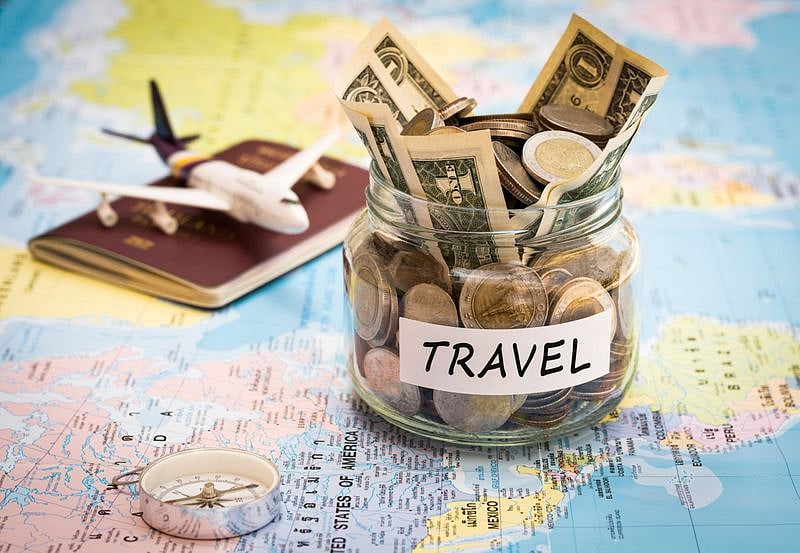
Summer holidays can cost much more than the advertised airfare, with accommodation, visas, airport spending, transport and travel insurance all adding to the final bill for UAE travellers.
Shutterstock
Dubai: You find return tickets to Europe for Dh3,000 and think you've landed a bargain. But by the time you've paid for visas, hotel rooms, travel insurance, airport transfers, meals, attraction tickets and baggage fees, that "cheap" summer holiday could easily cost more than Dh8,000—and that's before shopping.
It's a familiar experience for many UAE residents travelling during the school summer break. While airfares often receive the most attention, they're only one piece of the holiday budget.
A string of smaller expenses, many of them unavoidable, quietly pushes up the final bill.
Flights still take the biggest bite
Airfares remain the single largest expense for most travellers, and this summer they have become significantly more expensive.
According to MENA business travel platform Tumodo, the average air ticket price in the region rose by 45.6 per cent during the first half of 2026, climbing from around Dh1,430 in January to Dh2,080 in June, with prices peaking at nearly Dh2,200 in May.
The increase reflects several factors. School holidays have created a surge in demand, while higher jet fuel prices during the Iran conflict added to airline operating costs.
At the same time, the global aviation industry continues to struggle with aircraft delivery delays, engine maintenance issues, and spare-parts shortages, limiting capacity and keeping fares elevated.
Travel agents also say many UAE families travel during the two-month school summer break, meaning demand remains concentrated between mid-July and the end of August.
Willie Walsh, Director General of IATA, said that as a result of the Middle East war, the aviation body expects average jet fuel prices to be 70 per cent higher year-on-year.
“That will add $100 billion to our collective fuel bill this year. The positive, however, is that demand is holding up, even as airlines are raising fares and rates to cope. But growth will inevitably be slower, 2.1 per cent for the passenger business and 0.7 per cent for cargo,” he said during the IATA AGM last month.
“Our polling suggests that 86 per cent of travelers expect fares to track oil prices. In line with that, 49 per cent expect to spend more on travel this year than last. An additional 43 per cent plan to spend the same,” said Walsh.
Hotels are only part of the picture
Accommodation remains one of the biggest expenses for UAE travellers—and the amount they pay depends heavily on where they’re going.
An STR - an industry-standard benchmarking tool for hotels- and Travel Economics report forecasts slower travel demand across the region because of safety concerns, higher travel costs and reduced airline capacity, while Europe and Asia-Pacific are expected to experience mixed effects as travellers shift to alternative destinations.
In Europe, hotel performance is expected to remain resilient, with RevPAR forecast to grow 1.4 per cent in 2026, supported by stronger intra-European travel and demand from the Americas.
Destinations such as Glasgow, Barcelona and Prague are expected to benefit from stronger leisure demand, while Zürich, Heathrow and Gatwick may see weaker hotel pricing due to lower Middle East demand and changes in airline connectivity.
Meanwhile, Asia-Pacific is forecast to outperform Europe with 4.4 per cent RevPAR (revenue per available room) growth, although destinations reliant on Middle Eastern transit routes, such as Melbourne, may see weaker demand as airlines reroute flights.
Overall, the report expects most markets to recover from 2028 onwards, with no lasting long-term impact from the Iran conflict on Europe or Asia-Pacific.
Hotel room rates, depending on the destination, have also seen incremental increases this year.
The hidden costs begin before you fly
Visas
Many travellers underestimate how much they spend before boarding the aircraft.
Visa fees have increased across several major destinations in recent years. A standard Schengen tourist visa now costs around Dh387, while Japan has raised its single-entry tourist visa fee fivefold.
Travelling to the United States has become even more expensive after the introduction of a mandatory Visa Integrity Surcharge, taking the standard tourist visa application cost to nearly Dh1,600, excluding any optional expedited processing fees.
Travel insurance has also become more expensive as insurers factor in rising medical costs, flight disruptions and regional geopolitical risks.
Airports can be expensive too
Holiday spending often starts the moment travellers arrive at the airport.
From parking charges and meals to baggage fees, lounge access and duty-free shopping, airport purchases can quickly inflate the cost of a trip.
Public transport fares have increased in many destinations due to higher fuel and operating costs, while taxi fares, airport transfers, and tourist taxes have also risen in several cities.
Eating out has become more expensive as restaurants continue to deal with higher operating and energy costs. Meanwhile, many travellers underestimate the price of attractions, museum tickets, theme parks, guided tours and skip-the-line passes, which can add hundreds of dirhams to a family holiday.
Get updated faster and for FREE: Download the Gulf News app now - simply click here.
Will travel become cheaper?
There are signs that airline fuel costs are easing after the recent US-Iran peace agreement helped lower jet fuel prices from their wartime peak.
However, travellers should not expect immediate reductions in airfares. Airlines are still dealing with aircraft shortages, supply chain disruptions and delivery delays, all of which continue to limit capacity and keep costs elevated.
For now, industry experts say booking flights well in advance, travelling during quieter days of the week and planning for hidden expenses remain the best ways to keep a summer holiday within budget.
How much does a Dubai- UK trip cost for a family of four?
| Expense | Summer 2025 | Summer 2026 | Why it's changed |
|---|---|---|---|
| Return flights | Dh6,800 | Dh9,200 | Airfares up 30-40% due to school holiday demand, fuel costs and limited aircraft availability |
| Hotel (7 nights, 3-4 star) | Dh5,500 | Dh6,000 | Peak summer demand and higher room rates |
| UK local transport | Dh900 | Dh980 | Tube and rail fares increased this year |
| Food & drinks | Dh2,200 | Dh2,450 | Restaurant prices continue to reflect inflation and higher operating costs |
| Attractions | Dh1,300 | Dh1,450 | Ticket prices for museums, attractions and tours have risen |
| Travel insurance | Dh500 | Dh650 | Medical inflation and geopolitical risks have pushed up premiums |
| Airport spending (parking, meals, duty free, baggage) | Dh1,000 | Dh1,150 | Higher retail and food prices at airports |
| Estimated total | Dh18,200 | Dh21,880 | Around 20% higher overall |
How to reduce your holiday bill
Fly mid-week instead of weekends.
Book hotels with breakfast included.
Travel with cabin baggage where possible.
Exchange currency before departure and compare rates.
Buy attraction tickets online before travelling.
Use public transport instead of taxis where practical.
Compare travel insurance policies rather than buying at the airport.
Consider nearby airports or secondary cities for lower airfares and accommodation costs.
Network Links
GN StoreAbout Gulf NewsTerms & ConditionsReach by GNSitemapContact usPrivacy PolicyGN FocusHave your sayWork with usAdvertise with usGulf News epaperPrinting Services
Download our app
© Al Nisr Publishing LLC 2026. All rights reserved.