Dubai: When the global financial crisis hit the UAE's construction sector in late 2008, most contractors shrank operations to survive amid the downturn, and many collapsed. However, a handful actually managed to grow. Drake and Scull International PJSC is one of them.
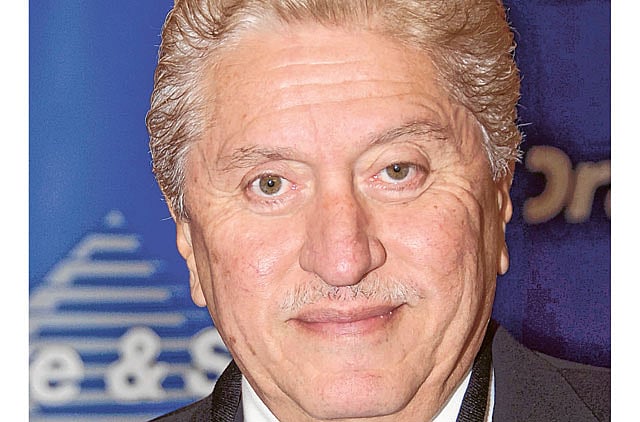
The company, which has an order backlog of more than Dh5.5 billion and has made four acquisitions so far, is making its fifth despite the current slowdown, Khaldoun Rashid Tabari, Chief Executive Officer of Drake and Scull International (DSI), said.
This reflects the strength of the company and its resilience.
Tabari has led the development of the company from a local MEP contractor to a regional leader in the construction industry.
Under Tabari's leadership, DSI has expanded the business to include civil contracting and engineering expertise in infrastructure, water and power.
Together with the core MEP services, DSI provides fully integrated end-to-end solutions in the construction industry.
In an exclusive interview with Gulf News, Tabari talks about the challenges and the opportunities in the region's construction market. Excerpts:
What is the current state of the construction industry in the UAE, GCC and Mena?
The construction industry in Dubai is currently undergoing a challenging phase due to the latest economic downturn.
Until supply meets the demand and banks' ability to lend improves, there remains pressure on the construction industry and recovery will take more time than originally anticipated.
Abu Dhabi, on the other hand, still offers construction contracts although competitive. The UAE, however, is at the forefront of infrastructure development in the region which enables the government to diversify developments to other sectors while maintaining a growth momentum in infrastructure projects.
Saudi Arabia recently announced a 580 billion riyals national budget which is the largest state expenditure to date. The budget is dedicated to revolutionising education, health care, and infrastructure sectors. Also, the massive population of the country stimulates substantial demand for residential units and will further fuel growth.
The long-awaited mortgage law will allow public investors to assume greater roles in public and private investments in the country. In retrospect, the forecasted increase in oil prices will enhance liquidity in the short run and will facilitate and accelerate the funding and the award of the planned mega projects.
Qatar has been well-placed and geared up for a significant growth in the construction industry especially since the government had set forth a clear vision to diversifying its oil and gas-driven economy and therefore has allocated massive funds towards various developments across the nation.
The country's latest selection to hosting the 2022 World cup complemented the initial government stimulus and ignited a wave of optimism among regional and international contractors which will ultimately see a significant windfall and a progressive resurgence of project funding and bond issuing.
Kuwait falls within the same spectrum and has adopted similar stances for the upcoming five-year plan with an estimated budget of almost a $100 billion.
Syria is a relatively open market with carefully considered guidelines.
However, it has promising potentials and has the fundamental drivers for a healthy economy.
Its oil and gas sector is lucrative; it holds solid and outstanding agricultural foundations, large population growth and induces investments in the hospitality industry.
The government has been supportive, having recently reduced corporate tax fees which have proved to be a great incentive for foreign companies.
The construction industry in Iraq is currently in its infancy, yet there is a massive need for infrastructure developments. Should the new government restructuring gain consensus, the country will be ready for massive developments across all sectors.
Oman has also seen a remarkable growth momentum and is a potential market which offers promising opportunities to our operations.
Libya, however, is a difficult market but a market full of opportunities and growth. DSI has been in Libya since 2009 but has taken us more time to materialise than expected especially with the dominance of the Turkish and Chinese contractors in the industry.
We are still bullish and aim to seize our fair share of the water treatment, sewage treatment and other infrastructure projects.
Do you anticipate a consolidation taking place in the coming years?
The aftermath of the economic downturn created a lot of uncertainty; severe asset value depreciation accounting for trillions of dollars weakened balance sheets and spurred a wave of consolidation in the world and the region. To compensate for the shortfall, lots of resurgence mergers and acquisitions occurred and some are currently under way. Transparency and corporate governance standards in the region are also improving which is a good sign of recovery.
What is the state of the mechanical, electrical and plumbing industry? Isn't that suffering as well?
The mechanical electrical and plumbing (MEP) industry is an integral part of the construction value chain.
The credit crunch and the lack of liquidity negatively affected the MEP industry as well as the rest of the supply chain. However, MEP is a niche were few specialist contractors encompass the technical know-how, the skills and the technology to excel.
When do you see the market taking off again? And, at what pace?
In 2011 the market will maintain its momentum in Saudi Arabia and Qatar will progressively pick up to accommodate the 2022 World Cup games that have been officially announced.
You may see an extensive pick-up in Kuwait, Syria and Iraq following the latest government restructuring. Libya is also a market pursuing tremendous developments.
As a company, how are you managing your business — especially being in a sector that has been adversely affected?
DSI is an end-to-end engineering solution provider. Over the years, we have expanded and upgraded our business model to align ourselves with the surrounding and evolving macro environment factors in the region. We successfully transitioned the business from being a sole MEP service provider to becoming a leader in providing integrated engineering solutions by expanding our service offering to include civil contracting, and water and power solutions.
These integrated business streams complement one another and give us the capability to cover the complete construction value chain and hence the advantage of economies of scale. Our current backlog figure is a reflection of all the company's business streams which clearly indicates a balanced and well-diversified project portfolio.
Your company has recently secured a string of orders. Would you like to elaborate on them?
The company has been recently awarded a Dh340 million MEP contract for the Abu Dhabi Presidential Palace and another iconic EPCO (Engineering, Procurement, Construction and Operation) Dh290 million contract for a District Cooling Plant in Riyadh, Saudi Arabia and also managed to secure a series of MEP project wins in Oman and the UAE.
These latest project wins are a clear indication of our successful geographical diversification and our clear understanding of the challenging market dynamics in the region.
What is the size of your current order book? And in how many projects?
DSI's backlog stands approximately at Dh5.5 billion and is reflective of the company's acquisitions and organic growth. We have won 27 major projects across the region in the year 2010.
You have recently expanded business beyond the borders of the UAE. Could you elaborate?
DSI embarked on a mission to go public in 2009. The proceeds of the IPO of over Dh1.2 billion in cash was the driving force behind our four acquisitions between 2009 and 2010 with the fifth one on the way. DSI's success has been its diversification into new markets and different business streams.
Our strategy of diversification whether organic, inorganic, horizontal or vertical has allowed us to enter into Kuwait, Qatar, Saudi and Libya, Egypt, Jordan, Syria, Oman and Thailand as well as acquire Passavant-Roediger a German technology provider in the field of water and sludge treatment.
What are the new countries you are planning to enter into the next 2-3 years?
We see opportunities in Iraq, India and North Africa. However, we are prudent and pragmatic about selecting the right and effective mode of entry to these markets. Company valuations are currently high in some markets we are targeting such as India due to its economic performance. This leads us to rethink and consider strategic joint ventures, partnerships and discourage us from seeking acquisitions alternatively.
Is your company going to grow only organically? What about acquisitions? How strong is your appetite in acquiring companies?
Our expansion plan consists of both organic and inorganic growth patterns depending on the market conditions of the country we target.
We organically grew in Syria, Oman, Thailand, Egypt and Libya and inorganically grew in Kuwait, Qatar and Saudi through a series of successful MEP and Civil acquisitions. We are in the process of consolidating our back offices and our supply chain which will leverage our market presence across the region.
We always seek opportunities that maximise our shareholders value. Oil and gas is a business stream that complements our service portfolio and will open doors for many projects that could benefit the overall value chain of the company. We look at expanding into this field and others that complement our service offerings and contribute to our growth.
Any plans to set up building materials manufacturing industries, such as cement factory, ready mix concrete, steel fabrication, glass?
Setting manufacturing plants for mass production requires huge start up capital and the internal rate of return for such an investment is only realised in the long run, which is not part of the DSI strategy.
DSI will stick to what it knows best. We will however seize any opportunity that complements our business and offers maximum value for our shareholder.
How many employees are currently under your company's payroll?
DSI's total work force is an estimate of 20,000 employees from diverse background and nationalities. Our strong corporate identity is the cornerstone behind our success story and our management is on a constant quest of identifying talents from different part of the globe to lead the company forward.
How big do you want to grow in five years from now?
We are aiming to achieve 20-25 per cent yearly revenue growth within the coming five years and we expect our reach to cover the Mena region and parts of Asia. We must also point out that we see potentials in the Black Eastern European.
Dubai Drake & Scull International PJSC (DSI) is a regional market leader delivering projects through integrated design, engineering and construction disciplines of mechanical, electrical and plumbing (MEP), civil contracting, and water and power.
The history of Drake & Scull begins with two companies: Drake & Gorham and Arthur Scull & Son. Both were founded by Victorian entrepreneurs with inventive minds, a talent for business and remarkable energy and vision.
Arthur Stanley Scull was born in Bristol in 1860, one of 11 children. The Sculls were not a wealthy family and, at the age of 14, Arthur was apprenticed to G. F. Tuckey, Master Plumber.
After financing his indentures, Arthur rented a small workshop in Milk Street, Bristol. This led the foundation of the company in 1881. For the first few years, his "sanitary engineering" business remained small and Arthur could not even afford a handcart for the transport of tools and fittings.
In 1886, aged 28, Bernard Drake borrowed £500 from a wealthy aunt to form a new company, Drake & Gorham. The two partners had a clear and simple objective — to install electricity into private houses.
Both Bernard Drake and Marshall Gorham had impeccable credentials. Both men had installed electric lighting into the homes of European Kings (Drake for Alphonso XIII of Spain and Gorham for Charles I of Romania).
In 1893, Bernard Drake founded Drake & Gorham, a new electrical company with colleague Marshall Gorham. In 1964 Drake & Gorham and Arthur Scull & Son merge to form Drake & Scull Engineering.
DSI established its first office in the region in Abu Dhabi in 1966, and it has since expanded its operations to include offices in Dubai, Jordan, Libya, Thailand, Qatar, Oman, Syria and Egypt with projects in UAE, Saudi Arabia, Sudan, Thailand, Qatar, Kuwait and Oman.
In July 2008, DSI offered 55 per cent of the company to the public. The shares were priced at Dh1 each plus an offering cost of Dh0.02 per share.
Sign up for the Daily Briefing
Get the latest news and updates straight to your inbox
Network Links
GN StoreDownload our app
© Al Nisr Publishing LLC 2026. All rights reserved.