Ownership is glue for keeping flock together
Expert says there are ways to offer ownership stake to employees
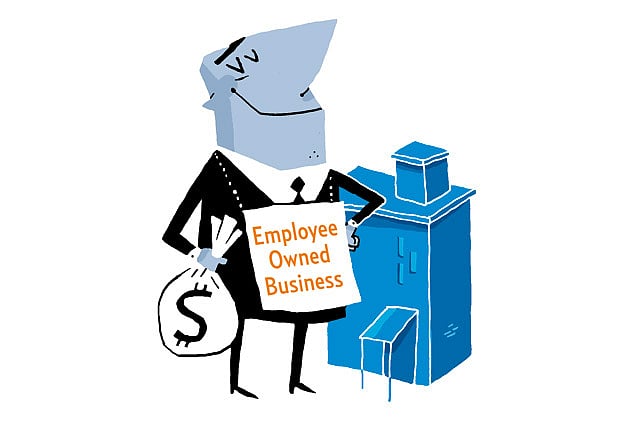
Dubai: Apart from a decline in turnover, the biggest threat to small businesses these days is holding on to skilled employees, against better-paid opportunities elsewhere in the Gulf. If they are to keep talent, it could be time for entities to consider empowering employees by giving them a direct stake in the business.
An "employee-owned business" can be ideal, and already works well elsewhere. Research carried out by Cass Business School offers proof. In the UK, businesses wholly or substantially owned by their staff were estimated to turn over £25 billion (Dh145 billion) a year, or about 2 per cent of the UK gross domestic product, the research revealed.
Joseph Lampel, professor of strategy and entrepreneurship at Cass said: "The employee ownership structure works well in small firms, however large firms such as Arup, Mott McDonald, John Lewis demonstrate the structure can deliver superior returns provided it is weaved into the firm's culture, strategy and operations".
It's true that employee-ownership models are a rarity in the region, principally due to the laws of the land. But that does not mean they don't exist. Engineering and development consultancy Mott MacDonald has applied the employee-ownership model to its Middle East operations as well.
But would it find wider favour? Apart from the law, there is another factor that could count against an employee-ownership structure — the transient nature of the workforce.
"The employee-ownership structure only works well when retention is strong," Lampel said. "Staff involvement is important to unlocking firm performance. It's not ideal for firms which rely heavily on a temporary workforce, for example, the construction or the contract industry.
Different parts
"However, there are different parts of the value chain for the [employee-ownership] structure in such industries too. Firms which rely on employee knowledge are most likely to benefit by adapting it."
In this regard, Lampel identified design consultancy, structural engineering, and maintenance firms — all operating under the broad ambit of the construction industry — as conducive to an employee-ownership model.
"Knowledge is a critical function of success and firms where employee knowledge is central to the firm's success. Their involvement is paramount," he added. "Employee-ownership structures tend to work well in such firms."
According to the Cass research, employee-owned businesses create jobs faster than traditionally structured ones, with an average increase in employment of nearly 7.5 per cent per annum between 2005 and 2008, compared with 3.9 per cent in traditional businesses. The rate escalated during the recession, with a 12.9 per cent employment growth in employee-owned businesses compared with 2.7 per cent for others.
But employee-owned businesses do come with their challenges, chief among them is how to ensure things run smoothly when the workforce is expanded.
Dr Ajay Bhalla, senior lecturer in information and knowledge management at Cass Business School said: "Increasing size could put greater distance between frontline employees and senior management.
"It could also make it more difficult to maintain inclusive decision-making without sacrificing the speed and flexibility that is essential for high performance in today's dynamic commercial environments," he said.
Perils of hiring too many, too soon
Many a business has been caught off-guard by deciding to hire and adding too many people, too soon. The perils of doing so are that much greater for small- and medium-sized enterprises, and in many cases could be the end of them.
Recent history is littered with the debris of such ill-informed decisions. Yes, the downturn played a major role in the failure of businesses, but more detailed scrutiny might reveal that nearly all of them had gone through a major expansion of their staff numbers, even when there was no justification to do so.
Joseph Lampel, professor of strategy and entrepreneurship, Cass Business School, said: "Rapid workforce expansion to take on opportunities is often a temporary solution.
"A more sustainable competitive edge can only be delivered once the small firm has found a stable footing and has confidence in its strategy."
The issue has again assumed significance as businesses, irrespective of size, consider downsizing as a way out of the current economic malaise.
Mix of reward
While as a concept an employee ownership business is yet to find traction in the region, the environment may be more conducive to businesses considering stock options as a reward or incentive.
"Stock options are an excellent mix of recognition and monetary gratification," said entrepreneur Maninder Bhandari, who was until recently a long-time career banker.
Sign up for the Daily Briefing
Get the latest news and updates straight to your inbox
Network Links
GN StoreDownload our app
© Al Nisr Publishing LLC 2026. All rights reserved.