My Business: Dubai brothers turn surplus food into 70% savings app
Peekabox helps Dubai diners buy surplus food from major brands at lower prices
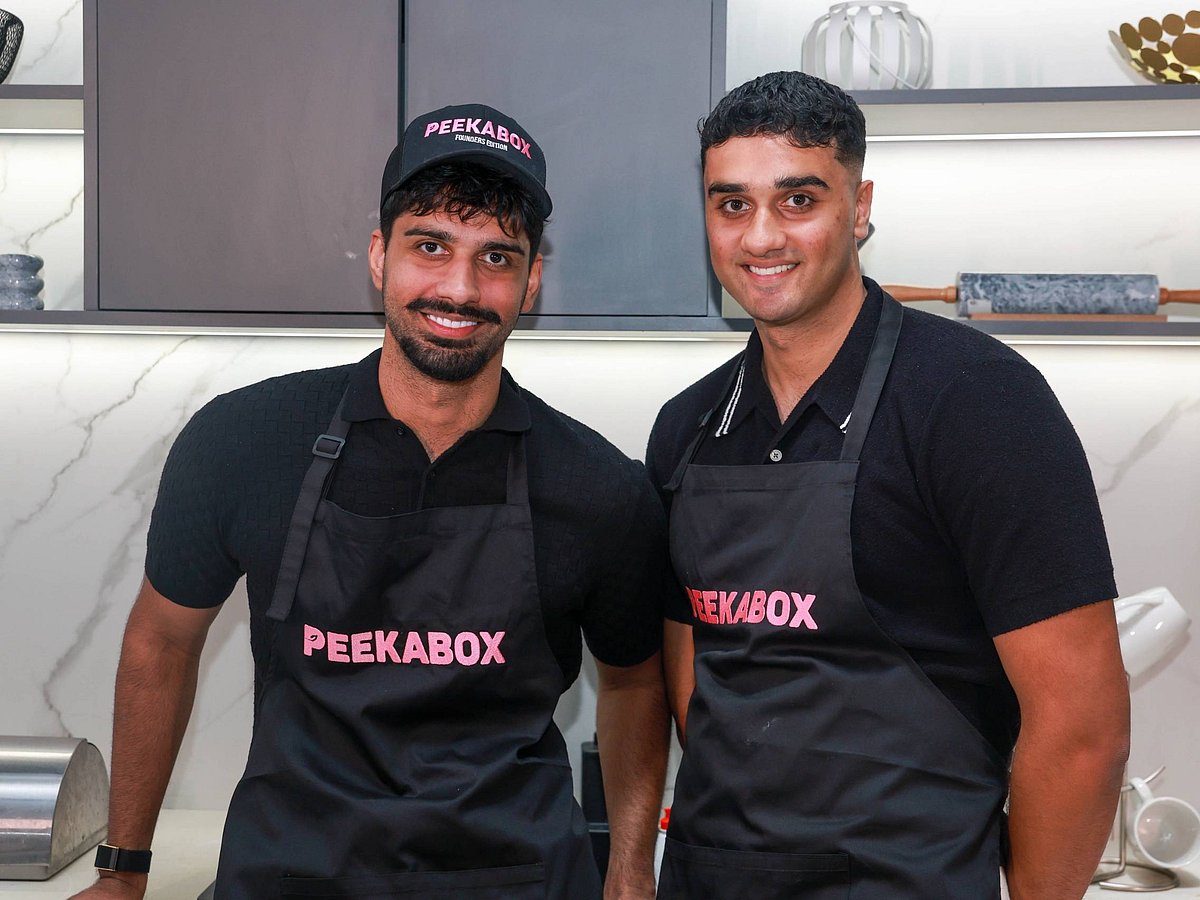
Dubai: Hasan Sarwar had a comfortable investment banking career ahead of him when a problem he kept seeing around Dubai began to feel too obvious to ignore
Every evening, he would pass bakeries and cafés where fresh food was still sitting on shelves, knowing much of it would be thrown away before the next morning despite being perfectly edible and made only hours earlier.
Get updated faster and for FREE: Download the Gulf News app now - simply click here.
“Not expired food, not bad food, just perfectly good croissants, sandwiches, salads, all getting binned simply because the day was over,” said Sarwar, the 25-year-old British CEO and co-founder of Peekabox.
That became the starting point for Peekabox, a Dubai-based food-tech platform that partners with bakeries, restaurants, cafés and grocery stores to sell surplus food at guaranteed discounts of 50% to 70%.
The idea is simple enough for consumers to understand quickly, but Sarwar says the business case goes deeper because retailers recover revenue from food they would otherwise discard, while residents get access to more affordable meals from brands they already know.
Growing up in Dubai for more than 18 years gave Sarwar a close view of how central food is to the city’s daily life, from family dinners and weekend gatherings to coffee runs and casual meals with friends, yet it also showed him how much freshly prepared food could be wasted because demand is difficult to predict.
“When I started digging into the numbers, I realised that in the UAE alone, over $3.5 billion worth of food is wasted annually and 38% of food prepared daily is thrown away,” he said.
The second half of the problem was just as important to him because living costs in Dubai were rising, and people around him were becoming more careful about how much they spent on dining out, groceries and everyday meals.
“I thought, what if there’s a way to solve both problems at once? Reduce the waste and make food more affordable from the brands people already love genuinely affordable,” he said.
Leaving banking behind
Sarwar moved to Dubai at the age of six, studied at Dubai English Speaking College, went on to read Philosophy, Politics and Economics at the University of Warwick, and returned to the UAE after university because he always saw Dubai as home.
Also Read
My Business: How two Dubai teenage brothers built a clothing brand to support their mumMy Business: Emirati startup aims to prove UAE can build world-class mobility techHe joined Jefferies in investment banking, while his brother and co-founder Omair worked at Rasmala, giving both of them a finance background that helped them think about Peekabox as a commercial platform instead of a goodwill project.
“I spoke to my brother Omair about it, and from that first conversation, it just clicked,” Sarwar said.
The brothers believed the model had to work for both sides from day one, with retailers earning money on food that would otherwise become a complete loss and customers getting a clear reason to use the app regularly.
“We both felt we had the commercial instinct to make this work, not as a charity, but as a real business that creates a win-win for retailers and consumers,” he said.
That has guided the way Peekabox has been built because the platform’s mission around food waste may attract interest, but Sarwar knows consumers will return only if the savings are real and the brands are relevant.
Convincing the market
The biggest early test was credibility because Sarwar and Omair were 24 and 22 when they started walking into meetings with senior executives, franchise groups and operators who had spent decades in the F&B sector.
“A lot of people looked at us and thought, why should we trust you?” Sarwar said.
They had to earn every meeting by explaining the economics clearly, showing that surplus food could become an additional revenue stream, and reassuring partners that discounted end-of-day sales would not damage full-price business.
Some operators initially worried that offering food at 50% to 70% off could pull customers away from normal purchases, but Peekabox positioned itself around different buying behaviour, especially customers who may not have bought at full price but would pick up a surprise box on their way home.
“Once they saw it as incremental revenue, things moved quickly,” he said.
Before launch, Peekabox secured more than 1,000 store partnerships, including Carrefour, Costa, Tim Hortons, Dunkin’, Armani Cafe, Eataly, Paul and Union Coop, a milestone Sarwar considers one of the clearest signs that the business had moved beyond an interesting idea.
“When we started, nobody knew who we were. We were two young guys with no track record in food-tech, walking into meetings with franchise groups that operate hundreds of locations across the region,” he said.
The company also closed a $1.5 million seed round and brought in investors including Dr. Sameer Al Ansari, Ahmad Julfar, Alain Bejjani, Arshad Ghafur and Hani Weiss, with Sarwar saying the founders wanted backers who could bring credibility, advice and access to major regional networks.
“Our investors include some of the most prominent business leaders in the region,” he said.
Why Dubai worked
Dubai was the natural launch market for personal and commercial reasons, since the brothers grew up in the city and understood its consumer habits, while the concentration of restaurants, cafés and grocery stores made the surplus food opportunity easier to organise.
The company incorporated in DIFC Innovation Hub, which Sarwar said made the licensing process simpler for a startup, and it also confirmed with Dubai Municipality and relevant health authorities that the model is compliant because Peekabox acts as a marketplace facilitator and does not handle food directly.
“The UAE has been incredibly supportive,” he said.
That regulatory clarity helped when speaking to partners, especially larger brands that needed confidence before putting stores onto the platform.
Sarwar also believes Dubai’s F&B density gives Peekabox a strong first market, particularly in areas such as DIFC, Marina, City Walk and Business Bay, where many outlets operate within a small radius and consumers are already used to app-based convenience.
“This is home. My brother and I grew up here, we’ve lived in Dubai for over 18 years. We understand the market, the consumer behaviour, and the culture,” he said.
Building from family lessons
Entrepreneurship was familiar to Sarwar long before Peekabox because his father left banking in 2006, moved the family to Dubai and started his own business, while his grandfather had earlier moved from Kenya to the UK and later built a hotel business.
Watching those decisions gave Sarwar and Omair a certain comfort with risk, although he is clear that Peekabox was built from zero.
“Peekabox is completely our own. We didn’t inherit a business or a customer base,” he said.
The brothers never seriously considered returning to banking after leaving their jobs, even when meetings were difficult or people dismissed them because of their age.
“There was never a moment where either of us sat down and thought, maybe we should just go back to banking,” Sarwar said.
The plan now is to start with a concentrated Dubai rollout, expand across the UAE and then move into the wider Gulf, where Sarwar believes dense F&B markets, high daily food preparation and more price-conscious consumers create strong conditions for the model.
“In five years, I want Peekabox to be the go-to platform for people who want great food at great prices, and for retailers who want to stop throwing away revenue,” he said.
His advice to other founders comes from the same experience of leaving a safe career before every answer was clear.
“Start before you feel ready,” Sarwar said. “If Omair and I had waited until we had all the answers, we’d still be in banking.”
The business will ultimately be judged on whether consumers open the app, find familiar brands nearby and feel the savings are worth coming back for, but Sarwar’s bet is that Dubai’s food waste problem and rising cost pressures have created the right moment for a platform built around both.
Sign up for the Daily Briefing
Get the latest news and updates straight to your inbox
Network Links
GN StoreDownload our app
© Al Nisr Publishing LLC 2026. All rights reserved.