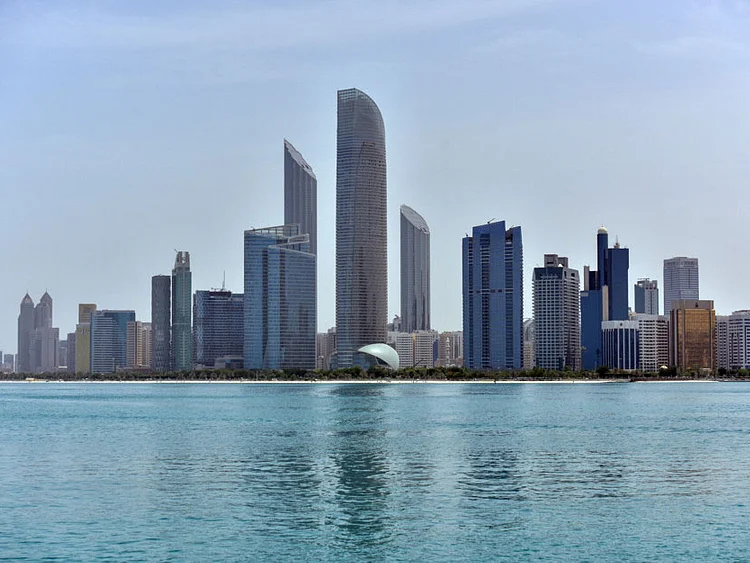
Dubai: A ceasefire in the region is prompting cautious optimism among UAE business leaders, who say the development could help stabilise markets, restore investor confidence and ease pressure on trade flows after a period of uncertainty.
Get updated faster and for FREE: Download the Gulf News app now - simply click here.
Executives across real estate, logistics, healthcare and manufacturing sectors said the immediate impact is likely to be a return to predictability rather than a surge in activity, with the UAE’s underlying economic fundamentals expected to support a gradual recovery.
“Developments that support stability are always welcomed by the business community, as they help restore confidence and enable forward planning,” said Paras Shahdadpuri, Chairman of Nikai Group.
“This steady approach allows businesses to remain focused on growth while maintaining operational stability.” Executives across sectors framed the ceasefire as a stabilising development rather than a trigger for immediate expansion, pointing to continuity and confidence as the primary outcomes.
“We look at the current developments as a constructive step for the economies in the region and for global markets as well,” said Abdul Jebbar PB, Founder, Group CEO and Managing Director at Hotpack. “What matters the most for businesses is continuation of the stability, boosting investor confidence, and ensuring the smooth operation of trade, and services.”
Continuity and resilience
“The UAE continues to demonstrate resilience and reliability as a global business hub,” Abdul Jebbar PB said. “With its strong fundamentals that enable companies like us to remain focused on growth, continuity, and deliver value in a stable environment to operate in.”
For healthcare, the ceasefire is seen as enabling a return to core priorities.“The announcement of a ceasefire is a vital opportunity and indication of achieving long term stability and reflection across the region,” said Boyd Chongphaisal, Vice President and General Manager, GSK Gulf.
“For the healthcare and life sciences cluster, it reinforces the importance of resilience, continuity of care, and supporting patients, our people and partners through period of uncertainty.”
“We hope this development paves the way for sustained dialogue and recovery, enabling industries to refocus on innovating to improve patient outcomes, strengthen healthcare delivery, and create long-term value for the communities we serve.”
Trade and logistics
“The ceasefire marks a critical pivot point for global trade,” said Dr Lijo John, Assistant Professor in Logistics and Supply Chain Management at Heriot-Watt University Dubai.
“We expect an immediate stabilisation in maritime insurance premiums and a gradual return to traditional transit routes, which will significantly reduce the ‘risk surcharges’ that have burdened shippers recently. For the logistics sector, this means more predictable lead times and lower operational costs.”
He said the shift would allow companies to move “from crisis management back to long-term infrastructure investment and efficiency. We expect a surge in activity at Jebel Ali Port as traditional transit routes, including the Strait of Hormuz, restore full-scale traffic. With regional airspace reopening, Emirates SkyCargo will see a critical boost in capacity.”
Measured property market
“Even during recent uncertainty, project timelines have continued to move forward,” said Madhav Dhar, CEO and Co-Founder of ZāZEN Properties.
“In the near term, we expect investors to take a more measured, wait-and-watch approach, particularly in the off-plan segment, while end-users may look to take advantage of selective value opportunities.”
“The next phase will depend on how effectively Dubai reinforces its global investment narrative and restores confidence among international buyers. Based on previous cycles, we anticipate a gradual pickup, with stronger momentum likely from Q4 2026 onwards.”
Market pricing dynamics remain balanced, according to Matt Myers, Assistant Professor at Heriot-Watt University Dubai. “Buyers sought discounts, while sellers largely held their positions.”
“The gap reflects a market that has matured through successive cycles, with trough-to-peak movements now more measured than in the past decade. Rather than triggering a sharp upswing, the ceasefire is better understood as a stabilising factor. It allows existing contracts to continue, reduces force majeure concerns, and helps arrest the erosion of confidence.”
Investor sentiment
“Historically, the strongest returns have gone to investors who entered counter-cyclically during downturns, and that pattern has tended to repeat,” Myers said. He added that policy response would shape sentiment.
“In that context, the UAE leadership’s handling of this period may prove more consequential for long-term foreign investor sentiment than any single market cycle.”
Shahdadpuri said leadership had already demonstrated consistency. “UAE leadership has amply demonstrated its maturity, calmness, resolve and firmness of the highest order during times of regional turbulence.”
“Such clarity and high level of preparedness continue to reinforce the UAE’s position as a reliable and trusted hub for global trade and enterprise.”
Manufacturing outlook
“Today’s developments in the region is a positive signal for the wider economic environment, and for businesses like ours, manufacturing in the UAE and reaching out to global markets,” said Bharat Bhatia, Chairman and CEO of Conares.
“The UAE has built a strong foundation that allows businesses to continue operating with confidence, even amid global uncertainties. This stability ensures that industries can remain focused on growth, continuity, and contributing to the UAE’s long-term economic progress.”
While executives do not expect an immediate upswing, many see the ceasefire as laying the groundwork for more sustained momentum over time, particularly as trade routes normalise and operational risks decline.
The broader consensus points to stability as the key near-term outcome, with business leaders indicating that confidence, rather than speed, will determine how quickly investment and activity levels pick up across the UAE economy.
Sign up for the Daily Briefing
Get the latest news and updates straight to your inbox
Network Links
GN StoreDownload our app
© Al Nisr Publishing LLC 2026. All rights reserved.