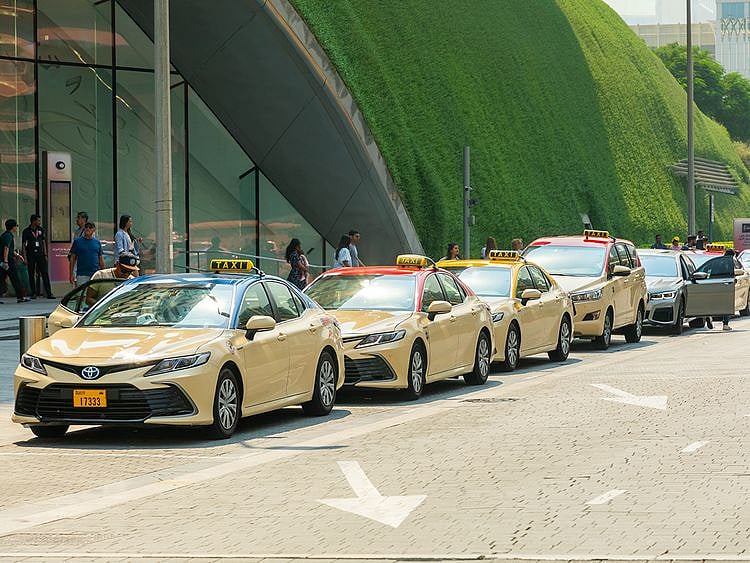
Dubai: Dubai’s taxi and limousine market began to recover in June after a difficult second quarter, with the year-on-year decline in trips narrowing to 11.2% from 36.7% in April.
The improvement came after weaker airport and tourism-related demand weighed on Dubai Taxi Company’s core businesses during April and May, cutting quarterly revenue and profit despite continued growth in its delivery bike fleet and an expansion of its operating fleet.
Get updated faster and for FREE: Download the Gulf News app now - simply click here.
DTC completed 10.3 million taxi and limousine trips during the second quarter, compared with 13.6 million a year earlier. Trip volumes increased by about 31% between April and June, while the annual decline eased from 36.7% in April to 24.4% in May and 11.2% in June.
June brings early signs of recovery
The company remained fully operational throughout the quarter, with no disruption to services, after heightened regional uncertainty emerged in March and affected airport and visitor-related activity.
Revenue fell 22.5% year-on-year to Dh484.5 million during the second quarter, compared with Dh625.1 million in the same period of 2025.
First-half revenue reached Dh1 billion, down from Dh1.2 billion a year earlier, following strong demand in January and February and weaker conditions from March through the second quarter.
"While the operating environment remained challenging across much of the quarter, particularly in airport- and tourism-related demand, we remained fully operational across all segments and continued to serve customers across the UAE,” said DTC Group CEO Mansoor Rahma Alfalasi
Taxi revenue declined to Dh396.8 million from Dh539.7 million, while limousine revenue fell to Dh24.5 million from Dh30.5 million.
Taxi trip volumes during June were 30.9% higher than in April, reflecting the progressive improvement in activity towards the end of the quarter.
Lower trip volumes weigh on profit
Quarterly earnings before interest, taxes, depreciation and amortisation declined 57.2% to Dh77.2 million, while the EBITDA margin fell to 15.9% from 28.9% a year earlier.
Net profit reached Dh10.4 million, compared with Dh105.4 million during the second quarter of 2025, down 90.1%. First-half net profit totalled Dh61.1 million, while cash and cash equivalents stood at Dh409 million at the end of June.
DTC reported a net debt-to-EBITDA ratio of 1.1 times, which the company described as a conservative level.
Delivery bike revenue rises 53%
Performance outside the taxi and limousine businesses remained more stable during the quarter, with bus revenue increasing 2.3% year-on-year to Dh32 million, supported by long-term government contracts.
Delivery bike revenue rose 53.1% to Dh27.9 million, supported by continued demand across the UAE’s on-demand delivery market.
DTC’s total operating fleet reached 11,928 vehicles by the end of June. Its taxi fleet stood at 6,522 vehicles, including 669 fully electric vehicles, following continued investment in capacity and fleet electrification.
Expansion across the UAE continues
DTC acquired another 600 taxi licence plates through a Dubai Roads and Transport Authority auction in April, increasing its Dubai market share to 46% before the inclusion of National Taxi.
The company also expanded into Ajman and extended the Bolt platform into Abu Dhabi, initially through limousine services and later through taxis, as part of its plan to build a larger multi-emirate mobility platform.
DTC completed its acquisition of National Taxi after the reporting period, giving the combined business an approximately 59% taxi market share in Dubai and about 12% in Abu Dhabi.
The transaction created the UAE’s largest taxi operator, with a combined taxi fleet exceeding 9,000 vehicles. DTC expects the acquisition to contribute to earnings from the first full year of ownership, supported by identified operational synergies.
Dividend decision moves to year-end
DTC’s board will consider any shareholder distribution for the 2026 financial year at year-end instead of following its usual semi-annual payment cycle.
The company said the decision would provide greater flexibility to balance financial resilience, investment in long-term growth and shareholder returns during the current operating environment.
The RTA also recalculated monthly taxi vehicle fees covering March to May, resulting in Dh25.6 million in fee reductions across DTC’s taxi fleets.
The financial benefit will be recognised in the company’s third-quarter results and will partially offset the impact of weaker mobility demand during the period.

Sign up for the Daily Briefing
Get the latest news and updates straight to your inbox
Network Links
GN StoreDownload our app
© Al Nisr Publishing LLC 2026. All rights reserved.