Why US oil companies are not rushing to build new refineries despite Trump’s push
With refineries near full capacity, Trump’s call for more gasoline runs into hard limits
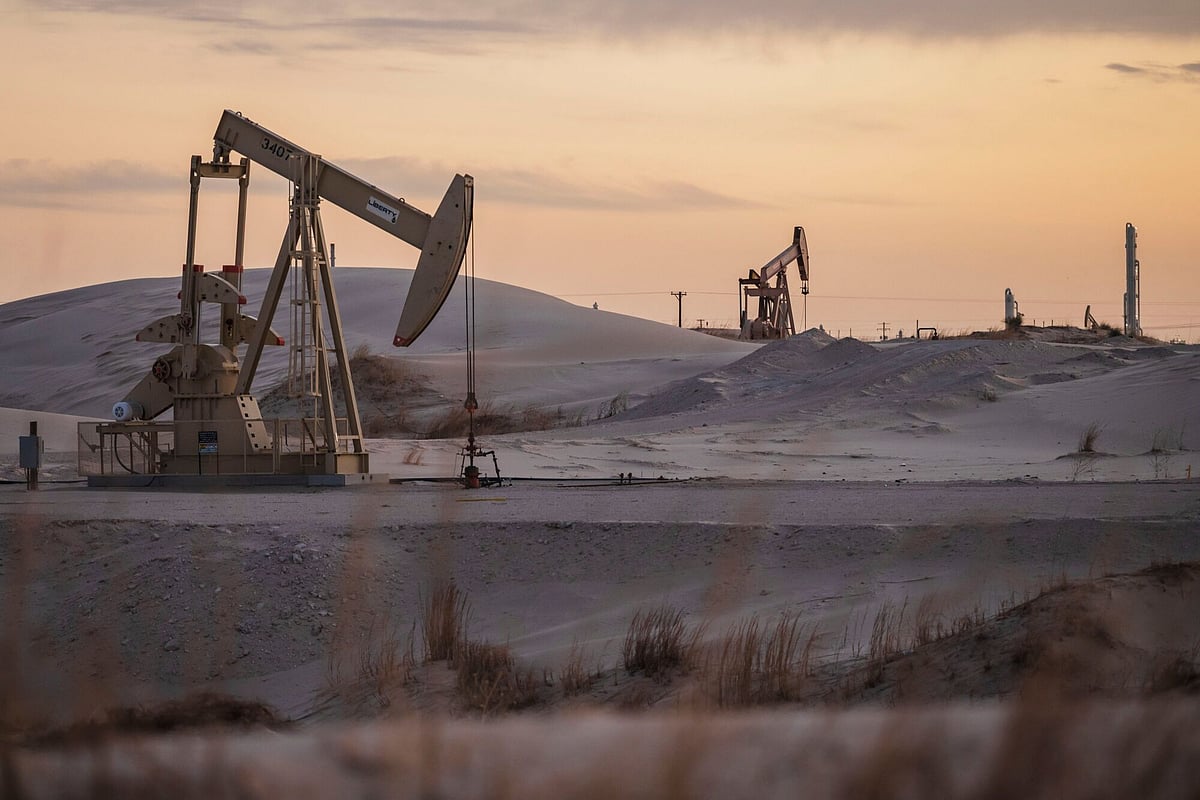
Washington: President Donald Trump wants US oil companies to produce more gasoline and bring down prices at the pump.
But the refiners he is pressing face a problem they cannot easily solve: there is little spare refining capacity to unlock, and building a new refinery would take years and billions of dollars.
That leaves Trump with few immediate options as gasoline prices remain elevated. The war between the US and Iran is not helping either, oil and fuel supplies around the world face disruption.
Trump met this week with executives from major oil and refining companies, including Chevron, Marathon Petroleum, Valero Energy and PBF Energy, urging them to increase refining capacity and boost fuel supplies, as per US media reports.
But US refineries are already operating at exceptionally high rates, according to industry news portal OilPrice.
The bigger obstacle may be even harder to overcome: the price of crude oil itself.
WTI crude was trading around $92 a barrel Monday, while Brent, the global benchmark, was near $97, as markets continued to price in the risk of prolonged disruption from the US-Iran conflict.
For American drivers, that creates a difficult equation.
Higher crude prices raise the cost of making gasoline. Higher refining margins raise the cost further. And building another refinery won't fix either problem anytime soon.
Why not simply build more refineries?
The obvious answer might appear to be adding more refining capacity.
But oil companies are reluctant to spend billions of dollars on facilities that could take roughly five years to design, permit and construct.
By the time a new refinery opens, today's extraordinary refining margins may have disappeared.
Then there's the interplay between economics and tech: Global oil demand is expected to "mature" — and eventually decline greater electric vehicles (EV) adoption kicks in, while fuel-efficiency improves and governments transition toward lower-carbon energy.
Get it: Fast, verified news for FREE ... download the Gulf News app — simply click here
That makes a multibillion-dollar refinery a risky long-term investment based on what could be a temporary shortage.
“Nobody’s going to go out and make a huge multibillion-dollar investment based on three months of record margins,” Robert Campbell, an analyst at Energy Aspects, told The Wall Street Journal.
The economics are particularly challenging in the US, where environmental regulations, permitting requirements and construction costs can make new refining projects exceptionally expensive.
US refiners are already running flat out
There is another reason Trump's request is difficult to fulfill: American refiners have very little unused capacity.
U.S. refinery utilization remained above 95% throughout the summer as refiners responded to strong seasonal fuel demand and shortages in international markets.
The Energy Information Administration reported utilization of about 98% at the end of August, with rates exceeding 100% in some regions because of the way utilization is calculated against nominal capacity.
Patrick De Haan, head of petroleum analysis at GasBuddy, said U.S. refiners had been operating above 95% for much of the summer and had little room to increase production.
In other words, Washington cannot simply order refineries to turn up the dial.
Refineries need maintenance, equipment and downtime. Running facilities at maximum rates for prolonged periods can also increase the risk of breakdowns.
The real problem is global
The US refining squeeze is part of a much larger global problem.
Millions of barrels per day of refining capacity are reportedly offline across Asia, the Middle East and Russia, either because of damage from the conflict, maintenance or other disruptions.
Phillips 66 executive Brian Mandell said in August that roughly 7 million barrels per day of refining capacity in Asia and the Middle East and another 1.4 million barrels per day in Russia were offline.
That amounts to more than 8 million barrels per day — an enormous hole in the global refining system.
The result is unusually strong margins for refiners, known in the industry as crack spreads, because the price of gasoline and diesel has risen relative to the cost of crude.
Chris Griggs of Enverus described the situation as a refining problem rather than simply a crude-oil problem.
That distinction matters.
Even if crude supplies stabilize, gasoline and diesel prices could remain high if there is not enough functioning refinery capacity to turn crude into usable fuel.
US helps keep the world supplied
American refiners have responded by running hard.
US gasoline and diesel exports have risen as refiners take advantage of high international prices and help fill supply gaps created by outages elsewhere.
That has provided an important cushion for the global market.
But it also means some of America's additional refinery output is effectively being pulled into the international market rather than remaining at home.
The United States is therefore simultaneously producing large amounts of fuel and facing high gasoline prices.
That may seem contradictory, but it reflects the interconnected nature of the global oil market.
Hormuz makes everything harder
Then there is the Strait of Hormuz.
The narrow waterway between Iran and Oman is a critical route for crude oil and petroleum products moving from the Persian Gulf to world markets.
The US-Iran war has severely disrupted shipping through the strait, adding a geopolitical premium to crude prices and tightening supplies.
That is particularly significant for American refiners because refiners cannot manufacture cheap gasoline from expensive crude.
Even if a refinery operates at 100% utilisation, its economics are still heavily influenced by the cost of its feedstock.
That is why adding a few more barrels of refining capacity would not necessarily translate into dramatically cheaper gasoline while crude remains near $90-$100 a barrel.
Renewable fuel standard is another flashpoint
At the White House meeting, refiners also reportedly raised concerns about the US Renewable Fuel Standard, which requires refiners and fuel companies to blend specified amounts of biofuels into the nation's fuel supply.
Some refiners argue that compliance costs can increase gasoline prices, particularly for smaller operators.
The issue has become another point of tension between the administration and the refining industry.
But changing the blending rules would not solve the central problem overnight either: the United States and the rest of the world are facing an unusually tight crude and refining market because of disruptions far beyond the control of individual American refiners.
So what can Trump actually do?
In the short term, there are only a few meaningful levers.
The administration can encourage refiners to maximize existing capacity, adjust regulatory requirements, seek additional crude supplies and release or coordinate strategic inventories.
But none provides a permanent solution.
And the single biggest factor in the price of gasoline remains the price of crude.
That means the most effective way to bring prices down could ultimately have little to do with building another US refinery.
It would require the global oil market to stabilise.
Sign up for the Daily Briefing
Get the latest news and updates straight to your inbox
Network Links
GN StoreDownload our app
© Al Nisr Publishing LLC 2026. All rights reserved.