Why reopening Strait of Hormuz will not immediately end strain on trade
Prospect of movement offered relief after weeks of blockage left 1,000 ships stranded
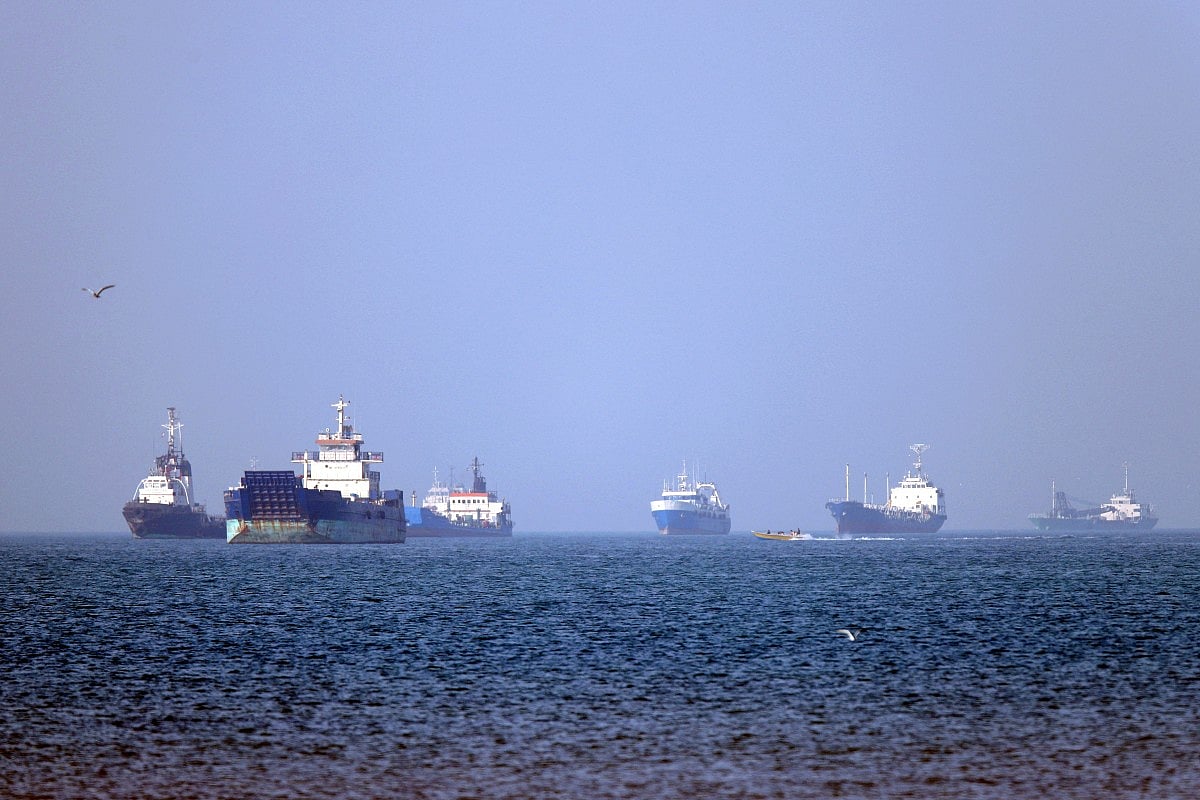
Dubai: Oil prices eased as markets responded to signs that shipping could resume through the Strait of Hormuz, following a US-led effort linked to Donald Trump to guide vessels out of the disrupted waterway. After weeks of blockage that left around 1,000 ships stranded, the prospect of movement has offered immediate relief.
Get updated faster and for FREE: Download the Gulf News app now - simply click here.
That relief, though, reflects expectations rather than reality on the ground. The Strait typically carries close to a fifth of global energy supply, meaning even short-term disruption creates longer-lasting pressure across trade and pricing systems.
Slower, more complex
Even as vessels begin to move, the system they return to has changed, with added layers of coordination, security, and routing complexity affecting timelines. Nigel Green, chief executive of deVere Group, describes the impact as a “latency shock” building across global supply chains.
“Markets are reacting to the idea that ships will start moving again, but the system doesn’t reset instantly. There’s a real latency shock to consider.” Convoys must be coordinated, inspections have increased, and routes are being adjusted, all of which extend transit times.
“All of this adds time, and time is now the pressure point in global trade,” Green says.
“The real disruption goes beyond the oil price. It sits in how long everything takes to move from one point to another.”
Costs rising everywhere
The impact of slower movement is already feeding into costs across sectors that depend on predictable supply chains.
“Every additional hour at sea or waiting clearance feeds into cost structures across industries,” Green says. “These are not isolated effects. They ripple through the global economy and reinforce inflationary pressure at multiple levels.”
Manufacturers face delays in receiving inputs, retailers must adjust delivery expectations, and energy buyers navigate less predictable supply conditions.
More risks to energy flows
At the same time, the broader geopolitical environment continues to shape the outlook. Analysis from Fitch Ratings suggests that while oil flows could gradually normalise in the coming months, risks tied to escalation remain.
“There is a substantial risk of an adverse scenario involving a more prolonged conflict that leaves a persistent deterioration in the security environment with restricted shipping through the strait and a higher oil price risk premium.”
Energy infrastructure across the region offers some resilience, including large oil fields such as Ghawar and pipeline networks that allow partial diversion of crude flows.
Pressure on energy imports
The effects are particularly visible in economies that rely heavily on energy imports moving through the Strait. “Asian emerging markets are vulnrable… given their heavy dependence on oil and gas from the Strait of Hormuz,” Fitch notes. This exposure increases sensitivity to supply disruptions and price volatility, especially if delays persist.
Downstream industries are also beginning to feel the impact of tighter supply conditions. “A shortage of jet fuel is a risk and airlines may reduce their networks in response,” Fitch says, pointing to potential pressure on aviation if disruption continues. Countries with refining capacity may be better positioned to manage supply constraints by processing imported crude domestically.
The combined effect is a trading system that is functioning, but with reduced efficiency and greater uncertainty. “The focus on headline oil prices risks missing the broader story,” Green says. “The cost of moving goods is rising because the system itself has slowed down.”
Reopening the Strait may ease immediate congestion, but it does not restore the speed or predictability that global supply chains previously relied on. The effects of disruption are likely to persist across trade flows, costs, and economic activity even as ships begin moving again.

Sign up for the Daily Briefing
Get the latest news and updates straight to your inbox
Network Links
GN StoreDownload our app
© Al Nisr Publishing LLC 2026. All rights reserved.