'White gold' beneath Zambales? Philippines expands natural hydrogen hunt in high-stakes clean energy drive
New Zambales exploration tests promise of underground hydrogen as clean fuel
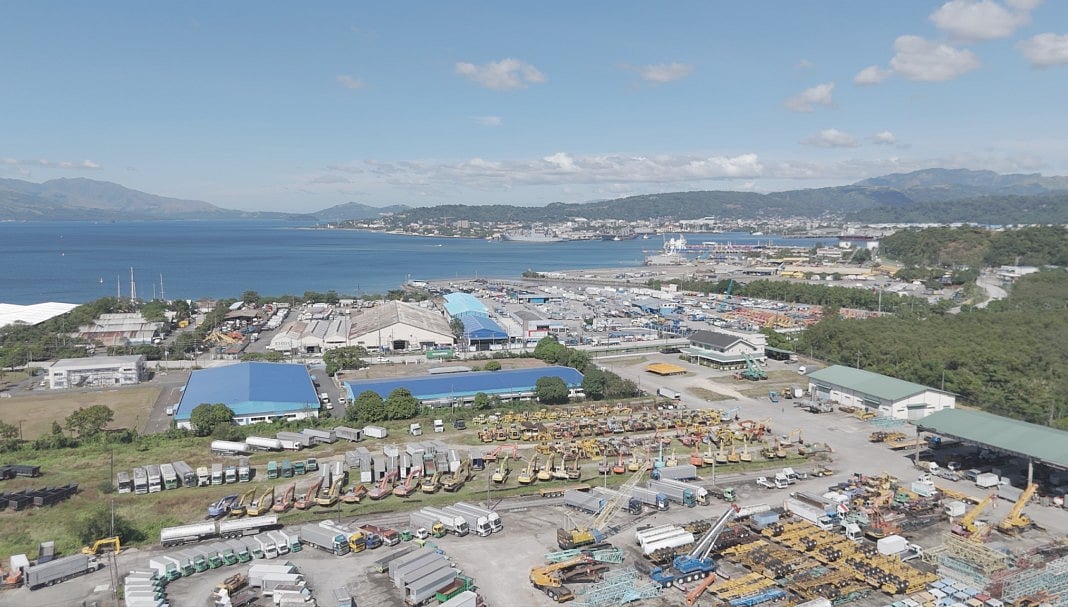
Manila: The Philippine government is accelerating its search for naturally occurring hydrogen, expanding exploration efforts in Zambales after President Ferdinand Marcos Jr. approved a new service contract granting Colorado-based energy company Koloma Inc. additional rights to study the country's underground hydrogen potential.
The agreement allows the US-based firm to conduct further geological studies in Zambales, a province increasingly viewed by scientists as one of Southeast Asia's most promising locations for naturally occurring — or "white" — hydrogen.
Get it: Fast, verified news for FREE ... download the Gulf News app — simply click here
The latest contract marks another step in the government's strategy to determine whether naturally produced hydrogen could become a future domestic source of clean energy alongside geothermal, solar, wind, and natural gas.
The Department of Energy (DOE) announced that Philippine President Ferdinand Marcos Jr signed Service Contract (SC) No. 92, giving Koloma its third natural hydrogen exploration contract in the Philippines.
Why this matters
Unlike conventional hydrogen — which must be manufactured using electricity or fossil fuels — natural hydrogen is generated underground through geological processes over millions of years.
If commercially recoverable deposits exist, they could significantly lower the cost of producing hydrogen fuel because extraction would resemble natural gas production rather than energy-intensive industrial manufacturing.
Supporters say successful discoveries could:
reduce Philippine dependence on imported fossil fuels;
support long-term energy security;
create a new export industry;
help decarbonize heavy industries and transportation.
However, experts caution that commercial production remains uncertain, as only a handful of countries have identified economically viable natural hydrogen resources.
Why Zambales?
Deep beneath the rugged landscape of Zambales, scientists have found something that could reshape the search for a naturally occurring source of clean energy: hydrogen gas emerging continuously from the Earth's crust at a rate rarely measured anywhere in the world.
Scientists have long been interested in western Luzon because of its ophiolite formations — large sections of Earth's mantle that were pushed to the surface millions of years ago.
These ultramafic rocks can undergo serpentinisation, a natural chemical reaction between water and iron-rich minerals that releases hydrogen gas.
The same geological conditions have attracted research projects in:
Mali
Albania
Oman
Australia
parts of the United States
At the Nagsasa seep in San Antonio, Zambales, researchers recorded at least 808 tonnes of natural hydrogen escaping to the surface each year.
The figure makes the site one of the most prolific hydrogen-emitting ophiolite systems ever measured and has placed the Philippines on the map of a rapidly developing field of energy research.
The discovery is attracting international attention. Scientists from the British Geological Survey (BGS) and the Philippine Nuclear Research Institute (PNRI) have teamed up to investigate how hydrogen is generated inside the rocks of the Zambales ophiolite — this time at the atomic scale.
Their latest work has taken Philippine rock samples to the Diamond Light Source, Britain's national synchrotron facility at Harwell in Oxfordshire. There, scientists used extremely bright X-rays to examine the chemical and structural processes involved in hydrogen generation.
Diamond's brighter-than-the-Sun light allows researchers to examine materials at a level of detail that conventional laboratory techniques cannot easily provide.
Natural hydrogen 'factory'
Unlike hydrogen produced industrially, natural or geologic hydrogen is generated through processes occurring naturally within the Earth's crust.
In Zambales, the process is associated with an ophiolite — a piece of ancient oceanic crust and upper mantle that was pushed onto land through tectonic activity.
The Zambales rocks contain iron- and magnesium-rich ultramafic minerals. When water interacts with these rocks, chemical reactions can produce molecular hydrogen.
Scientists are particularly interested in understanding what happens to elements such as iron and chromium during those reactions, and how the resulting hydrogen moves through fractures and porous zones before reaching the surface.
The 2025 study that identified the extraordinary hydrogen flux found that the Nagsasa seep's emissions were continuous, rather than the intermittent hydrogen "fairy circles" reported in some other locations.
Researchers said the measurements could indicate that the surface seep is being supplied by a deeper underground hydrogen
Koloma believes these conditions indicate that the area may hold significant — or commercial quantities — of natural hydrogen resources.
What Koloma is doing
Koloma, a Denver-area startup backed by major technology and climate investors, specialises exclusively in exploring naturally occurring hydrogen.
Rather than drilling immediately for production, the company first conducts:
geological mapping
geochemical sampling
seismic surveys
subsurface modeling
exploratory drilling
Only after sufficient evidence would commercial extraction become possible.
The new Philippine contract expands these exploration activities.
Not the first contract
The latest agreement is Koloma's third service contract in the Philippines, signaling increasing confidence by both the company and the DOE in the country's geological potential.
The government has gradually opened exploration areas as part of its broader push to diversify future energy sources.
Officials say exploration remains in its early stages and no commercial reserves have yet been confirmed.
Global race for "white hydrogen"
Natural hydrogen has become one of the fastest-growing frontiers in clean-energy exploration.
Until recently, hydrogen strategies focused on:
How hydrogen is classified
Gray hydrogen: Natural gas with high carbon emissions
Blue hydrogen: Natural gas with carbon capture
Green hydrogen: Water electrolysis using renewable electricity
White (natural) hydrogen: Naturally occurring underground deposits
The discovery of commercial natural hydrogen fields could reshape the economics of hydrogen because production costs may be substantially lower than manufactured hydrogen.
Major energy companies, venture capital firms, and governments have begun investing heavily in exploration.
Potential benefits for the Philippines
If commercially viable deposits are discovered, the Philippines could eventually:
strengthen energy independence;
reduce oil and LNG imports;
develop a new clean-energy industry;
attract additional foreign investment;
support future hydrogen-powered transport and manufacturing.
However, industry experts stress that exploration success does not guarantee commercial production, which depends on reservoir size, flow rates, extraction costs, environmental safeguards, and market demand.
Challenges ahead
Several hurdles remain before natural hydrogen can become a commercial industry in the Philippines:
confirming sufficient underground hydrogen volumes;
developing extraction technologies;
building transportation and storage infrastructure;
establishing environmental regulations;
proving long-term economic viability.
Many natural hydrogen projects worldwide remain in the exploration stage.
What's next?
Koloma is expected to continue geological surveys and exploratory work under Service Contract No. 92.
If promising hydrogen concentrations are identified, the project could move into exploratory drilling and resource evaluation before any production decisions are made.
For the DOE, the expansion reflects a broader effort to position the Philippines as an emerging player in next-generation clean energy.
Whether Zambales ultimately becomes a commercial source of "white hydrogen" remains uncertain, but the latest contract underscores growing international interest in the country's unique geology — and in a resource that some scientists believe could transform the global hydrogen economy.
Sign up for the Daily Briefing
Get the latest news and updates straight to your inbox
Network Links
GN StoreDownload our app
© Al Nisr Publishing LLC 2026. All rights reserved.