Philippines bets billions on hydropower to power AI era, cut fossil fuel dependence
From pumped-storage to battery-backed hydro plants, race on to build grid for digital era
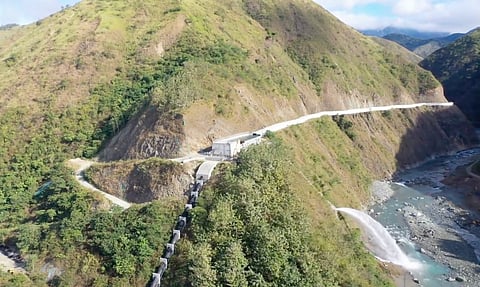
Manila: The Philippines is making one of its biggest bets yet on renewable energy.
Billions of dollars are being poured into hydropower, pumped-storage facilities and grid-scale battery systems as Southeast Asia's fastest-growing digital economy strains an aging electricity network.
Most of the money flowing are from the private sector.
Get updated faster and for FREE: Download the Gulf News app now - simply click here
Over the past several months, the government and private sector have unveiled a wave of investments that could reshape the country's energy landscape.
This ranged from "green loans" financing giant pumped-storage power projects to new battery energy storage systems designed to stabilise the grid as AI, cloud computing and advanced manufacturing drive electricity demand to new highs.
The flurry of projects comes as President Ferdinand Marcos Jr.'s administration pushes the drive for energy security, reduce dependence on imported fossil fuels and meet ambitious renewable energy targets while preparing the country's grid for an increasingly electrified economy.
Age of Electricity: The IEA projects global electricity demand to grow by an average 3.6% annually from 2026 to 2030, adding about 1,100 terawatt-hours (TWh) of new demand every year—roughly 50% more annual growth than the previous decade. The increase is being driven by industrial activity, electric vehicles, space cooling and data centers, among other uses.
"These projects will help assure the security of the country's power grid and reduce our reliance on fossil fuel," independent directors of First Gen Corp. said this week after reaffirming support for the company's ₱61.87-billion investment in two pumped-storage hydropower projects.
A record green financing package
Leading the investment surge is Prime Infrastructure Capital Inc., controlled by billionaire Enrique Razon Jr., which secured what the company described as one of the largest green infrastructure financing packages in Philippine history.
The financing totals approximately ₱273.5 billion ($5 billion) and will fund two massive pumped-storage hydropower projects:
the 1,400-megawatt Pakil Pumped-Storage Project in Laguna; and
the 600-megawatt Wawa Pumped-Storage Project in Rizal.
The package combines ₱214.87 billion from a syndicate of Philippine banks with a $1.05-billion standby facility backed by major Japanese lenders, including MUFG Bank and Mizuho Bank, underscoring growing international confidence in the country's clean-energy transition.
The financing reflects "the confidence of local and international banks in Prime Infra's capability to deliver large-scale, critical infrastructure," as per the Manila-based BusinessWorld.
The investment is a vote of confidence in the Marcos administration's economic and energy reform agenda.
Amazon Web Services (AWS) executives met President Ferdinand Marcos Jr. on July 8 to discuss the company's proposed investment in the Philippines, including plans to establish an AWS Region that could bring up to $5 billion in investments over the next 15 years. The proposed cloud infrastructure would support AI, e-commerce and digital services while bolstering the country's position as a regional digital hub and creating thousands of high-value jobs.
Why pumped storage matters
Unlike conventional hydropower plants that simply generate electricity from flowing water, pumped-storage facilities function as giant rechargeable batteries.
When electricity demand is low — or when solar and wind farms produce excess power — the facilities use surplus electricity to pump water uphill into an upper reservoir.
When demand surges, particularly during evening peak hours, the stored water is released back through turbines to generate electricity within minutes.
The Philippines' first and only PSHS, the Caliraya-Botocan-Kalayaan facility, has been energising the Luzon grid in 1983.
The technology has become increasingly important worldwide as countries add more intermittent renewable energy to their grids.
First Gen expands its storage ambitions
First Gen has doubled down on that strategy. Its board has approved a ₱61.87-billion investment for a 33% stake in Prime Infra's two flagship pumped-storage projects.
According to the company's independent directors, the investments are projected to generate approximately ₱16 billion in annual earnings while strengthening national energy security.
Construction has already begun after the projects reached financial close, secured regulatory approvals and signed offtake agreements.
The government has designated both facilities as Energy Projects of National Significance, allowing faster regulatory processing.
Pantabangan enters a new chapter
Meanwhile, First Gen is expanding another major energy-storage project.
On July 6, the National Irrigation Administration (NIA) authorised the company to develop the 120-megawatt Aya PSHS in Pantabangan, Nueva Ecija, under a 25-year renewable agreement.
Unlike the existing Pantabangan Hydropower Station — which generates electricity from reservoir releases for irrigation and downstream power production — the Aya project will recycle water between reservoirs, allowing electricity to be stored and dispatched when demand spikes.
The project will complement First Gen's existing 132-MW Pantabangan-Masiway and 165-MW Casecnan hydroelectric plants. Aya is scheduled to begin commercial operations by 2030.
"We reaffirm our shared commitment to advancing sustainable development, strengthening energy security, and maximising the benefits of our water resources," NIA Administrator Eduardo Guillen said following the signing of the agreement.
First Gen Senior Vice President Dennis Michael Gonzales said facilities capable of storing energy are becoming increasingly important for maintaining grid stability.
"More facilities with storage and highly flexible operating parameters are key to stabilise the electricity grid," Gonzales told Philippine News Agency.
Solar generation has also expanded rapidly in recent years, increasingly needs flexible energy storage capable of balancing fluctuations in supply and demand.
As of July 2026, the Philippine Department of Energy (DOE) has awarded more than 1,000 renewable energy service contracts with a combined potential capacity exceeding 93 gigawatts (GW) across all renewable technologies.
Solar accounts for the largest share of these projects. The DOE's latest published list shows the total potential capacity of awarded solar projects is approximately 36–37 GW (around 36,000–37,000 MW).
This figure refers to projects that have been awarded Renewable Energy Service Contracts (RESCs) or are under development (it is not the amount already generating electricity).
Batteries join solar, hydro network
PSHS is no longer the only technology helping stabilise the grid.
SN Aboitiz Power (SNAP) announced financial close this week for two additional 40-megawatt Battery Energy Storage System (BESS) projects in Benguet.
The batteries will be installed at the Binga and Ambuklao hydroelectric plants, bringing SNAP's total battery capacity in operation and under construction to 160 MW.
Together with existing battery facilities at the Magat Hydroelectric Plant, the projects will provide ancillary services that help maintain grid frequency and reliability.
Unlike power plants that generate electricity continuously, battery systems inject power almost instantly when supply briefly falls below demand, preventing voltage and frequency fluctuations that can trigger outages.
The contrast: Progress and paralysis
Yet while billions flow into new hydro investments, one of the country's oldest renewable-energy assets remains stalled.
The century-old Asin Hydropower System in Benguet, built between 1921 and 1936, remains idle after the Baguio City Council rejected a ₱1.27-billion proposal to rehabilitate the historic facilities.
The dispute — centred on jurisdiction, indigenous land rights, regulatory approvals and overlapping government authority — has become a cautionary example of the governance challenges confronting renewable-energy development in the Asian country.
The contrast could hardly be sharper.
While the 120-megawatt (MW) Aya pumped-storage facility in Pantabangan (Nueja Ecija) the 1,400-MW Pakil PSHS project in (Laguna) and 600-MW Wawa project (Rizal), move toward becoming next-generation energy-storage hubs, Asin illustrates how even relatively small renewable projects can remain trapped by legal and institutional complexities.
Energy security
Electricity demand in the Philippines is expected to rise steadily over the coming decade as manufacturing expands, electric vehicles become more common and energy-intensive industries — including AI-powered data centers and cloud computing facilities — proliferate.
Grid operators increasingly warn that renewable generation alone is not enough.
Southeast Asia, including the Philippines, is expected to be one of the fastest-growing electricity markets. The International Energy Agency (IEA) says Southeast Asia will be among the major contributors to rising electricity demand through 2030 as economic growth, industrialization and electrification accelerate across the region.
Data centres and AI are emerging as major new sources of electricity demand.
According to the IEA, artificial intelligence is expected to drive a significant increase in electricity consumption by data centers over the coming decade, making them one of the fastest-growing sources of power demand globally.
The Philippines is already seeing rising peak electricity demand.
The National Grid Corporation of the Philippines (NGCP) reported that Luzon's peak demand reached 12,467 megawatts in early March 2025, while the Department of Energy forecast a 2025 Luzon peak of 14,769 MW, about 5.4% higher than the 2024 peak.
The system requires large-scale storage capable of shifting electricity from periods of abundant supply to times of peak demand.
For decades, hydropower was viewed primarily as a source of renewable electricity.
Now it is increasingly valued as infrastructure that stores energy, balances the grid and enables the broader transition toward cleaner power.
For the Philippines, that shift may prove as significant as the dams themselves.


