Philippines: Why a century-old hydropower system that once powered Baguio remains silent
Jurisdiction clash with Tuba stalls bid to revive century-old Asin plants
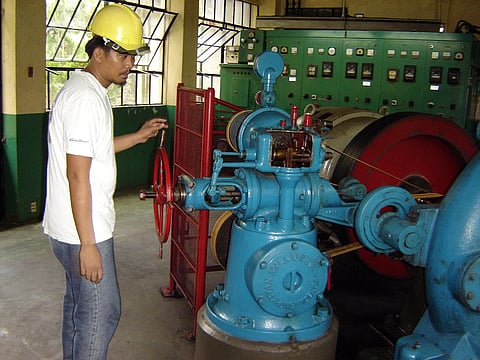
Manila: A century after it helped electrify Baguio City, the Philippines' summer capital, the historic Asin Hydropower System remains idle.
Now, it's caught in a web of legal disputes, regulatory hurdles and competing claims over land and water.
The latest setback came this week when the Baguio City Council rejected a ₱1.27-billion unsolicited public-private partnership (PPP) proposal by Repower Energy Development Corp. (REDC) to rehabilitate and modernise the three 100-year-old hydroelectric plants in neighbouring Tuba, Benguet.
Get updated faster and for FREE: Download the Gulf News app now - simply click here
It's a test case for Philippine renewable energy.
Built between 1921 and 1936 during the US occupation of the Philippines, the plant has been idle since 2012.
₱1.27-billion hydropower plant rehab: The Philippines' Repower Energy Development Corp (REDC) proposed a rehabilitate-operate-transfer (ROT) project to revive the century-old Asin hydroelectric power plants in Baguio City under a public-private partnership (PPP) setup. Through its subsidiary, Baguio Asin Hydropower Corp., the company sought to overhaul and revive the three facilities and increase their generation capacity from 4.3 megawatts (MW) to 9.4 MW.
The Baguio City Council's rejection of the latest setback underscores how legal jurisdiction, regulatory approvals and community consent — beyond engineering, technology and funding — can stall renewable energy investments in the Philippines.
Not only does it knock off job creation, it robs the country of cheaper power.
The decision has renewed questions over whether one of the Philippines' oldest renewable energy facilities can ever be brought back online.
₱1.27-billion hydropower revival rejected: The Baguio City Council rejected Repower Energy Development Corp.'s unsolicited PPP proposal to rehabilitate the century-old Asin Hydropower System, delaying efforts to revive one of the Philippines' oldest renewable energy facilities.
Jurisdiction dispute stalls project: The proposal was turned down because revised engineering plans extended into neighbouring Tuba, Benguet, prompting the council to rule that the project should instead be reviewed by Tuba's local government. Project proponent Repower insists the changes were only minor technical adjustments.
DOE permits under scrutiny: The Department of Energy has raised questions over whether Repower's hydropower service contracts cover new power facilities rather than the rehabilitation of the existing Asin plants, creating another regulatory hurdle before work can proceed.
Indigenous rights become a key obstacle: Indigenous communities in Tuba say no redevelopment can proceed without "Free, Prior and Informed Consent (FPIC)" under the Indigenous Peoples' Rights Act. Land ownership and water rights remain unresolved, adding another layer of complexity.
What are the Asin hydropower plants?
The Asin Hydropower System consists of three mini-hydroelectric plants built between 1921 and 1936 during the American occupation, built even before the mighty Hoover Dam was built (1931 and 1936).
Today, although the facilities are owned by the Baguio City government, they are physically located in the municipality Tuba, Benguet (once a barrio under Baguio).
This creates an unusual governance arrangement. For years, it has complicated redevelopment efforts.
The plants originally generated about 4.3 megawatts (MW) of electricity and supplied power to Baguio for decades before ceasing operations in 2012 after their operating permits expired and changes in national energy regulations required fresh approvals.
Understanding the dispute
The legal and property issues surrounding Baguio City's Asin Hydropower Complex have been known for years.
They underscore the difficulties that have repeatedly delayed efforts to restore the aging renewable energy facilities.
In January 2022, the Baguio-based Herald Express reported that the city government was working to resolve longstanding ownership, compensation and jurisdictional disputes before inviting private investors to rehabilitate and modernise the three mini-hydropower plants.
Back then, City Administrator Bonifacio dela Peña said ownership of Plant No. 2 was no longer in question after a court ruling affirmed Baguio City's ownership of the land where the facility stands.
The more complicated issues involved Plants No. 1 and No. 3.
Nearly all — about 99% — of the land occupied by Plant No. 1 had been covered by tax declarations filed by the Palos family, requiring negotiations to secure continued use of the property, Herald Express reported.
Dela Peña said early discussions suggested the family was willing to allow the city to continue operating the facility, although formal arrangements still needed to be finalised.
For Plant No. 3, the challenge stemmed from overlapping local government jurisdictions. The site lies within the municipality of Tuba, Benguet, whose officials sought a share of future revenues or other economic benefits should the hydropower facilities resume commercial operations.
The city also ordered a "social scoping study" to determine whether additional residents or landowners affected by the hydropower project's transmission lines had compensation claims that had not been identified during earlier right-of-way (ROW) settlements.
The review was intended to identify any remaining stakeholders before the city proceeded with plans to seek private-sector participation.
Given the overlapping jurisdiction between Baguio City and Tuba, indigenous community concerns and right-of-way compensation issues, the rehabilitation of the Asin Hydropower Complex has remained far more complex than a typical infrastructure rehabilitate-operate-transfer (ROT) deal under the updated PPP law.
Why was the latest proposal rejected?
Baguio City officials, led by Mayor Benjamin Magalong, said the proposed rehabilitation no longer matched the original project because engineering revisions — including pipeline and transmission alignments — extended into areas under Tuba's jurisdiction.
As a result, the city council concluded that the project should instead be submitted to the Tuba municipal government for evaluation.
Repower Energy disputed that interpretation, saying the revisions were only minor engineering realignments needed to address technical constraints and did not fundamentally alter the project.
Company officials also said they were not given an opportunity to explain the changes before the council voted to reject the proposal.
What's the role of the Department of Energy?
Another issue involves the Department of Energy (DOE).
According to Baguio council members, the DOE informed Tuba officials that hydropower service contracts issued to Repower appeared to cover new hydropower facilities, rather than the rehabilitation of the existing Asin plants.
That distinction could affect the project's regulatory compliance and may have to be resolved before any redevelopment can proceed.
Repower has said it secured the DOE service contracts after filing applications in 2023 and maintains that the project remains "legally viable".
Why is Tuba opposing the project?
Beyond jurisdictional questions, indigenous peoples' rights have become a central issue.
The hydroelectric facilities are located within Tuba, where indigenous communities have repeatedly asserted that any redevelopment must comply with the Indigenous Peoples' Rights Act, including obtaining Free, Prior and Informed Consent (FPIC) before work begins.
Local elders have consistently maintained that no project should proceed without meaningful consultation.
"We will not allow anyone to develop the hydro plants without passing through the mandatory free, prior and informed consent pursuant to existing laws, rules and regulations," indigenous leaders have said.
Baguio officials also conducted an inventory of surrounding landowners after concerns were raised over ancestral land and water rights.
They found differences between landholders identified by the city and those with whom the developer had been negotiating.
Why does the project matter?
Repower's proposal aimed to increase the plants' generating capacity from 4.3 MW to 9.4 MW, more than doubling electricity output while restoring a long-idled renewable energy asset.
The company also envisioned shifting the facilities away from supporting domestic water operations toward dedicated power generation.
The project aligns with the Philippines' broader push to expand renewable energy and attract private investment under the government's PPP programme.
Have there been previous attempts?
Yes.
The Asin Hydropower System has attracted private-sector interest for years.
Earlier proposals involving developers such as Kaltimex Energy failed to move forward, while negotiations with Repower continued for nearly two years before the latest rejection.
The city council's decision marks another setback for efforts to revive the historic facilities.
What happens next?
Repower may still file a motion for reconsideration with the Baguio City Council to address concerns over jurisdiction, regulatory compliance and engineering revisions.
Any future proposal would also likely require closer coordination with the municipality of Tuba, the Department of Energy, the National Commission on Indigenous Peoples (NCIP), and affected indigenous communities.
Why it matters
The Asin Hydropower dispute illustrates the challenges facing renewable energy development in the Philippines.
Even projects with historical significance, government ownership and private financing can become entangled in permitting, overlapping jurisdictions, regulatory interpretations and indigenous rights.
This project illustrates how even small scale energy projects can be entangled in jurisdictional disputes between barangays, towns/cities and provinces.
As the Manila government races to expand renewable energy capacity, the century-old Asin hydropower plants illustrate a hard truth: the biggest barriers to clean energy are often not turbines or financing, but overlapping jurisdictions, regulatory uncertainty and competing stakeholder interests.
That challenge comes as the Philippines faces steadily rising electricity demand, driven by industrial growth, economic expansion and a new generation of energy-intensive data centres powering the AI revolution.
₱5.21 trillion renewable energy projects: Approved investments in Philippine renewable energy (RE) have surged to record levels. Under the government's fast-track Green Lane Initiative, Board of Investments (BOI)-certified RE projects have reached ₱5.21 trillion ($84.8 billion) across 179 projects. For early 2026, energy projects (primarily RE) dominated approvals, securing ₱20.4 billion in just the first two months. More RE projects means abundant, and cheaper, power for all.
What's the solution?
There's a broader lesson: The Philippines is actually blessed with abundant natural and renewable energy (hydro, solar, wind and geothermal) resources — and now corporate funding, too — to harness such strategic projects.
Investors continue to express interest in developing them.
What the country lacks, in the Asin hydropower case, is institutional coordination.
A realistic solution is not a single law or agency, but better coordination even before projects are launched. The Asin case shows that technology, engineering and financing can move faster than governance.
Here are five practical reforms/solutions that could help untie this Gordian knot:
#1. Treat aging hydropower as strategic national infrastructure — every additional renewable energy source boosts national energy security
Facilities like Asin already exist. Reviving them typically has a smaller environmental footprint than building entirely new such projects.
This is the first key stop: The government must designate legacy hydropower rehabilitation projects as strategic energy infrastructure, allowing for accelerated — not weakened — review processes while maintaining environmental and indigenous rights safeguards. This is entirely possible when all stakeholders are on the same page.
#2. Create a "one-stop shop" for renewable energy permitting
Instead of requiring developers to navigate separate approvals from local governments, the Department of Energy (DOE), the National Commission on Indigenous Peoples (NCIP), DENR and other agencies, the government could establish a single interagency permitting process for renewable energy projects.
This would allow jurisdictional conflicts and regulatory issues to be identified early, rather than after millions of pesos have already been invested in feasibility studies and engineering surveys.
#3. Clarify ownership and jurisdiction before bidding projects
The Asin dispute demonstrates that uncertainty over who has authority —the Baguio City government, Tuba municipality or other stakeholders — can derail projects.
Before any PPP is offered, government agencies should complete a comprehensive legal and cadastral review defining:
property ownership;
jurisdictional boundaries;
water rights;
existing permits; and
regulatory responsibilities.
That would reduce legal uncertainty for both investors and host communities.
#4. Engage indigenous communities from the start
Rather than treating Free, Prior and Informed Consent (FPIC) as a regulatory hurdle at the end of the process, developers should make indigenous communities partners from the outset.
Early consultation can identify concerns over ancestral land, water resources and environmental impacts before engineering plans are finalized, reducing the risk of costly disputes later.
#5. Establish a Renewable Energy Mediation Council
Many renewable projects stall because disputes fall between multiple government agencies.
An independent mediation body composed of representatives from the DOE, NCIP, Department of the Interior and Local Government (DILG), local governments and affected communities could help resolve conflicts before they escalate into litigation or project cancellations.
The dispute resolution mechanism mandates courts to resolve land valuation disputes quickly, while extending the law's right-of-way acquisition rules to qualified private entities and PPPs.
#6. Use ARROW Act alongside relevant laws
The new ARROW Act (Republic Act No. 12289), signed into law in September, covers hydropower projects. Because it expanded the Right-of-Way Act, the law applies to key power sectors, enabling authorised developers of energy infrastructure (including power generation and distribution) to streamline the land acquisition process, based on clear valuation, dispute resolution and dispute resolution mechanisms under the new law.
Under RA 12289, right-of-way acquisition applies not only to national government projects but also to those of government-owned and -controlled corporations (GOCCs) and private entities providing public services such as electricity, water, transportation and other public services.


Broader challenge
Although the Asin project consists of relatively small renewable energy facilities, it has become a huge case study in the legal, regulatory and social challenges that can inordinately delay energy projects in the Philippines despite strong government support and private-sector interest.
The stalled Asin rehab underscores a broader challenge confronting the Philippines: whether its institutions can keep pace with its economic ambitions and deliver the infrastructure needed to compete with its Asean regional peers.


