$2.16 trillion power boom: Who's investing, where the money is going —and why it matters
Investors pivot to electricity as clean energy spending more than doubles oil and gas
Fossil fuels remain important. They power much of the world.
For decades, every geopolitical crisis — from Middle East wars to supply disruptions in the Strait of Hormuz — has reinforced one assumption: when energy security is threatened, the world inevitably returns to oil and gas.
Now, figures tracked by Abu Dhabi-based Irena and the International Energy Agency (IEA) suggest it's going another way.
According to the IEA World Energy Investment 2026 report, investment in clean energy hit $2.16 trillion in 2025 – more than double the $1.01 trillion invested in fossil fuels, including oil, natural gas and coal.


India and China are leading the charge.
India is leading with a $300 billion energy transition plan, hitting a significant milestone with its rapid ramp in renewable energy generating capacity.
As of April 2026, the subcontinent has achieved over 50% of its installed electricity capacity from non-fossil sources — reaching this milestone five years ahead of its 2030 Paris Agreement target.
China commands unrivalled dominance in electrification: renewables, EVs and critical minerals (apart from supply chains, software, high-tech). China is driving the unprecedented green revolution: its EV and energy storage systems lead the world, thanks to its ability to hyperscale new-energy system. China now accounts for 80% global battery production.
China's cumulative solar fleet grew from ~253 GW at end-2020 to ~887 GW at end-2024, taking China’s share of the global solar fleet from ~35% (2020) to ~48% (2024), as per Irena data.
By comparison, the US and Europe also grew substantially, but much less quickly in absolute GW terms.
The US rose from about 75 GW to ~176 GW (from 2020 to 2024); Europe grew from ~157 GW to ~336 GW. China's key advantage in this space: It produces 95% of global polysilicon/ingots, enabling production and exports, driven by Wright's Law.
By 2030, China's solar output could rival global nuclear. It's possible the world would lag without a similar scale, according to
WRIGHT'S LAW: Wright’s Law is a forecasting principle stating that for every cumulative doubling of units produced, the cost of manufacturing will fall by a constant percentage (the "learning rate"). Pioneered in 1936 by aeronautical engineer Theodore P. Wright, it quantifies the concept of "learning by doing".
Global energy pivot
The milestone underscores a profound shift in global energy markets.
In the global capitalist order — it’s money and investments, not political rhetoric — that’s increasingly fanning the wave of the future.
Industry tracker Ember reported that, based on 2025 power generaiton data, renewables are displacing fossil fuels in the "wider energy system" (i.e. transport, industry, buildings).
At first glance, the trend appears counterintuitive.
The Middle East has endured months of heightened tensions, including attacks on energy infrastructure, threats to close the Strait of Hormuz, and uncertainty over one of the world's most critical oil shipping lanes.
Traditionally, such events would have triggered a surge in investment in oil and gas production elsewhere.
It did, to a certain extent, especially in the Americas (notably the US, Canada and Brazil) and Europe.
To say the world needs more electricity is a massive understatement: 655 million are still living without electricity, according to a UN report.
Governments are increasingly viewing solar farms, wind parks, hydro-power, geothermal, battery storage, modern electricity grids not merely as climate initiatives, but as practical and strategic assets that reduce dependence on imported fuels and vulnerable maritime chokepoints.
Every geopolitical shock serves as a reminder that domestically generated electricity from renewable sources is insulated from conflicts that can disrupt global oil and gas supplies.
Money follows power
The clearest evidence of this transition is where investors are placing their bets.
The IEA projects that solar power alone will attract around $365 billion in investment, making it one of the largest recipients of global energy capital.
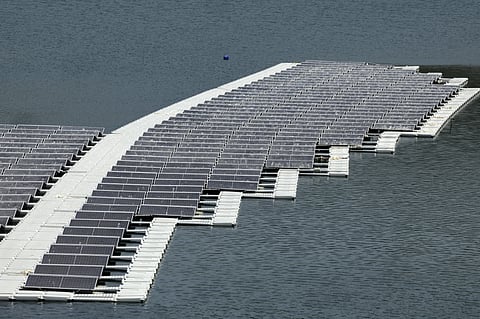
Spending on electricity transmission and distribution networks is also accelerating as countries modernise aging grids to accommodate or extend them to hook up to renewable generation sites, often in remote areas (or offshore, in the case of floating wind turbines or solar panels).
Today, more than 70% of global investment in the power sector flows into low-emission technologies, including renewable energy, battery storage and electrification.
That represents a dramatic reversal from previous decades, when fossil fuel extraction dominated global energy spending.
Energy transitions are ultimately driven not by policy declarations but by financial decisions.
In Africa, investors are allocating capital for renewables. There' an expection of long-term returns. Increasingly, across the continent, those returns are found in electricity rather than combustion.
Africa’s solar energy transition is not only continuing but is also ramping up, according to the Global Solar Council.
In 2025, Africa recorded its fastest-ever growth, adding roughly 4.5 gigawatts (GW) of new solar capacity, a 54% year-on-year growth that signals a full-blown energy transition is underway, according to the Global Solar Council (GSC).
Energy independence
The economics of renewable energy have also evolved. And it’s not like they’re new.
From decentralised, rudimentary uses (like mediaeval watermills and ancient wind sails) into highly efficient solar and wind power plants, renewable energy has evolved.
Energy independence has also become a national security concern.
Driven by dramatic drops in manufacturing costs (attributed by economists to “Wright’s Law”, or the “learning curve effect”, i.e. a notable reduction in per-unit cost for every doubling of production run), grid-scale integration, and supportive policies, modern systems are increasingly cheaper than fossil fuels while producing far fewer greenhouse gas emissions.
Solving intermittency
The biggest challenge for renewables: intermittency and grid integration.
Because power generation from sources like wind and solar fluctuates with the weather, it cannot be effortlessly dialed up and down to match peak electricity demand.
Annual renewable capacity additions more than doubled, rising from roughly 280 GW in 2020 to about 700 GW in 2024, as per IEA data.
And unlike oil and gas, renewable resources such as sunlight, wind and hydropower do not require continuous fuel imports.
The biggest challenge for renewables: capital, grid integration and permitting.
They require massive, capital-intensive investments in grid modernisation and utility-scale battery storage to ensure a stable, continuous power supply.
Investments in these solutions are now ramping up. Once infrastructure is built, operating costs are relatively stable because the primary energy source is effectively free.
Though up-front costs are high, this has transformed renewable energy into a tool of energy independence.
Countries without significant fossil fuel reserves can reduce exposure to volatile global commodity markets by generating electricity from domestic resources.
In an era marked by sanctions, wars and disrupted shipping lanes, that advantage has become increasingly valuable.
Rather than slowing the energy transition, geopolitical instability is reinforcing its strategic appeal.
Fossil fuels, especially coal, remain important. The transition does not mean fossil fuels are disappearing — but the investment scene is certainty shifting.
Coal continues to play a significant role in parts of Asia, while natural gas remains an important transition fuel in many economies.
Developing countries also face financing challenges that limit the pace of renewable deployment.
Nevertheless, the broader investment trend is unmistakable.
The IEA expects global upstream oil investment to fall below $500 billion in 2026, marking a third consecutive year of decline. Meanwhile, clean energy continues attracting a growing share of global capital.
History shows that technological transitions rarely occur overnight. Coal remained widely used long after oil became dominant, and conventional cameras persisted for years after digital photography emerged.
What matters is not whether incumbent technologies continue to exist, but where new investment is flowing.
Turning point
The latest investment data suggests the global energy transition has moved beyond environmental aspirations into an economic reality.
Faced with geopolitical uncertainty, volatile oil markets and growing concerns over energy security, governments and investors are increasingly choosing electricity over hydrocarbons.
The massive capital required by this transition shows in the data, money is going not only to renewable power generation but also grid modernisation and utility-scale battery storage to ensure a stable, continuous power supply.
Each new solar farm, battery factory, transmission line, hydropower and offshore wind project represents a long-term investment in an energy system less dependent on imported fuels and less exposed to geopolitics.
If investment trends show anything, the message is becoming increasingly difficult to ignore.
The world's biggest energy bet is on electricity — and the transition is accelerating precisely because geopolitical instability has made energy independence more practical than ever.
TIMELINE
2023 marked a turning point, with global additions jumping nearly 50% year over year to a record 510 GW, the fastest growth in more than two decades.
Solar PV has become the dominant solution, accounting for about three-quarters of new renewable capacity in 2023 and nearly 80% of projected growth through 2030. Wind remains the second-largest contributor.
China has led global expansion, installing as much solar PV in 2023 as the entire world installed in 2022, while also posting a 66% increase in wind capacity additions.
According to the IEA, the world is expected to add more renewable capacity between 2023 and 2028 (about 3,700 GW) than was installed during the previous century of commercial renewable power development.
Global capacity additions have increased every year, with solar PV driving most of the expansion due to declining costs, supportive government policies, and energy security concerns.
Even with record deployment, international agencies say annual growth must continue accelerating to meet the global goal of tripling renewable energy capacity by 2030.


