One in every 12 people still has no electricity — and time is running out
655 million people still living without electricity: Sub-Saharan Africa left in the dark
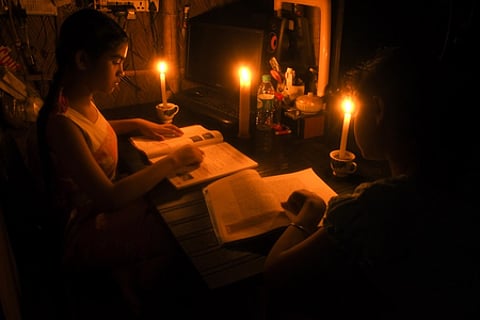
Amid the Mideast crisis, driving energy insecurity and affordability for a huge part of humanity, 655 million people globally still lack access to electricity, and 2 billion use polluting fuels and technologies for cooking putting their health and well-being at risk, according to a new report.
That's one in every 12 inhabitants of the planet living in the dark, despite real abundance, ramped up food production and massive strides in technology.
Sub-Saharan Africa bears a disproportionate share of these gaps, with over 560 million living without electricity.
More importantly, up to 970 million are still lacking access to clean cooking, according to the World Health Organisation (WHO).
The latest edition of Tracking SDG 7: The Energy Progress Report, featuring new 2023 and 2024 data, shows while most regions are nearing universal access, progress in Sub-Saharan Africa has slowed significantly, and the pace of electrification must triple to achieve universal access by 2030.
Despite these challenges, the report highlights encouraging progress in several areas of sustainable energy.
The Energy Progress Report (published jointly by the United Nations, the World Bank, the IEA, IRENA, the WHO and the UN Statistics Division), stimates that 92% of the world's population had access to electricity in 2024, leaving about 655 million people still living without power. While this marks a significant improvement from roughly 1 billion people without electricity a decade ago, progress has slowed sharply in recent years as population growth, conflict, economic pressures and weak infrastructure offset gains in many developing countries.
Renewables expand
The reported noted that renewable energy (RE) continued its strong expansion, accounting for over 30% of global electricity consumption.
RE-generating capacity reached a global record of 544 watts per person.
International public financial flows supporting clean energy in developing countries increased slightly to $24.6 billion; and improvements in global energy efficiency continued to reach 3.76 megajoules per US dollar, although this remains an insufficient pace to meet the Sustainable Development Goal (SDG) 7 targets.
Scale-up action needed
However, the report warns that without urgent and scaled-up action, the world will fall short of achieving SDG 7 to ensure universal access to affordable, reliable, sustainable, and modern energy by 2030.
Moreover, while the current global energy crisis is still unfolding, its impact on energy markets and the broader economy are expected to be significant.
Financing constraints are hampering progress, with levels either insufficient to meet the SDG 7 goals or declining altogether in the poorest countries.
International financial flows in support of clean energy to the least developed countries declined significantly, registering $3.7 billion in 2024, an 11% decrease from 2023.


Electrification stalls
One of the report's biggest warnings is that the pace of electrification has stalled.
Annual growth in global electricity access has fallen to about 0.6 percentage points per year, roughly half the average rate achieved during the previous decade.
At that pace, the world is not on track to achieve Sustainable Development Goal (SDG) 7, which calls for affordable, reliable and modern energy for everyone by 2030.
To meet that target, the report says the annual rate of improvement must more than double to around 1.3 percentage points each year, requiring a massive acceleration in investment, grid expansion and deployment of decentralised energy systems such as solar mini-grids and stand-alone solar home systems.
The Sub-Saharan Africa challenge
The greatest challenge remains Sub-Saharan Africa, where nearly 85% of the global population without electricity now lives.
Rapid population growth has outpaced new electricity connections in several countries, leaving millions behind despite ongoing infrastructure projects.
The region's rural electricity gap has widened significantly — from 376 million people without access in 2010 to 447 million in 2024 — underscoring the difficulty of extending national power grids to remote communities.
The report also highlights a growing inequality between urban and rural areas worldwide. Cities have benefited from faster infrastructure development and investment, while many rural communities continue to depend on expensive diesel generators, kerosene lamps or biomass for lighting and energy needs.
Limited electricity access affects nearly every aspect of daily life, including education, healthcare, food preservation, digital connectivity and economic opportunities.
The UN and its partners warn that inadequate electricity access is increasingly intertwined with other global crises.
Climate change is damaging energy infrastructure through extreme weather events, while armed conflicts in parts of Africa, the Middle East and elsewhere have disrupted power systems and delayed electrification projects. Rising borrowing costs have also made it harder for low-income countries to finance large-scale energy investments.
Reasons for optimism
Despite these challenges, the report identifies reasons for cautious optimism.
Falling costs for solar photovoltaic technology, battery storage and decentralized renewable energy systems are enabling faster electrification in areas beyond the reach of traditional power grids.
Many countries are increasingly turning to mini-grids and off-grid solar systems as cost-effective solutions for rural communities.
UN Secretary-General Antonio Guterres has repeatedly described access to affordable and reliable electricity as essential for sustainable development, emphasizing that energy underpins healthcare, education, economic growth and climate resilience.
The 2030 challenge
The report concludes that achieving universal electricity access by 2030 remains technically feasible, but only if governments, development banks and the private sector dramatically scale up financing, accelerate clean-energy deployment and prioritise regions that have fallen furthest behind.
Without a significant increase in investment and international cooperation, hundreds of millions of people are likely to remain without electricity well into the next decade.
Key findings across primary indicators:
Access to electricity. Despite gains, progress remains far too slow. In 2024, the global access rate stagnated at 92%, and annual growth halved compared to the previous decade. Sub-Saharan Africa and rural populations are increasingly left behind, with the rural deficit in Sub-Saharan Africa growing from 376 million in 2010 to 447 million in 2024. Achieving universal access by 2030 will now require the pace of progress to triple to 1.3% a year.
Access to clean fuels and technologies for cooking. This remains the largest energy gap, affecting approximately two billion people — roughly one quarter of the world’s population.
Uneven progress: Progress is uneven, with a stark urban-rural divide: 89 per cent of the urban population have access to clean cooking compared to only 56% of people living in rural areas. Without stronger action, 1.8 billion people could still rely on polluting fuels like charcoal, wood, kerosene, and coal by 2030.
Sub-Saharan Africa. Again, this region accounts for a disproportionate share, with the number of people lacking access expected to reach one billion by 2027. This has severe health consequences, with household air pollution being responsible for some 3 million deaths per year.
Renewable energy. Renewables now supply over 30 per cent of electricity, but their share in heat and transport remains limited. Despite record growth, disparities in renewable energy-generating capacity persist; renewable energy-generating capacity in low-income countries stood at only 33.6 watts per person, compared to 1,224 watts per person in high-income countries.
Energy efficiency. Progress is falling short of the pace required to meet global targets, with the rate of progress falling from 2.4% in 2022 to 1.5% in 2023. Recent improvements in energy intensity remain well below the level needed to align with SDG 7, highlighting a widening gap between ambition and implementation. Strengthening efficiency measures across sectors is essential not only for reducing energy demand but also for lowering costs and emissions.
International public financial flows to developing countries in support of clean energy. The latest data reveals limited growth, insufficient relative to needs, with flows marginally increasing from $24.4 billion in 2023 to $24.6 billion in 2024.
Debt-based financing: Despite the high cost of debt creating economic strain across developing countries, debt-based financing continues to be the main form of international public clean energy finance, accounting for about 80% of total flows in 2024. Grants accounted for 13%, while equity financing and risk guarantees remained comparatively marginal at 2% and 5%, respectively.


