Beyond the mine: Where true power in critical minerals really begins
Control over processing is becoming the true measure of strategic power
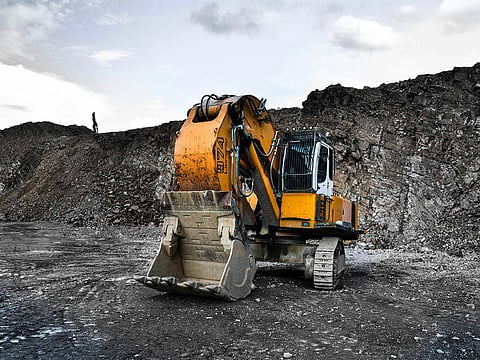
When the conversation turns to critical minerals today, the spotlight almost always falls on one question: who owns the mines? Who controls the world’s lithium, cobalt, nickel, and rare earth elements? It is a valid question, and an important one — but it no longer tells the full story. Ownership of a deposit beneath the surface does not automatically translate into geopolitical leverage, and extraction alone does not guarantee strategic advantage. The real power begins at a stage that rarely makes headlines yet reshapes the balance of influence more decisively than any other: refining and processing.
Raw ore does not go straight into an electric vehicle battery, a semiconductor chip, or an advanced defence system. Between the mine and the finished product lies a long chain of steps: extraction, transportation, refining, processing, and finally manufacturing. At the heart of this chain sits refining — the moment when a lump of dirt becomes a material that industry can actually use. Without this step, a mineral is nothing more than a commodity with limited value. With it, the same mineral becomes the backbone of technology, clean energy, the digital economy, and even national defence.
Shift in global concern
The mistake in reading today’s race for critical minerals is reducing it to a simple tally of who owns what. Power is no longer measured solely by reserves in the ground, but by the capacity to turn those reserves into something the industrial world depends on. This explains why global concern has shifted beyond the scarcity of certain elements or rising demand — it now centres on the fact that refining and processing capabilities remain heavily concentrated in the hands of a small number of countries. The world does not lack minerals. What it lacks is an evenly distributed ability to process them into usable industrial inputs. And that is where the real vulnerability lies, because whoever controls that bottleneck does not merely operate a factory — they control the pace, the cost, and, in some cases, the very feasibility of other nations’ industrial and technological ambitions.
For this reason, the critical minerals file has moved well beyond the realms of economics and the environment. It has entered squarely into the calculus of national security. The question is no longer just about electric cars or renewable energy. It is about something far more sensitive: what happens if the link between the mine and the factory breaks? What happens if a single country — or a small group — can slow that process down or dictate its terms? At that point, minerals cease to be an economic matter and become a matter of leverage.
True influence
China’s role in this picture illustrates the point with striking clarity. The country did not build its dominance in this sector simply by securing access to ores or investing in mining operations overseas. It understood, earlier and more deliberately than most, that true influence does not begin at the pit — it begins in the stages that follow: refining, processing, manufacturing, and control over broad swaths of the value chain. That is why much of today’s anxiety in Washington and Brussels is not merely about China’s presence in mining, but about its near-monopoly over the processing steps that make minerals industrially usable at scale.
This is precisely why recent international moves in this space look like more than a scramble for mining contracts or new deposits. They are part of a broader effort to rewire supply chains and reduce their fragility. Nations are no longer searching only for a raw feedstock — they are seeking partnerships that cover the stages that come after: refining, processing, transport, and initial manufacturing. In other words, we are witnessing a shift from a race for resources to a race for control over the entire chain.
The takeaway is clear. In the world of critical minerals, power does not originate solely from what lies beneath the earth. It originates from the ability to transform what lies beneath the earth into economic, technological, and strategic influence. So the decisive question in the years ahead will not be who owns the minerals, but who owns the stage that gives the minerals their value and gives the nation its leverage.

Fatima Musabah Alremeithi is a Senior Researcher at TRENDS Research & Advisory in the UAE

