Philippines: Gigawatt-scale hydropower to boost electricity grid for AI, chips — and cut coal
Prime Infra, First Gen back multibillion-dollar push to curb coal dependence
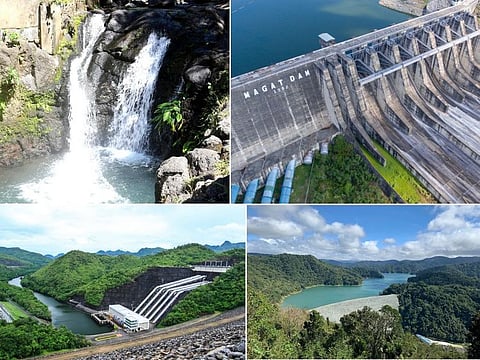
Manila: The Philippines is reversing its dependence on coal to power its data centre and AI ambitions.
How?
By advancing several major pumped-storage hydroelectric power (PSHP) system that together would deliver more than 8 gigawatts (GW) of additional electricity, an industry report stated.
Andritz Hydro reported that approved new power generation projects include 8,700 MW of hydropower — enough to power 8.7 million homes
There's more: the estimated "technical and economic" hydropower potential in the Asian country is about 20,334 GWh per year, of which only 17% has already been exploited,. as per Andritz.
Untapped Potential: The DOE reports that the Philippines has an estimated 13,097 megawatts (MW) of untapped hydropower resource potential. Industry groups like the Philhydro Association Inc. place broader theoretical and multi-use architectural resource limits even higher.


Proven track record. The Philippines already boast some 275 MW of the existing hydropower capacity comprising units more than 40 years old. The CBK hydropower plant, located between Quezon and Laguna (current generating capacity: 787MW) supplies the Luzon grid, is now 43 years old.
This forms a significant step toward stabilising the Luzon electricity grid as the country ramps up renewable energy and reduce coal power.
With about 2,000 known waterfalls across the country, the Philippine is never short on water power.
Under the National Renewable Energy Program, the Philippines envisions tripling renewable energy capacity by 2030, requiring an additional 14,900 MW, including 8,700 MW of hydropower.
In addition, power transmission system upgrades are also in line.
How it works
PSHS functions like large-scale energy storage: It provides flexible capacity that can be dispatched based on demand, and operates pumped-storage units, helping manage supply variability from solar and wind generation and support electricity availability when and where it is needed.
During periods of excess electricity — often from solar or wind — water is pumped from a lower reservoir to an upper one. When power is needed, the water is released downhill through turbines to generate electricity on demand.
The system provides flexible, long-duration storage that can help balance the grid during peak hours or when renewable output drops.
Vulnerable to imported fossil fuel
The Philippines is extremely vulnerable to imported fossil fuels despite sitting on vast, untapped indigenous renewable wealth. This archipelago characterised by heavy rainfall and mountainous terrains ideal for water-driven power, the Philippines has become the most coal-dependent nation in Southeast Asia.
According to the DOE and international energy metrics, coal accounts for roughly 60% to 63% of the country's total power generation mix, while hydropower supplies only about 8% to 11%.
Electricity demand
While there's an abundance of water power in this tropical archipelago, what's been missing is infrastructure.
Things are changing, thanks to policy "tweaks".
Demand for conventional and pumped storage hydro development is projected to increase, in particular to provide grid stability services.
Numerous pumped storage schemes are now at various stages of development.
Two under-construction projects, developed by Prime Infra with investment from First Gen Corp., consist of the 600-megawatt Wawa facility in Rizal province and the 1,400-MW Ahunan (also known as Pakil PSHS) project in Laguna.
Both are located in Luzon, the nation’s most populous island, and are targeted for completion around 2029-2030, as per trade publication Water Power. There's more in the Visayas and Mindanao, the country's bread basket.
Small hydro: In the Philippines, there are also interesting development opportunities for small hydro. Small hydropower plants totaling around 250 MW are already listed as indicative power projects and this does not include all the projects being built.
The Philippines could potentially reach or exceed 8-GW scale of PSHS alone because Green Energy Auction 3 (GEA-3) awarded more than 8GW of pumped-storage hydropower capacity, backed by massive private investments.
TOTAL HYDROPOWER CAPACITY: With more than 70 plants in operation, the Philippines has a total installed hydropower capacity of 3,701 MW. This represents about 16% of the national total. Of this, around 566 MW are run-of-river and 3,135 MW are dam-type plants, including one 728 MW pumped storage complex. Only about 24 plants (34%) have a capacity larger than 10 MW, but they provide around 96% of the total hydropower generation. (DOE)
Examples of major planned/completed PSHS projects
Pakil Project (Laguna): A massive 1,400-megawatt pumped-storage facility funded under major private sector financing.
Wawa Project (Rizal): A 600-megawatt pumped-storage plant spearheaded by Olympia Violago Water & Power.
San Miguel Facilities (Pangasinan/Benguet): Two separate 800-megawatt pumped-storage projects proposed by San Roque Hydropower Inc., totaling 1.6GW.
Aya Project (Nueva Ecija): A 120-megawatt pumped-storage plant authorized for First Gen and the National Irrigation Administration.
CBK (Laguna-Quezon): This 797-MW pumped storage hydro power facility was first energised in 1983 and is among the largest hydropower facilities serving the Luzon grid, playing a key role in supporting a reliable and stable power supply.
Targets, timelines
GEA-3 Awards: The Department of Energy's third Green Energy Auction officially secured over 6,000 MW (6GW) of awarded pumped-storage proposals, surpassing the initial target framework.
The government's regulatory framework targets commercial operations for these storage and generation facilities rolling out progressively between 2028 and 2035.
The electricity demand for the Luzon Economic Corridor (LEC) will surge dramatically, driven heavily by high-tech industrial zones like the planned Pax Silica AI and semiconductor hub in New Clark City, which alone requires an estimated 3 to 5 gigawatts (3,000 to 5,000 megawatts) of power daily. This massive requirement equals roughly one-third of the current Luzon grid's total peak demand.
Bump in power demand
The Philippines faces rising electricity demand and has set ambitious targets to increase the share of renewables in its power mix. Coal currently dominates generation, but the government aims for substantial growth in solar, wind, geothermal and hydro resources.
Pumped storage addresses a key challenge: renewables such as solar and wind are intermittent.
Large-scale storage like these facilities can store surplus daytime solar power for evening peaks, reducing reliance on fossil fuel plants that provide backup power.
The projects have been designated as Energy Projects of National Significance by the Department of Energy.
They secured positions in green energy auctions and are moving forward through public-private partnerships.
Combined investment is expected to run into billions of dollars.
Challenges ahead
Like other large hydropower developments, the projects face hurdles common in the archipelago nation: right-of-way, environmental concerns and potential impacts on local communities and water resources.
Thorough feasibility studies, environmental assessments and community engagement are required.
The Philippines has significant untapped hydropower potential due to its mountainous terrain and rainfall, but only a fraction has been developed.
These 8.7 GW of pumped storage would rank as a major addition to the country’s roughly 29 GW total installed capacity.
Grid capacity pressures: The broader Luzon grid maintains a system peak demand of roughly 12,249 MW against an available capacity of 17,097 MW, leaving tight operating margins. "Localised" off-grid or dedicated energy generation for power-hog industrial corridor like the one envisioned at Clark under "Pax Silica" is seen as vital for the corridor's success.
Water power drive
The PSHS drive comes as the Philippines, one of the world’s most vulnerable countries to climate change, seeks to modernise its energy system while reducing greenhouse gas emissions.
Pumped storage is a proven technology used worldwide, with some of the largest plants in China, the United States and Japan capable of delivering multiple gigawatts.
If completed on schedule, the Wawa and Ahunan projects would mark a milestone for Philippine energy infrastructure and demonstrate a practical path to support the nation’s clean energy transition.
Paradox
The nation possesses an extraordinarily high natural ceiling for hydroelectric development, yet it remains largely dormant in favour of imported fuel.
This structural "disconnect" between the country's natural geography and its actual grid realities could certainly be filled, as it's now being filled, by tapping its immense hydropower resource.


