Oil nears $100 as US destroys five Iranian tankers, Iran strikes Jordan
Missile salvos, destroyed tankers push crude benchmarks toward triple digits
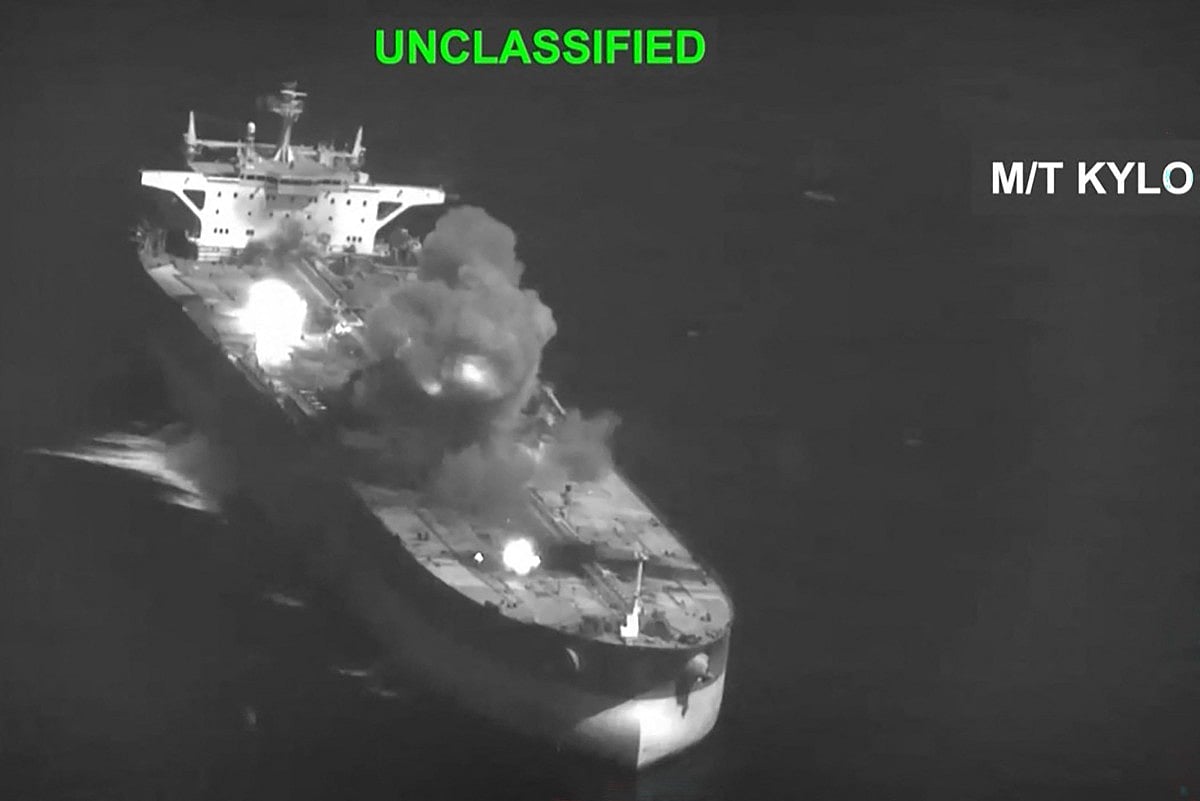
Oil prices surged toward $100 a barrel on Wednesday as the United States destroyed five Iranian crude carriers, Iran launched a ballistic-missile attack toward Jordan and Tehran warned tanker crews near Kuwait and Bahrain to leave their vessels, raising fears that the conflict could further disrupt Gulf energy supplies.
The latest escalation came after the U.S. military said Iranian forces twice targeted a US Navy warship with ballistic missiles over the previous two days.
US Central Command said the warship evaded the attacks and that no American personnel were injured.
The five tankers were struck early Wednesday.
Four — the Kaviz, Charminar, Horizon 1 and Riesco — were hit in the Gulf of Oman, while the Derya was struck near Iran's Kharg Island, according to CentCom.
US officials described the strikes as an economic response to Iranian attacks on American naval forces.
The action follows earlier US attacks on Iranian-linked oil tankers, signaling that Washington is increasingly using Tehran's oil exports as a target in the conflict.
Iran responded by firing 20 ballistic missiles toward Jordan, according to the Jordanian Armed Forces.
Jordan said its air defenses intercepted and destroyed 18 missiles, while two landed in unpopulated areas. No casualties were reported.
Iran's Revolutionary Guard claimed it had struck the US-linked Al-Azraq air base in Jordan and targeted American vessels and additional oil tankers. Those claims could not immediately be independently verified.
Why oil markets are worried
The biggest concern is no longer simply the loss of individual tankers. It is the possibility that the attacks will make shipping through and around the Strait of Hormuz increasingly difficult.
Gulf News earlier reported that Brent crude climbed toward $98 a barrel in early Asian trading Wednesday, while WTI rose above $94 and Murban, a key Gulf benchmark, jumped to $110.80.
By midafternoon Tokyo time, Brent was at $99.27, up $1.35, while WTI stood at $94.18, up $1.15.
Murban reached $110.80, up $4.
The market is particularly sensitive because Hormuz is one of the world's most important oil chokepoints.
Any sustained disruption could affect crude supplies, tanker insurance, freight rates and ultimately fuel prices well beyond the Gulf.
The risk is growing.
Iran's IRGC Navy has warned tanker crews near ports and harbors in Kuwait and Bahrain to evacuate vessels following the U.S. strikes.
That warning potentially widens the danger zone from Iranian-controlled waters to commercial shipping infrastructure in neighbouring Gulf states.
Network Links
GN StoreDownload our app
© Al Nisr Publishing LLC 2026. All rights reserved.