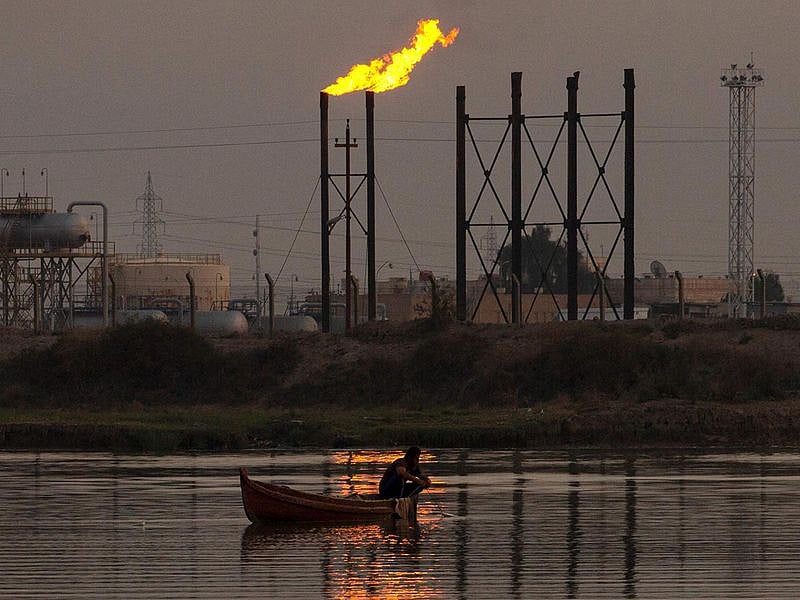
Dubai: Iraq is moving to sharply increase crude oil exports through northern and western routes as the prolonged disruption of shipping through the Strait of Hormuz continues to undermine the country's oil-dependent economy.
Get updated faster and for FREE: Download the Gulf News app now - simply click here.
The Iraqi cabinet has approved plans to more than triple crude exports through the Kurdistan-Turkey pipeline network, raising shipments from 220,000 barrels per day (bpd) to 770,000 bpd within two and a half months.
The route transports oil from the Kirkuk and Kurdistan fields to Turkey's Mediterranean port of Ceyhan, providing Iraq with a rare alternative to exports from its southern terminals in the Persian Gulf.
The latest target exceeds an earlier government plan that aimed to increase exports through Ceyhan to 500,000 bpd. Iraq resumed exports through the pipeline in March after reaching an agreement with the Kurdistan Regional Government.
Hormuz disruption hits exports
The expansion comes as Iraq faces mounting pressure from the effective closure of the Strait of Hormuz, one of the world's most important energy chokepoints. The disruption followed the outbreak of conflict involving the United States, Israel and Iran earlier this year, which led to a dramatic decline in shipping traffic through the waterway.
Unlike regional producers such as Saudi Arabia and the United Arab Emirates, Iraq has limited infrastructure capable of bypassing the Strait of Hormuz. As exports from its southern Basra terminals stalled, storage facilities and tankers filled rapidly, forcing Baghdad to reduce oil production.
Production from Iraq's southern oil fields has fallen significantly since the conflict began. Average output has dropped to approximately 1.3 million bpd from around 4.3 million bpd before the outbreak of hostilities, according to figures cited in the report.
Heavy dependence on oil exposed
The export decline has had a major impact on government finances. Oil revenues account for roughly 90% of Iraq's state budget, making the country one of the most oil-dependent economies in the Middle East. Iraq has struggled for decades to diversify its economy away from crude exports, leaving public finances highly exposed to disruptions in energy markets.
Official export data illustrates the scale of the downturn. Oil Minister Basim Muhammad Khudhair said Iraq exported 10 million barrels through the Strait of Hormuz in April, down from 93 million barrels in the month before the conflict began.
Shipping activity at Basra has also collapsed. According to vessel-tracking data cited by Bloomberg, only two tankers loaded crude at Iraq's southern export terminal in April, compared with 12 in March. Under normal conditions, as many as 80 tankers can load at the port each month.
Pursuing alternative export routes
To offset the losses, Iraq is pursuing several alternative export channels. The government has approved plans to expand crude shipments by truck to neighboring countries to 420,000 bpd. Former Oil Minister Hayyan Abdul Ghani had previously estimated Iraq's trucking capacity at between 100,000 and 200,000 bpd.
Baghdad has also approved a proposal to export crude through Syria's Mediterranean ports of Baniyas and Tartus following discussions with Syrian authorities. The government has not disclosed expected export volumes through those routes.
Deep discounts offered to buyers
At the same time, Iraq has resorted to steep price incentives to maintain crude sales. State oil marketer SOMO is offering discounts of up to $33.40 per barrel on Basrah Medium crude for cargoes loading this month. Basrah Heavy crude is being offered at discounts of up to $30 per barrel below official selling prices.
The discounts reflect the logistical challenges facing buyers. Although Iraq continues to market crude from its southern fields, tankers must still enter the Persian Gulf and transit waters affected by the regional conflict in order to load cargoes. SOMO's sales notice states that force majeure provisions will not apply because buyers are entering agreements with full knowledge of the existing conditions.
Iraqi officials acknowledge that export challenges are likely to continue as long as the regional conflict remains unresolved. Diplomatic efforts to secure a lasting peace have yet to produce a breakthrough, leaving Iraq dependent on a rapid expansion of alternative export routes to protect government revenues and stabilize its economy.

Sign up for the Daily Briefing
Get the latest news and updates straight to your inbox
Network Links
GN StoreDownload our app
© Al Nisr Publishing LLC 2026. All rights reserved.