European visitors from the e-ferry industry take a cruise of the Pasig River in Manila aboard the M/B Dalaray electric ferry. In November, the Philippines Association of Coastal and Inland Water Ferries Inc. (PACIFI), IMP shipyard and Port Services, Inc. And ZEM have signed a memorandum of understanding (MOU) to jointly develop the country’s prototype electric hybrid propulsion ferry.
Could Manila’s 'Dalaray' be the Tesla of the tides?
Philippine student-built electric ferry signals boom in green maritime transport
Last updated:
5 MIN READ
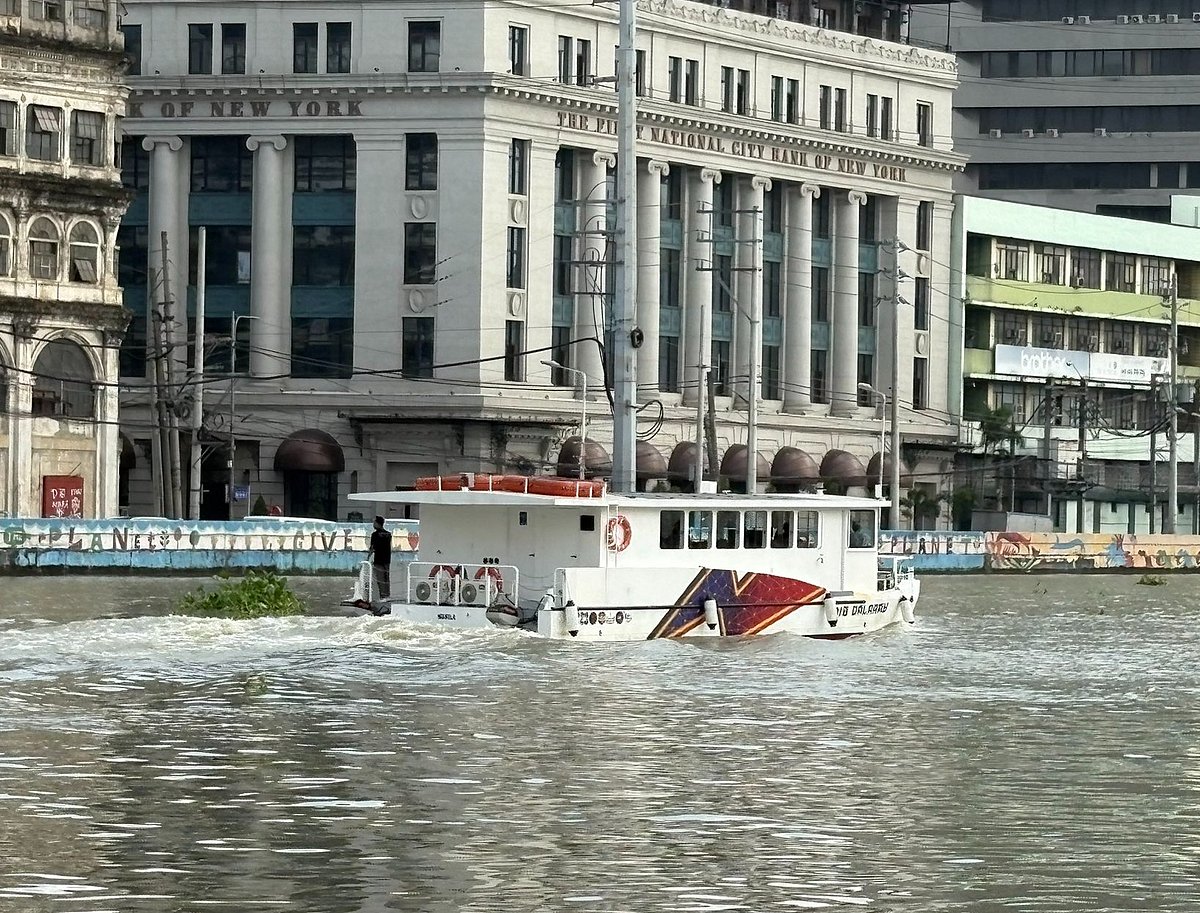
M/B Dalaray, a battery-electric ferry cruising along Pasig River, Manila (off Plaza Mexico, Intramuros). The e-ferry, designed and built by Filipino studies for less than $1 million in Navotas, offers a cleaner, quieter, and more sustainable way to travel along the Pasig River, linking Manila, Makati, Mandaluyong, Pasig, and Taguig. Scaling its production could help boost inter-island transport and local tourism.
DOST
Manila: As the world races toward net-zero emissions in transportation, a humble catamaran gliding silently along the Pasig River has captured global attention.
Dubbed M/B Dalaray, this battery-electric ferry which seats 40 passengers – the Philippines' first homegrown zero-emission vessel – represents a breakthrough in affordable, sustainable maritime tech.
OK, it has no AI navigation and controls yet. But in the era of full self-driving vehicles on road, it may not be far off island-hopping routes.
Could investors eying scaling electrified ferries usher in a green archipelagic revolution?
Designed and built by engineering students from the University of the Philippines Diliman (UPD) in collaboration with the Department of Science and Technology (DOST), the 13-metre vessel seats 40, plus five crew members and was built for under $1 million.
Dalaray’s maiden cruises underscore a pivotal moment: the potential to electrify the world’s ferry fleets, starting in the archipelago nation of 7,641 islands.
Launched in October 2025, Dalaray cruises at eight knots with a 45-km range per charge, powered by two 50-kilowatt electric motors and lithium-ion batteries.
Its debut on the Pasig River Rehabilitation Commission's ferry system – connecting bustling cities like Manila, Makati, and Pasig – isn't just a local trial run.
It's a proof-of-concept for scalable green transport that could slash emissions from the Philippines' diesel-dependent fleet, which logs millions of passenger trips annually across fragmented waterways.
Initiatives like the Maharlika Investment Fund (MIF), or Norway’s Sovereign Wealth Fund (SWF), called the Government Pension Fund Global (GPFG), could propel this into a development cycle with quick iteration, mass production and adoption.
It remains to be seen whether Filipinos could work well with Norwegians over a long-term gig. It's a fact that Pinoys have proven their enduring love for the pop duo M2M's Marit Larsen and Marion Raven, of Lørenskog).
Battery electric ferries will be the Tesla of the tides, and Norway brings a full end‑to‑end playbook — from tech and regulation to financing and commercialisation — that can dramatically shorten the Philippines’ learning curve and de‑risk scaling a new maritime industry.
Here are the reasons why Filipinos must ramp up collab work with the Europeans on this tech:
1. Proven technology and system design
Norway already operates around 180 electric ferries on 111 routes, giving its engineers unmatched experience in hull design, battery sizing, safety, and control systems under real‑world conditions.
Working with Norwegian ship designers, system integrators, and battery specialists allows Filipino engineers to adapt field‑tested designs rather than reinventing from scratch, accelerating development of a robust Philippine prototype and subsequent class of vessels.
2. Advanced controls, autonomy, and safety
Norwegian firms like Kongsberg, Norcontrol, Zeabuz, and Maritime Robotics are already deploying integrated control systems, digital monitoring, and even autonomous passenger ferries, all of which can be localised for Philippine waters.
Joint engineering teams can co‑develop control logic, remote monitoring, and safety protocols tuned to tropical conditions, congested ports, and archipelagic routes — raising safety and reliability standards from day one.
3. Ecosystem and infrastructure know-how
Norway’s transition required parallel investments in shore power, smart charging, and grid upgrades, with dedicated public funding mechanisms to make the infrastructure bankable.
By collaborating on port layouts, charging concepts, and energy‑efficiency measures, Filipino planners can avoid common pitfalls, designing an ecosystem (ports, power, maintenance) that supports large‑scale deployment instead of isolated pilot projects.
4. Financing structures and de‑risking models
The Norwegian side has experience blending EU programs like Horizon 2020, national climate funds (e.g., Enova), and private capital to finance electric fleets and on‑shore infrastructure.
Filipino finance professional working directly with Norwegian financiers and innovation agencies (e.g., Innovation Norway) can adapt green‑funding templates, tender models that reward low emissions, and PPP structures tailored to the Philippines’ needs.
5. Industrial production and scalable supply chains
Norway’s electric ferry programmes have already pushed shipyards and suppliers to industrialise battery integration, modular design (e.g., TrAM project), and split construction between foreign and domestic yards.
Partnerships between Norwegian technology providers (such as ZEM) and Philippine yards like IMP enable local manufacturing, assembly, and servicing of electric ferries, building a Philippine supply chain that can later export to Asean.
6. Marketing, policy influence, and first-mover branding
Norway’s status as a global reference for maritime electrification, plus joint events like the Philippines–Norway Electric Ferries Conference, provides powerful narrative and diplomatic backing for investors and policymakers.
Co‑branding a “Norway–Philippines e‑ferry model” gives Filipino engineers and financiers a strong marketing story — linking climate resilience, modern transport, and collab work the Norwegians — that can attract passengers, local operators, and regional buyers across Southeast Asia and beyond.
The Philippines is among the world’s top shipbuilders.
Collab work between industry experts and foreign capital could significantly cut the learning curve and expand horizons for the country’s seminal e-ferry industry.
Whole-of-nation approach: Here’s why it’s needed
Linking remote islands with clean power while unlocking export revenues from eco-conscious markets abroad requires strategic foresight and a “whole-of-nation” approach.
For investors, the case for scaling Dalaray's production is compelling, blending environmental urgency with robust financial upside.
First, the global electric ferry market is exploding, projected to surge from $8.93 billion in 2025 to $21.94 billion by 2032 at a 13.7% compound annual growth rate (CAGR), driven by regulatory mandates and falling battery costs.
Asia-Pacific, including the Philippines, is poised for the fastest expansion, with nations like China and Japan already retrofitting fleets to combat coastal pollution.
This positions low-cost producers like the Philippines as key suppliers in a sector where 70% of new ferry orders worldwide now specify electric drivetrains.
Second, the Philippines' unique geography demands it.
With over 2,000 inhabited islands reliant on ferries for daily commutes, the country faces chronic overcrowding, high accident rates, and emissions equivalent to 15% of domestic shipping's carbon footprint.
Electrifying these routes could cut that by 15% by 2028, aligning with national goals under the Paris Agreement.
Norwegian firm Hyke's planned rollout of 10 autonomous electric shuttles in Philippine waters by 2027 highlights the inbound investment wave.
But local innovation like M/B Dalaray offers a more cost-effective, homegrown alternative to import dependency.
Third, operational economics tilt decisively toward electric. Dalaray's build cost – a fraction of the $5-10 million for comparable diesel ferries – pairs with five-fold savings in fuel and maintenance over fossil-fuel rivals, thanks to efficient batteries and regenerative braking.
Real-world data from similar vessels shows payback periods as short as four years, with lifetime energy costs 21-31% lower than diesel equivalents, even in grid-challenged regions like the Philippines where renewables are only starting to ramp up.
Fourth, scaling production could create thousands of jobs in shipbuilding hubs, while subsidies from DOST, capital infusion via public-private partnerships (PPP), and extra help from international partners like Norway – fresh off a November 2025 memorandum for hybrid-electric prototypes – sweeten the deal.
Green bridge
As climate deadlines loom – with the International Maritime Organisation (IMO) targeting 50% emissions cuts by 2050 – investors scaling Dalaray stand to pioneer a "green bridge" for the Global South.
Venture capital in cleantech maritime has ballooned 300% since 2020; channeling it here could yield not just profits, but a legacy of connected, cleaner seas.
With prototypes already plying the Pasig, the question isn’t if production scales – it’s who will captain the voyage.
Looking ahead
Looking abroad, successful precedents abound.
Norway's MF Ampere, the world's first fully electric ferry operational since 2015, has logged distances equivalent to 17 equatorial laps, slashing CO2 by thousands of tonnes annually and inspiring over 80 similar vessels in Europe.
In the US, Glosten's all-electric Alabama River ferry has proven reliable for 132-passenger loads, reducing local emissions and costs in urban waterways.
Dalaray, with its student-led ingenuity, could export to emerging markets in Southeast Asia and the Pacific, where island-hopping tourism and logistics mirror Philippine needs.
For those eyeing the next Tesla of the tides, the helm awaits in Manila.
Sign up for the Daily Briefing
Get the latest news and updates straight to your inbox
Network Links
GN StoreAbout Gulf NewsTerms & ConditionsReach by GNSitemapContact usPrivacy PolicyGN FocusHave your sayWork with usAdvertise with usGulf News epaperPrinting Services
Download our app
© Al Nisr Publishing LLC 2026. All rights reserved.