WGS 2026: IMF’s Georgieva urges Gulf to build its own Airbus moment
IMF chief says Gulf needs a unifying project to compete in a fractured global economy
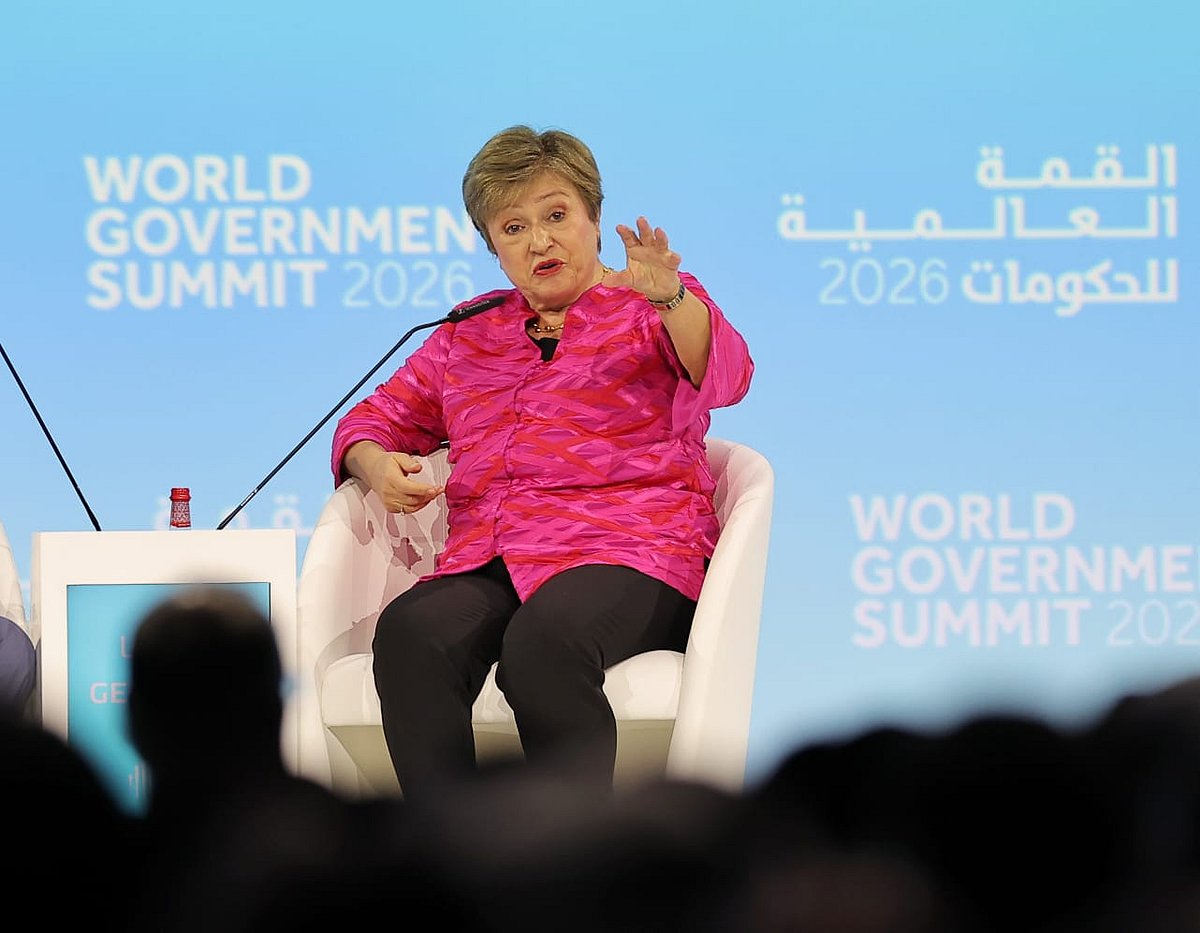
Dubai: The Gulf should create its own version of Airbus to deepen economic integration and compete at scale in a more fragmented global economy, according to the International Monetary Fund’s managing director, who said unity of purpose would matter more than ever in the years ahead.
Speaking at the World Governments Summit 2026, Kristalina Georgieva pointed to Airbus as Europe’s most effective example of economic coordination, arguing that a similar joint project could help the Gulf translate cooperation into lasting global influence.
“When Europe came up with Airbus, it did something fabulous,” Georgieva said. “It created a very potent competitor to Boeing. Now every second aircraft on this planet comes from Europe. So for the Gulf, get your Airbus.”
Georgieva said the value of Airbus went beyond aviation. The project forced European countries to align industrial priorities, overcome sovereignty concerns, and accept collective decision-making in pursuit of scale. That discipline, she said, remains relevant as regions seek to compete in artificial intelligence, advanced manufacturing, and capital-intensive industries.
The Gulf, she added, has the ingredients needed to replicate that success, citing growing regulatory coordination, rising interest in regional trade, and more mature fiscal and monetary policymaking. “What I now see in discussions with ministers of finance and central bank governors in the Gulf is maturity that can help the region move in that direction of strength through unity of purpose,” she said.
Global economy proves resilient
Georgieva’s comments came against a backdrop of improving global growth expectations. The IMF recently upgraded its forecasts for global output, including projections for the Gulf, despite heightened geopolitical tension and ongoing trade disputes.
The global economy has shown resilience, she said, helped by agile private sectors, muted trade shocks, and strong optimism around artificial intelligence lifting productivity. “We see a world that is geopolitically much more complex, yet quite resilient,” she said.
She likened trade to water, explaining that when barriers appear, flows find alternative routes. Tariffs announced during recent trade disputes fell sharply after negotiations, with effective collections closer to 9% than initial headline levels. At the same time, bilateral and plurilateral trade agreements have multiplied, reflecting continued reliance on an integrated global economy.
Europe faces a wake-up call
Turning to Europe, Georgieva said the region faced a clear test. Fragmentation across 27 countries has slowed progress on competitiveness, productivity, and growth, even as the global economy moves faster. Completing the single market could lift Europe’s output by as much as 20%, she said, if long-standing obstacles were addressed.
She highlighted gaps in capital markets, energy pricing, and labour mobility, noting that hundreds of billions of euros in European savings continue to flow abroad, largely to the US. “Europe has to adapt,” she said. “It is not going to be the other way around.”
Lessons for the Gulf
Georgieva cautioned Gulf policymakers against copying Europe’s institutional complexity, while encouraging them to adopt its most effective ideas. Large-scale joint projects, she said, help economies integrate in practical ways and strengthen global competitiveness.
Such efforts would require compromise and trust, particularly in areas like capital markets where competition already exists within the region. Yet she said the Gulf has already shown its capacity to invest early in human capital and to prioritise dialogue, giving it a strong position as new technologies reshape the global economy.
In today's world defined by recurring shocks and persistent uncertainty, Georgieva said countries and businesses should focus on strong institutions, sound policies, and cooperation with neighbours. That approach, she said, offers the best chance of navigating the year ahead and turning ambition into durable economic strength.
Sign up for the Daily Briefing
Get the latest news and updates straight to your inbox
Network Links
GN StoreDownload our app
© Al Nisr Publishing LLC 2026. All rights reserved.