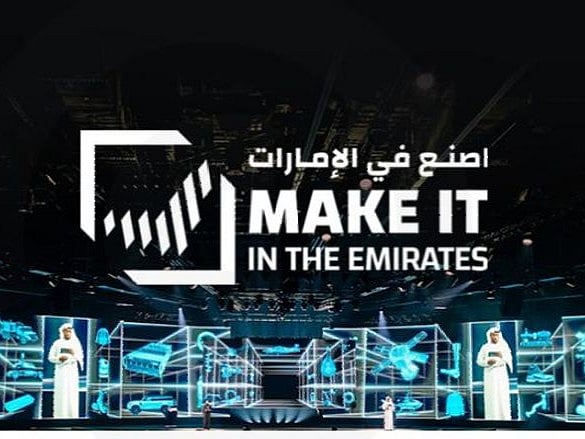
Make it in the Emirates 2026 has emerged as a powerful platform advancing the UAE’s ambition to build a resilient, diversified, and future-ready economy.
This year’s edition brings together a wide spectrum of sectors, highlighting the country’s integrated approach to industrial development. From core manufacturing to services, healthcare, and academia, the event reflects a holistic ecosystem designed to fuel long-term growth.
Get updated faster and for FREE: Download the Gulf News app now - simply click here.
It underscores the UAE’s commitment to strengthening local production while fostering global competitiveness.
Equally, it highlights the role of innovation, digital transformation, and sustainability in shaping the next phase of industrial expansion.
More than an exhibition, the platform signals a strategic shift toward collaboration across industries to power the nation’s economic future.
Strengthening local manufacturing capabilities
A central theme at this year’s event is the strengthening of local manufacturing capabilities. According to Ducab, participation reflects a long-standing commitment to the UAE’s industrial vision. Gert Hoefman, Interim Group CEO, emphasised that the company’s strategy goes beyond production to building a comprehensive industrial ecosystem. With over four decades in the market, Ducab has focused on localising supply chains and investing in advanced facilities, including copper rod and aluminium plants, reinforcing the “Made in the UAE” proposition globally.
Driving innovation in energy and infrastructure
Innovation remains a defining pillar of Ducab’scontribution. The company is developing high-voltage fibre optic cables among the first in the GCCwhich integrate power transmission with real-time monitoring capabilities. These systems enable enhanced grid performance by tracking temperature, strain, and operational efficiency. In parallel, Ducabis aligning with high-growth sectors such as data centres and industrial digitalisation, while also achieving a regional milestone in extra high voltage cable system testing at 400kV in collaboration with international partners. Such advancements reflect how industrial players are supporting the UAE’s sustainability agenda while meeting the demands of a rapidly evolving digital economy.
Expanding global competitiveness
The broader manufacturing ecosystem, supported by initiatives like Make it in the Emirates, has significantly strengthened the UAE’s global competitiveness. Ducab’s export footprint reaching 75 markets worldwide demonstrates the effectiveness of local partnerships across sourcing, logistics, and production. As the UAE continues to nurture its industrial base, companies are increasingly positioned to compete internationally while raising benchmarks in innovation and sustainability.
Healthcare as an industrial enabler
Healthcare is another critical dimension shaping the industrial narrative. Response Plus Holding (RPM) highlights how the sector is evolving to support operational continuity across industries. Dr. Rohil Raghavan, CEO of Response Plus Holding (RPM), noted that participation in the event reflects the UAE’s transition toward a competitive, innovation-driven healthcare ecosystem backed by strong policy direction and long-term investment.
Enhancing workforce safety and resilience
He explained that healthcare is no longer a standalone service but a strategic enabler of industrial productivity. RPM plays a key role across sectors such as energy, aviation, manufacturing, construction, and education, providing not only emergency response but also preventive care and workforce readiness. Rapid deployment capabilities within industrial zones ensure immediate medical support, reducing downtime and enhancing overall efficiency.
Technology transforming healthcare delivery
Dr. Raghavan also pointed to the growing importance of technology in healthcare delivery. Investments in artificial intelligence, predictive analytics, and real-time fleet tracking are improving response times and decision-making in the field. In addition, the development of the UAE’s first long-range air ambulance marks a significant milestone in advanced medical evacuation, reinforcing the country’s leadership in pre-hospital care. Such initiatives underline how healthcare innovation is becoming integral to industrial resilience and sustainable growth.
Academia powering innovation and talent
Academia is playing an equally vital role in shaping the UAE’s industrial future. Abu Dhabi University is leveraging the platform to bridge research and real-world application. Professor Ghassan Aouad, Chancellor, highlighted the university’s commitment to advancing a knowledge-based economy through its innovation arm, ADU Innovate.
From research to real-world solutions
At this year’s event, the university is showcasing a range of cutting-edge projects led by students and faculty. These include Q1RAM, a quantum memory system designed to enhance computing efficiency; AMAL X, an AI-powered exoskeleton supporting stroke rehabilitation; and a solar-powered atmospheric water harvesting solution addressing water scarcity in arid environments. Additional innovations span autonomous logistics for smart buildings and advanced aviation training simulations, demonstrating practical applications across industries.
Building future-ready talent
Such initiatives reflect a broader priority: equipping students with experiential learning opportunities that connect academic theory with industry needs. By engaging directly with stakeholders, students gain exposure to commercialisation pathways and innovation ecosystems, strengthening the pipeline of future talent. This aligns closely with national priorities such as Operation 300bn, which aims to expand the industrial sector’s contribution to GDP.
A unified vision for sustainable growth
Together, these perspectives highlight the multidimensional impact of Make it in the Emirates 2026. The platform not only showcases industrial capabilities but also fosters collaboration between manufacturers, healthcare providers, and academic institutions. It reflects a cohesive strategy where innovation, talent development, and sustainability converge to drive economic progress.
As the UAE continues to position itself as a global industrial hub, initiatives like this play a crucial role in accelerating transformation. By aligning policy, investment, and cross-sector collaboration, the country is building a robust foundation for long-term growth one that is both globally competitive and locally anchored.
Sign up for the Daily Briefing
Get the latest news and updates straight to your inbox
Network Links
GN StoreDownload our app
© Al Nisr Publishing LLC 2026. All rights reserved.