Hormuz 'humanitarian' run: Trump’s ‘Project Freedom’ sparks Iran war fears as Iran regime general issues new threat
Concerns mount over safety of maritime aid route following Iran’s stern message
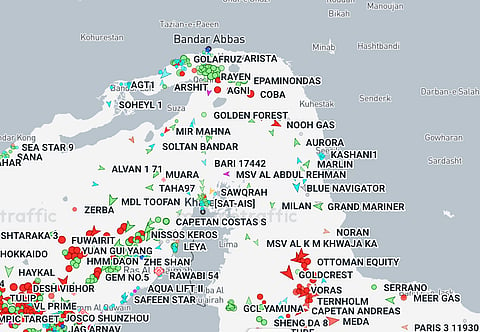
US President Donald Trump has officially mobilised the US military to launch "Project Freedom," amid what he framed as "very positive" talks with Iran, which could be scuttled by a renewed threat from an IRGC general.
Trump on Sunday announced a high-stakes naval mission designed to escort nearly 2,000 stranded commercial vessels out of the volatile Strait of Hormuz.
Operation "Project Freedom", kicked off on Monday, with the US Central Command confirming their readiness to execute the mission.
The US mission involves a massive deployment of US Central Command assets, including 15,000 personnel, guided-missile destroyers, and over 100 land and sea-based aircraft.
The White House is framing "Project Freedom" as a critical "humanitarian gesture" to aid approximately 20,000 seafarers who have been trapped in the Gulf for weeks.
Many of the merchant mariners in the Gulf are reportedly facing severe shortages of food, water, and medical supplies.
IRGC general's threat
While the US maintains the operation is focused on restoring freedom of navigation for innocent merchant crews, the Iranian military has issued sharp, contradictory warnings.
Major General Ali Abdollahi of the Iranian military's central command stated that any foreign forces — particularly the US military — attempting to enter the strait would be "targeted and attacked," asserting that the waterway remains under the firm control of the Islamic Republic.
Meanwhile, European leaders have expressed concern over the escalating tensions.
French President Emmanuel Macron publicly urged both nations to seek a "coordinated" reopening of the waterway, warning that France would not participate in military operations perceived as "unclear" in their strategic scope.


Debate over 'Project Freedom'
The debate rages on surrounding Project Freedom, a US initiative announced by President Trump, to escort neutral merchant ships through the Strait of Hormuz starting May 4.
Proponents argue it demonstrates US resolve to wrest control from Iran's Islamic regime, countering Tehran's strategy of prolonging the conflict past US midterms without risking nuclear escalation.
Iran's strategic caution
Critics, however, suspect that 'Project Freedom" could be a Trojan horse for invasion.
They warn Iran won't permit US warships near Kharg Island, Iran's key oil export hub previously struck by US forces in March.
Past US attacks there fuel distrust, with fears of an amphibious assault to land troops.
Economic realities and tolls
Iran allows passage for a reported $2 million toll per transit, formalised by the Tehran parliament in late March.
Shippers carrying $200 million cargoes deem it a pragmatic fee to protect vessels, crew, and goods, explaining minimal international pleas to Trump.
No evidence shows mass begging; instead, it highlights Trump's alleged desperation for a case of war — essentially by inviting attacks from Iran — to shatter the ceasefire, justify with US lawmakers the case for renewed US military action and resume bombing.
Dual blockade: Who controls the strait?
Iran initiated the blockade on February 28 with mines, boardings, and warnings amid war.
The US imposed its naval blockade on April 13, targeting Iranian ports and toll-payers, essentially creating a dual blockade.
"Project Freedom" supports navigation for non-Iranian traffic while upholding the US blockade.


