Global trade to exceed $35 trillion in 2025 for the first time
Manufacturing trade saw double-digit growth, auto industry witnesses drop
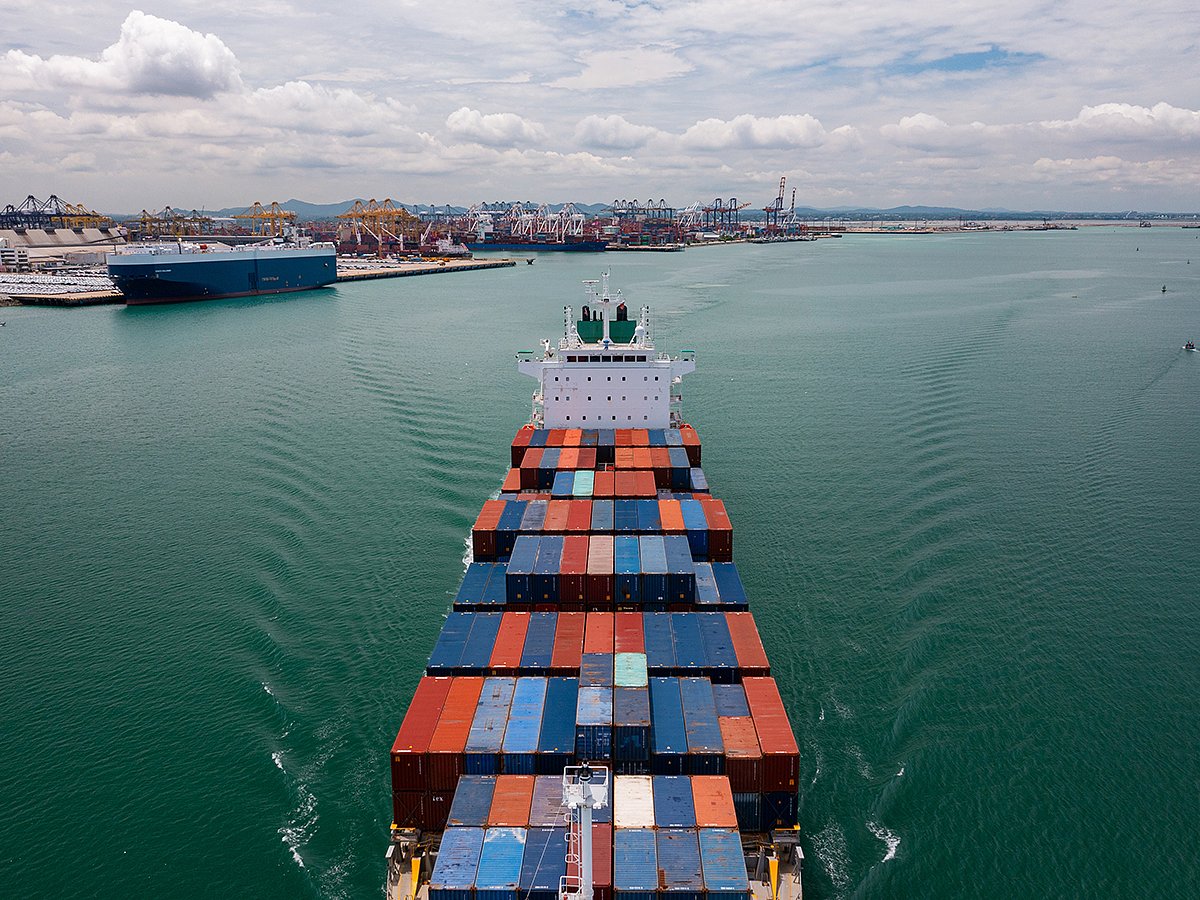
Dubai: For the first time, global trade is on course to exceed $35 trillion in 2025, according to UNCTAD’s final Global Trade Update of the year.
New data from the United Nations Conference on Trade and Development (UNCTAD) confirmed that trade continued to expand through the second half of 2025, even as geopolitical tensions, higher costs, and uneven global demand slowed momentum.
UNCTAD’s report also said that global trade growth at the end of 2025 is now driven by higher volumes rather than rising prices. After two quarters of rising prices that inflated trade values, prices are falling, yet demand remains strong as inflation cools. This signals healthy, real economic activity, explained UNCTAD.
“This points to stable demand even as inflation eases,” it said.
Between July and September, global trade grew 2.5 per cent compared with the previous three months. Goods rose by nearly 2 per cent, and services by 4 per cent.
The East Asia region, which includes China, Japan, and Hong Kong, recorded the strongest export growth over the past year (9 per cent), supported by a 10 per cent surge in intra-regional trade.
Africa also performed strongly, with imports up 10 per cent and exports 6 per cent. Meanwhile, South–South trade (defined as trade among the Global South, including the Middle East) expanded by around 8 per cent, reflecting deepening economic ties among developing economies.
Among individual economies, China and the Republic of Korea stood out in East Asia, while Brazil and South Africa were key drivers in South America and Africa. India and China also posted some of the strongest growth in services exports.
Growth is expected to continue in the year’s final quarter, though at a slower pace: 0.5 per cent for goods and 2 per cent for services. If projections hold, goods will add about $1.5 trillion to this year’s total and services $750 billion, consistent with an overall 7 per cent annual increase.
A year of recovery
Trade in 2025 consistently outpaced global economic growth, reversing the stagnation of 2023–2024. “Yet imbalances remain elevated, and friendshoring and nearshoring - trade shifting towards politically aligned or geographically closer partners - strengthened again, reshaping trade patterns,” said UNCTAD.
Looking to 2026, the UN trade body expects weaker growth as slower global activity, rising debt, higher trade costs and persistent uncertainty weigh on performance.
Manufacturing strong, but autos weak
Manufacturing grew 10 per cent over the year, led by electronics (14 per cent), driven by AI-related demand. Agriculture expanded sharply in the third quarter, with cereals and fruit-and-vegetable exports each rising 11 per cent.
Automotive trade fell 4 per cent, while fossil-fuel trade declined amid lower prices.
UAE’s performance
While the UCNTAD report did not provide details on the Middle East or GCC states, including the UAE, recent government reports highlight impressive non-oil foreign trade growth.
According to recent government reports, the UAE achieved non-oil foreign trade over the past year. Non-oil trade climbed to around Dh1.7 trillion in the first half of 2025, almost double the level of five years ago, while non-oil exports and re-exports posted double-digit growth despite a sluggish global trade environment.
The emirates also rose to fourth place worldwide in merchandise exports per capita, reflecting its growing role in high-value trade flows and re-exports through hubs such as Jebel Ali Port and Abu Dhabi’s expanding logistics ecosystem.
Sign up for the Daily Briefing
Get the latest news and updates straight to your inbox
Network Links
GN StoreDownload our app
© Al Nisr Publishing LLC 2026. All rights reserved.