AXA to consolidate gains in regional insurance sector
Group avoids overt risk and targets growth in established areas
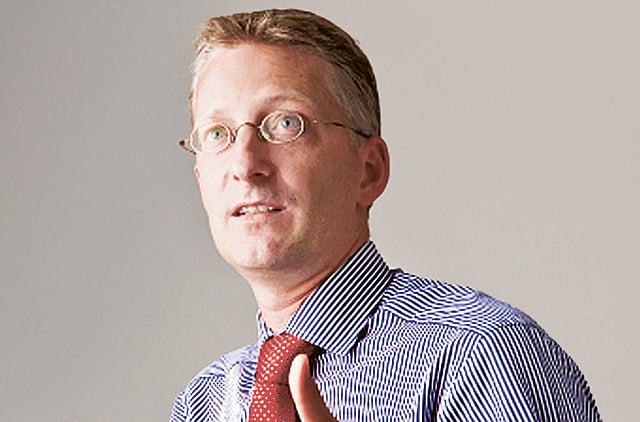
Dubai: Caution and a conservative attitude have served Jean-Louis Laurent Josi well. In more than two years as head of AXA Insurance's Gulf and Levant operations, these principles have ensured the company's performance and profitability in an industry where operating margins remain under severe strain and there's been no sign of immediate improvement.
By sticking to its well-thumbed operating manual and eschewing overt risk-taking, AXA has managed to elude the pitfalls that many of its global counterparts, especially those in the US, went through during the recession.
Josi is quick to point this out, as well as the fact that it's one of the few global insurers which has never needed a bailout. In the Gulf markets too, AXA exerts considerable influence. In the non-life section, it is the leading international insurer — a standing built up over decades and Josi is hoping to further consolidate this success in 2011.
Recently, Islamic insurers have been arriving on the market, offering aggressively priced products. Are they stiff competition?
I would not agree that it's only the Takaful companies which are putting pressure on premium rates. It's very much a general trend. But they do represent a new type of competition.
As to who will win, it's ultimately up to the customer to decide. I do not believe a conventional insurer will solve all of their requirements, nor do I believe a Takaful company will do so.
Is there any chance that AXA would consider aligning with an Islamic insurer to cross-sell products?
On certain occasions we have had agreements with Takaful companies. In the UAE, we have one with the largest Takaful company, Salama. If we see there is a real opportunity — and the same makes sense for the customer — we will [align with an Islamic insurer]. And it can work.
As for Saudi Arabia, it's not a real Takaful market, but a co-operative one. We are now a co-operative company in Saudi Arabia. One of the biggest differences between a conventional and a co-operative insurer is that the latter share profits with the policyholders. By law, everyone needs to be a cooperative insurer [in Saudi Arabia].
Have you made the transition as required by the recent insurance sector regulation in Saudi Arabia?
We have a fully-compliant licence in the kingdom and we're listed on the stock exchange. Now we're in the process of having all our products approved by SAMA, as well as transferring our portfolio from the old branch to the new company.
All of this is being done in partnership with the regulator. We're in all three of the main cities. There's a precise process for this.
Industry margins continue to come under intense pressure, particularly the motor and health industries. Do you see a situation where AXA might think it would be better off not to sell low-margin lines?
I do believe one of our strengths is that we know the core business and we focus on that. That core comprises life insurance, property and casualty, and asset management and we focus on all three. We want to be profitable from a technical point of view on these items. Based on the 2009 figures, we're the largest non-life international company in the GCC.
We wrote premiums of around $450 million (Dh1,652 million) and achieved a growth rate of around 8.5 per cent last year. Our profit was around $40 million, an increase of 20 per cent over 2008.
We really tend to focus on the technical side. Between 2008 and now, we didn't have to book any material impairment on the investment side regionally. We are quite cautious, because we have a long-term focus.
This cautious approach, you believe, will ensure you maintain margins on all the lines you offer here?
Yes, certain lines are intensely competitive. It means we have to be diversified in the countries in which we operate. Also, we must operate in all lines, and not be restricted to the motor and health care sectors.
We're a really strong player in the marine business; we're certainly in the top three. But motor and health represent two-thirds of our premium.
In 2009, we found the motor business very challenging in the UAE and in some of the other countries as well. However, that doesn't mean we lost money and also, we were growing in other lines.
We will not consider exiting certain lines just because of higher competitive pressure on margins.
If we lose money, then questions could be asked. But so far we haven't. At this stage, AXA is certainly capable of selling its products at a good price. We do tell customers we're not only selling a price, we are selling a quality of service that goes along with it.
But aren't there clients who are swayed by the price at which insurance coverage is offered?
We are constantly being challenged by the local smaller competitors. My feeling is that this year, this trend will decrease. Certainly, corporate customers need to know who is insuring them, and when there is a claim, it's be paid by the insurer. It's not a given for all insurers. Customers are willing to pay a little bit more if they're convinced by this argument. Yes, some corporate clients have left us because of lower rates offered elsewhere, but a good many of them have returned to us.
Are there any lines from which you expect to gain more in the future?
We're expecting more from life [insurance], as this line only represents 10 per cent of the total premium written in the Gulf. Currently, it's split evenly between group and individual life. Currently, we do not focus on the individual. We are in the process of analysing whether we should change that.
We know what it's like to be a major player globally, and this can be easily leveraged to this region.
It's a growing market here and we have a lot of priorities. There are choices to be made.
In some countries, you can have licences for both life and non-life. In others, there are separate licensing requirements.
Are you covering all of the Gulf markets?
We're in all of them, except Kuwait. If we see an opportunity, we could enter there as well. It could be by following a major customer into that market. But we never enter a market for the sake of doing so.
Are you expecting to take a hit on the marine side because of the Iran sanctions?
It will have an impact on everyone. Marine is about 10 per cent of our premium, and the year so far has been good. We anticipated that the measures on Iran and in the second quarter, would implement that, mainly in the UAE. But because we are diversified, the marine business from the rest of the GCC is compensating for the drop in the UAE.
What we see, certainly from our figures, is that a growth in the marine business in other countries is boosting the marine premium. For us, it's Saudi Arabia which is having the highest growth.
Any need for you to consider fresh capital injection?
We don't need any for our regional operations. We are quite profitable, and we reinvest part of it.
Sign up for the Daily Briefing
Get the latest news and updates straight to your inbox
Network Links
GN StoreDownload our app
© Al Nisr Publishing LLC 2026. All rights reserved.