US flight disruption: Flightradar24 compares skies before and after FAA nationwide ground stop
AA halted US flights for over four hours on Nov 13 after issuing a nationwide ground stop
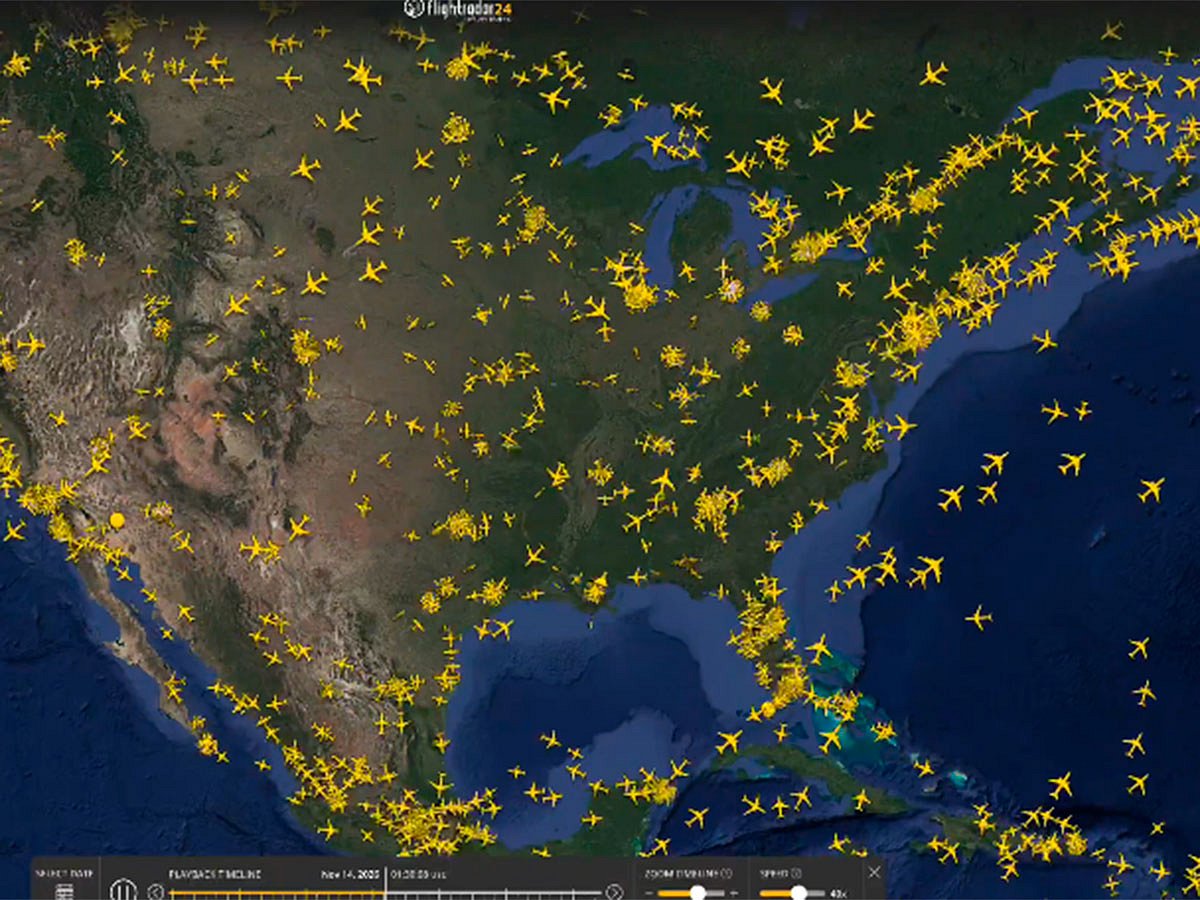
A nationwide ground stop imposed by the US Federal Aviation Administration (FAA) on Friday brought air traffic across the United States to a halt, disrupting thousands of flights and leaving hundreds of thousands of passengers stranded or facing lengthy delays.
A striking comparison shared by flight-tracking platform Flightradar24 shows the scale of the disruption. Its visualisation contrasts normal Friday night air traffic from the previous week with the skies over the United States during Friday's ground stop, highlighting the dramatic reduction in aircraft movements.
Get updated faster and for FREE: Download the Gulf News app now - simply click here.
The FAA issued the nationwide ground stop at 20:54 UTC on November 13, preventing aircraft from taking off for more than four hours. The restriction was lifted at around 8.15pm Eastern Time, allowing flights to gradually resume.
The disruption marked the longest nationwide flight stoppage in 25 years and affected domestic and international services, with knock-on consequences for passengers travelling to and from the United States.
Thousands of flights cancelled
The scale of the disruption continued to emerge as airlines worked to restore their schedules.
FAA Administrator Bryan Bedford said 12,000 flights were cancelled on Friday. He warned that between 4,000 and 5,000 of the approximately 41,000 flights scheduled for Saturday could also be cancelled.
However, flight-tracking website FlightAware had recorded more than 6,200 cancellations by Saturday evening.
Bedford apologised to passengers affected by the disruption and said he expected flight schedules to return to normal by the close of business on Sunday.
Travellers reported confusion and frustration as flights were delayed or cancelled, with some passengers already on board aircraft being asked to disembark shortly before departure.
What caused the nationwide ground stop?
The Trump administration attributed Friday's disruption to problems during maintenance work on the country's air traffic control communication infrastructure.
Transportation Secretary Sean Duffy said an upgrade involving the replacement of ageing copper communication wires with high-speed fibre-optic cables had caused problems affecting communications with aircraft and radar feeds.
He said a contractor error or faulty equipment may have caused the issue, resulting in other routers within the air traffic control system becoming overloaded.
The incident has renewed concerns about the condition of America's ageing aviation infrastructure and the need to modernise systems responsible for managing air traffic.
Calls for air traffic control system overhaul
Duffy called for $50 billion in funding to upgrade and modernise the US air traffic control system, urging Congress to provide the necessary support.
The disruption also prompted criticism from political leaders, with Illinois Governor JB Pritzker questioning the administration's handling of infrastructure funding.
New York Governor Kathy Hochul called for Duffy to resign or be dismissed, saying the country was fortunate that no lives had been lost.
US lawmakers also called for investigations into the cause of the outage, including whether the country's aviation infrastructure was adequately protected against cyber threats.
Despite the widespread disruption, President Donald Trump had made no public statement about the incident as of Saturday night.
With airlines still working through cancellations and delays, passengers were advised to check directly with their airlines for the latest flight information as services gradually returned to normal.
With inputs from AFP
Network Links
GN StoreDownload our app
© Al Nisr Publishing LLC 2026. All rights reserved.