“What concerns me is that the damaged terminal was being used by all non-Kuwaiti airlines. At the moment, the only airlines able to operate normally in and out of Kuwait are Kuwait Airways and Jazeera Airways, because they use separate terminals," says Alwadhi.
Kuwait airport terminal may need year-long recovery after strikes, warns IATA
Airfare hikes, staffing pressure and airport damage add strain on Middle East aviation
Last updated:
4 MIN READ
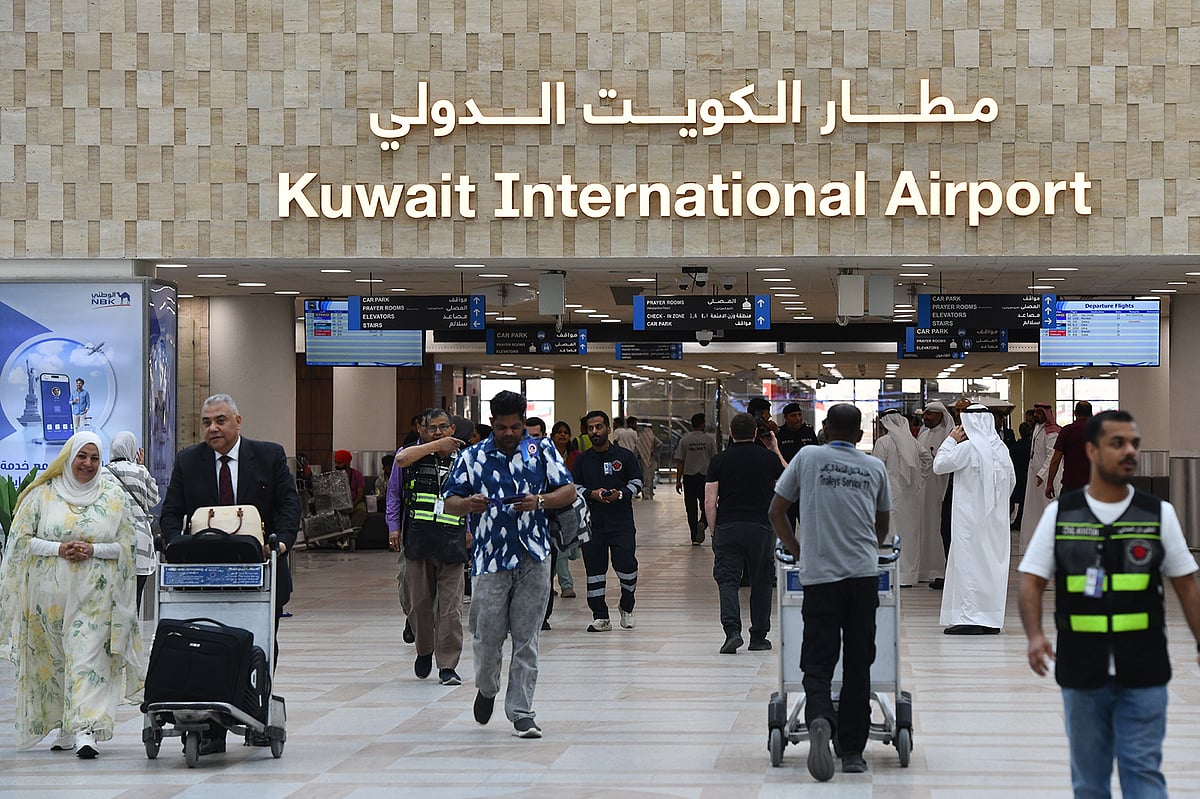
Kuwait halted flights and activated emergency plans after an Iranian missile and drone strike hit the country's airport terminal 1.
Rio de Janeiro: Kuwait’s main international airport terminal could remain heavily disrupted for an extended period after recent strike damage, the International Air Transport Association (IATA) has warned.
This comes as the ongoing US-Israel-Iran conflict begins affecting airport infrastructure, fuel systems and airline operations across the GCC, including the UAE.
Kamil Alawadhi, IATA’s Regional Vice-President for Africa and the Middle East, told media at the 82nd Annual General Meeting (AGM) and World Air Transport Summit (WATS) in Rio de Janeiro that the damage seen at Kuwait airport appeared severe based on images and early assessments.
The incident, a major escalation in the ongoing war, occurred less than a week ago, so authorities are still evaluating the structural damage and preparing a repair plan, Alawadhi explained.
“But from the videos and pictures sent to me, my guess is that recovery could take at least a year. The roof is gone,” he said. No official timeline had been provided by Kuwaiti authorities yet, but the scale of the visible structural damage suggests repairs could take “at least a year.”
Heavy impact on operations
The disruption is significant because the affected terminal handled most foreign airlines operating into Kuwait.
“At the moment, the only airlines that can operate in and out of Kuwait are Kuwait Airways and Jazeera,” he said, referring to the separate terminals used by the two Kuwaiti carriers.
He added that authorities may need to fast-track parts of Kuwait’s new airport terminal project or temporarily allow foreign airlines to use terminals currently reserved for local operators.
"The only solution I have is either they do finish some part of the new terminal really quickly, which is terminal two, or they allow the other operators to use the Kuwait Airways and Jazeera Airways terminals as well," he said, adding it would take some tough decisions and logistics to "get that sorted."
Following the attacks, Kuwait's national carrier said it had resumed scheduled operations from Terminal 4 at the airport, according to Kuwait News Agency (KUNA).
Acting CEO Abdulwahab Al-Shatti said the airline activated emergency operational procedures in coordination with the Directorate General of Civil Aviation and other authorities to ensure safety and minimise disruption. The carrier said affected passengers were offered flexible rebooking and cancellation options without additional fees.
Jazeera Airways also announced the resumption of operations from Terminal 5 after receiving security clearance from authorities. However, the airline warned that some flights could still face delays or cancellations because of the evolving operational situation.
Conflict affecting airports, fuel systems
The comments come as aviation executives increasingly warn that the regional conflict is no longer limited to airspace closures and rerouted flights but is now physically affecting airport infrastructure and fuel logistics.
According to Alawadhi, fuel farms, pipelines, taxiways and runways in parts of the Gulf have also been impacted. In the early days of the war, a fuel tank at Dubai International Airport was hit by an Iranian drone, leading to a temporary suspension of operations at DXB. The drone attack on Kuwait Airport also killed one Indian national.
Airlines across the region have repeatedly adjusted schedules as airspace opens and closes at short notice following strikes.
Airfares likely to remain high
Passengers are also expected to continue paying elevated ticket prices for months as airlines struggle with soaring fuel costs. “So obviously airlines do not control fuel prices, and tickets are often sold 30, 60 or even 90 days in advance,” Alawadhi said.
“When fuel prices suddenly surge, airlines can end up operating those flights at a significant loss.”
He said airlines are often forced to pass at least part of those additional costs on to travellers in order to remain financially viable. “While fuel prices remain at these record highs, ticket prices will also stay high,” he added.
The pressure is being felt globally, although African airlines have faced additional challenges linked to fuel availability and supply disruptions.
Smoke billows following a strike at a fuel depot at Kuwait International Airport in Farwaniya Governorate, Kuwait, on Wednesday, March 25, 2026. Kuwaiti authorities said air defences intercepted multiple hostile drones and missiles, while the strike caused a fire but no casualties.
Staffing pressures returning
The crisis is also placing fresh pressure on airline staffing levels, particularly as some carriers continue operating below normal capacity.
Alawadhi said airlines cannot maintain full staffing levels indefinitely if operations remain reduced.
“If the airlines are at 75 per cent today of what they were last year, then there’s 25 per cent capacity that they haven’t got back yet,” he said.
Still, he noted that many Gulf airlines had handled previous crises differently from some global carriers during the Covid-19 pandemic by attempting to retain staff through unpaid leave or reduced-pay arrangements rather than large-scale layoffs.
Gulf aviation still seen as resilient
Despite the operational and financial strain, IATA said Gulf aviation remains highly resilient due to the flexibility of regional carriers and the scale of their networks.
Alawadhi said airlines around the world have continued adapting rapidly whenever another carrier suspends routes or reduces operations.
“When one airline pulls out, another airline steps in,” he said. “The aviation industry as a whole is incredibly resilient.”
He also dismissed concerns that Gulf airlines would cancel long-term aircraft orders, noting that most deliveries are already scheduled years into the future.
“If you went and bought an A320 now, you’ll get it in 2032,” he said.
Sign up for the Daily Briefing
Get the latest news and updates straight to your inbox
Network Links
GN StoreAbout Gulf NewsTerms & ConditionsReach by GNSitemapContact usPrivacy PolicyGN FocusHave your sayWork with usAdvertise with usGulf News epaperPrinting Services
Download our app
© Al Nisr Publishing LLC 2026. All rights reserved.