IndiGo’s dominance over India’s skies tested by new airline entries after disruptions
Three new airlines plan 2026 launches as government moves to widen competition
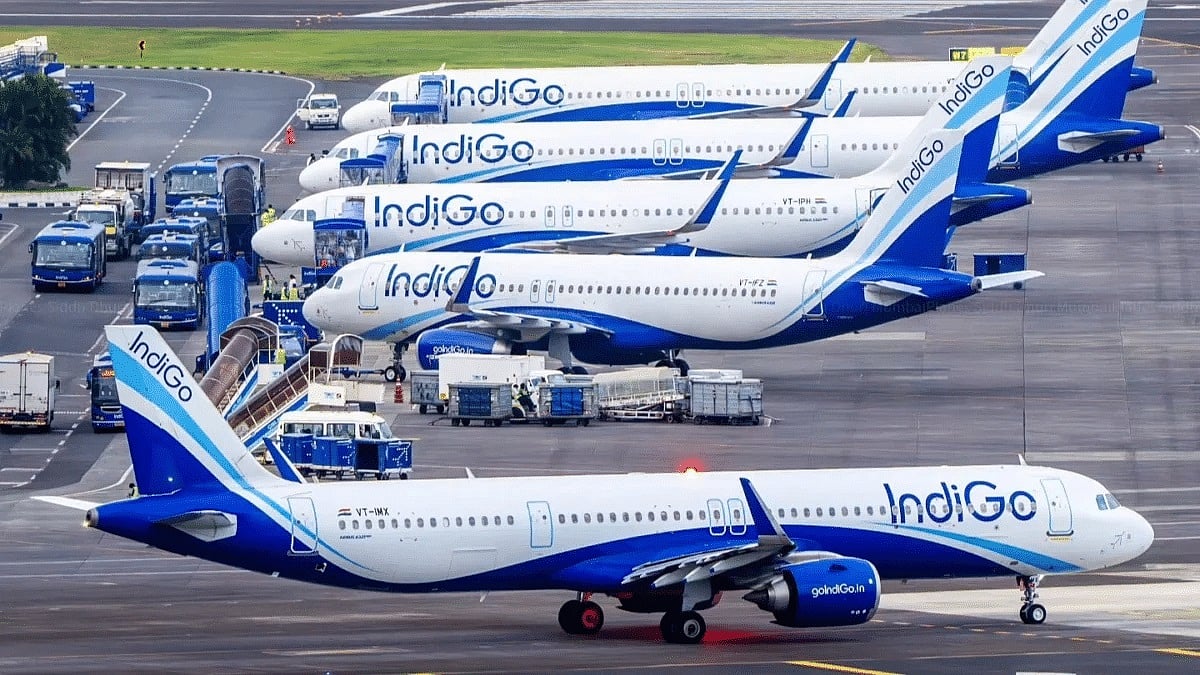
Dubai: For much of the past decade, flying in India has meant choosing between two names: IndiGo or Air India. On hundreds of routes, there has effectively been only one option. That dominance is now under fresh scrutiny, after the government cleared three new airlines to enter the market, weeks after a major disruption at IndiGo exposed the risks of over-reliance on a single carrier.
The civil aviation ministry on Wednesday issued no-objection certificates (NOCs) to Al Hind Air and FlyExpress, adding to Uttar Pradesh–based Shankh Air, which received approval earlier. All three airlines are expected to begin operations in 2026, marking the most significant attempt in years to inject competition into India’s domestic aviation market.
Disruptions exposed risks
The push for new airlines follows chaos in November and December, when IndiGo cancelled around 4,500 flights over several weeks. Poor crew planning linked to updated flight duty time limitation rules led to widespread delays and cancellations, leaving thousands of passengers stranded across airports.
While IndiGo restored most services within days, the scale of the disruption reignited concerns about market concentration. With IndiGo controlling about 65% of domestic capacity, even short operational failures have nationwide consequences. Together with the Air India group — Air India and Air India Express — the two carriers account for more than 90% of India’s domestic market.
The episode prompted renewed calls for structural reform and greater airline diversity.
How IndiGo built its lead
IndiGo’s rise was built on discipline rather than spectacle. When it launched in 2006, India’s aviation sector was dominated by full-service carriers such as Jet Airways, Air India and Kingfisher Airlines. While rivals focused on premium services, IndiGo adopted a strict low-cost model, operating a single aircraft type and using sale-and-leaseback financing to conserve cash.
The strategy paid off. IndiGo remained profitable through the global financial crisis, overtook Air India by 2010, and became the country’s largest airline in 2012. As competitors collapsed — Kingfisher in 2012 and Jet Airways in 2019 — IndiGo rapidly absorbed airport slots and routes, pushing its market share beyond 40% by the mid-2010s.
The pandemic further consolidated its position. While airlines such as Go First later filed for bankruptcy, IndiGo used its cash reserves to place record aircraft orders, including a 500-plane Airbus deal in 2023. By late 2025, IndiGo was operating nearly 80% of all domestic routes, and was the sole operator on more than 500 city pairs.
Highly concentrated market
India currently has nine scheduled domestic airlines in operation. These include IndiGo, Air India, Air India Express and state-owned Alliance Air, alongside Akasa Air, SpiceJet, Star Air, Fly91 and IndiaOne Air. Regional carrier Fly Big suspended scheduled services in October.
Outside the two dominant groups, Akasa Air has emerged as the strongest challenger, holding about 5% market share with a fleet of around 30 aircraft. SpiceJet, once the country’s second-largest airline, has shrunk to about 2–3% amid financial distress. Several regional carriers operate niche routes under the government’s UDAN connectivity scheme.
Despite this, competition remains limited at scale — a gap the government now appears keen to address.
Who are the new entrants?
Shankh Air
Shankh Air is positioning itself as Uttar Pradesh’s first scheduled airline, with its main hub planned at the upcoming Noida International Airport in Jewar. Unlike most new entrants, it plans to operate as a full-service carrier, offering multiple cabin classes. The airline is undergoing technical reviews and aims to launch in the first quarter of 2026, with plans to scale to 20–25 aircraft within three years.
Al Hind Air
Backed by the Kerala-based Alhind Group, a long-standing travel and tourism player, Al Hind Air plans to operate ATR 72-600 turboprop aircraft. Its strategy centres on high-frequency regional routes, initially focused on southern India, before expanding to short-haul international services to the Middle East. The airline received its NOC in December 2025 and is seeking its air operator certificate, with a mid-2026 launch target.
FlyExpress
FlyExpress has also received its NOC, though details on its fleet and routes remain limited. The airline is expected to focus on Tier-2 and Tier-3 cities under the UDAN scheme, tapping into regional demand that remains underserved by larger carriers.
Can the duopoly be broken?
The arrival of three new airlines in 2026 is unlikely to immediately weaken IndiGo’s grip. High fuel taxes, thin margins and intense price competition have historically driven airlines out of business. Jet Airways, Kingfisher and Go First remain cautionary tales.
But their entry matters. More airlines mean more capacity, more redundancy during disruptions, and less dependence on a single operator. After the IndiGo meltdown, regulators and passengers alike are acutely aware of what happens when the system has no buffer.
For India’s aviation market, the real test will begin next year — not when approvals are announced, but when these airlines actually take to the skies.

Sign up for the Daily Briefing
Get the latest news and updates straight to your inbox
Network Links
GN StoreDownload our app
© Al Nisr Publishing LLC 2026. All rights reserved.