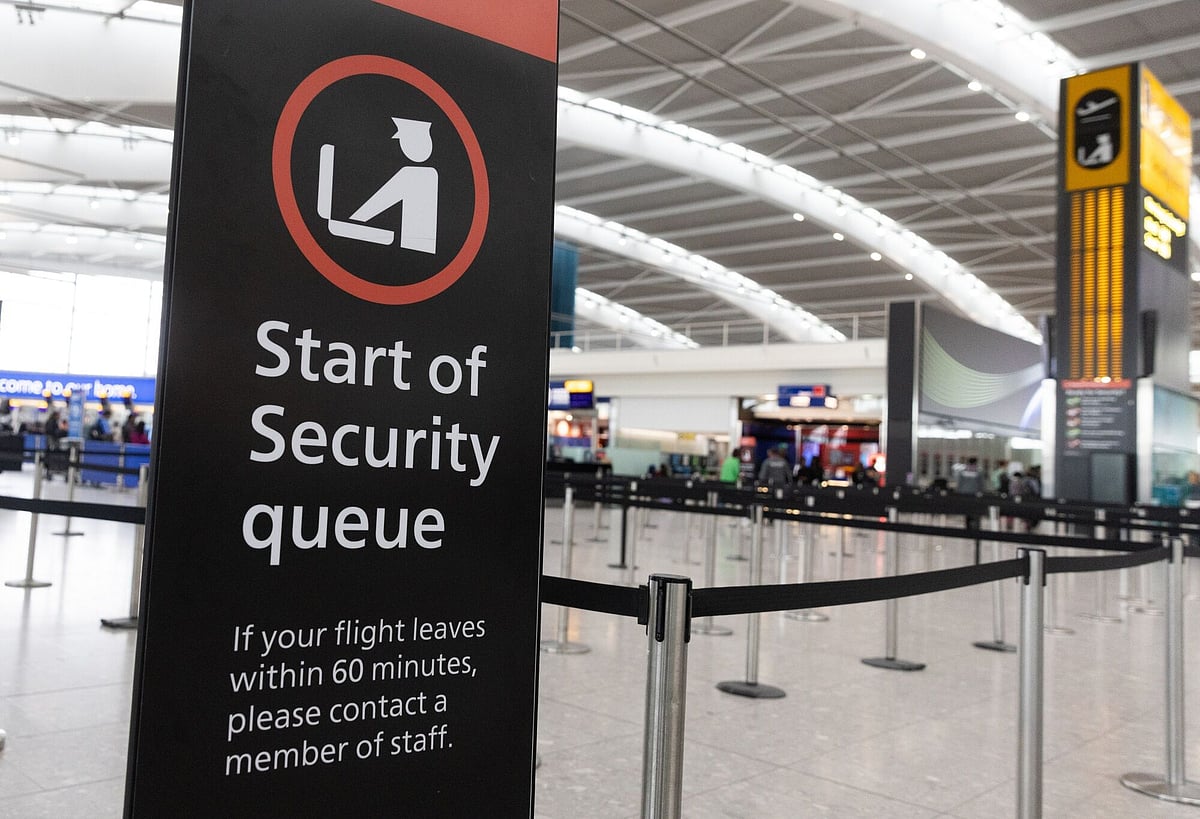
London Heathrow Airport is likely to miss an extended deadline to finish installing advanced security scanners, according to people familiar with the matter, raising the prospect of peak-summer backups as passengers take time to remove liquids and electronics from their luggage.
The UK’s biggest airport is exploring options for another extension beyond June, said two of the people, who requested to remain anonymous as discussions were confidential. Other airports also risk going over the cutoff, one of the people said.
Heathrow was among a number of large airports that couldn’t make a June 2024 deadline, after the original cutoff in 2022 was shelved because of the pandemic. The facilities were granted another year to complete the work, and several including London Gatwick and Manchester expect to be ready. The government said last year that it was considering serious financial penalties if the new target wasn’t met.
“We are working really hard with government to make that happen and that’s really all I can say now,” Heathrow Chief Executive Officer Thomas Woldbye said in an interview last week after the airport group reported full-year results.
Asked about a potential extension, Woldbye said he would discuss it with government. The project is “big and complex” and there may be “smaller areas that we need to mop up but that’s it,” he said.
A spokesman for Heathrow declined further comment.
The new computed-tomogrophy machines give a clearer picture of baggage contents, obviating the need to remove liquids and electronic items for security purposes. Yet the scanners are much bigger and heavier than the ones they are replacing, requiring some airports to reinforce flooring to accommodate them.
Last year, the UK Department for Transport extended the installation deadline and then in June told some airports that were ready with the new machines to continue the old procedure of segregating liquids in plastic bags. This caught some airports and passengers offguard, and led to long waiting times for security checks.
“Passengers should have enjoyed a more-efficient security process at the UK’s biggest airport,” said Rory Boland, editor at Which? Travel, a non-profit consumer guide. Instead, rules varied at UK airports, and “the ensuing confusion led to long delays.”
Heathrow’s Woldbye said more than half of the airport’s passengers are now going through security lanes equipped with the new scanners. Its website continues to instruct passengers to place gels and liquids in a clear bag, and remove laptops. In practice, customers going through its 146 lanes are typically allowed to leave these items in their luggage when there’s an upgraded machine.
The DfT, which has overseen the transition to the new equipment, had no comment on Heathrow’s timeline. The new scanners are helping the UK to remain “one of the most robust aviation security regimes in the world,” a spokeswoman for the agency said.
The airport said last month it would pay a £250 million ($316 million) dividend to its owners, its first in five years. It has also gained UK support for adding a third runway, and is moving toward formal approvals.
Gatwick, the UK’s second largest airport, said it’s set to finish its project by the end of March, while Manchester Airports Group expects to complete installation across its three hubs, including London Stansted, in line with the government’s timeline. Smaller airports such as Birmingham International and London City have already fitted the machines.
Airports remain in the dark about how DfT will approach liquid rules this summer. Passengers should check the security requirements before they travel and ensure that liquids in hand luggage don’t exceed 100 milliliters, the DfT spokesperson said.
“It’s imperative that security rules at UK airports are uniform and that improvements to security scanners are made as soon as possible,” said Boland, of Which? “In the meantime, rules must be clearly communicated to passengers before they travel.”
Sign up for the Daily Briefing
Get the latest news and updates straight to your inbox
Network Links
GN StoreDownload our app
© Al Nisr Publishing LLC 2026. All rights reserved.