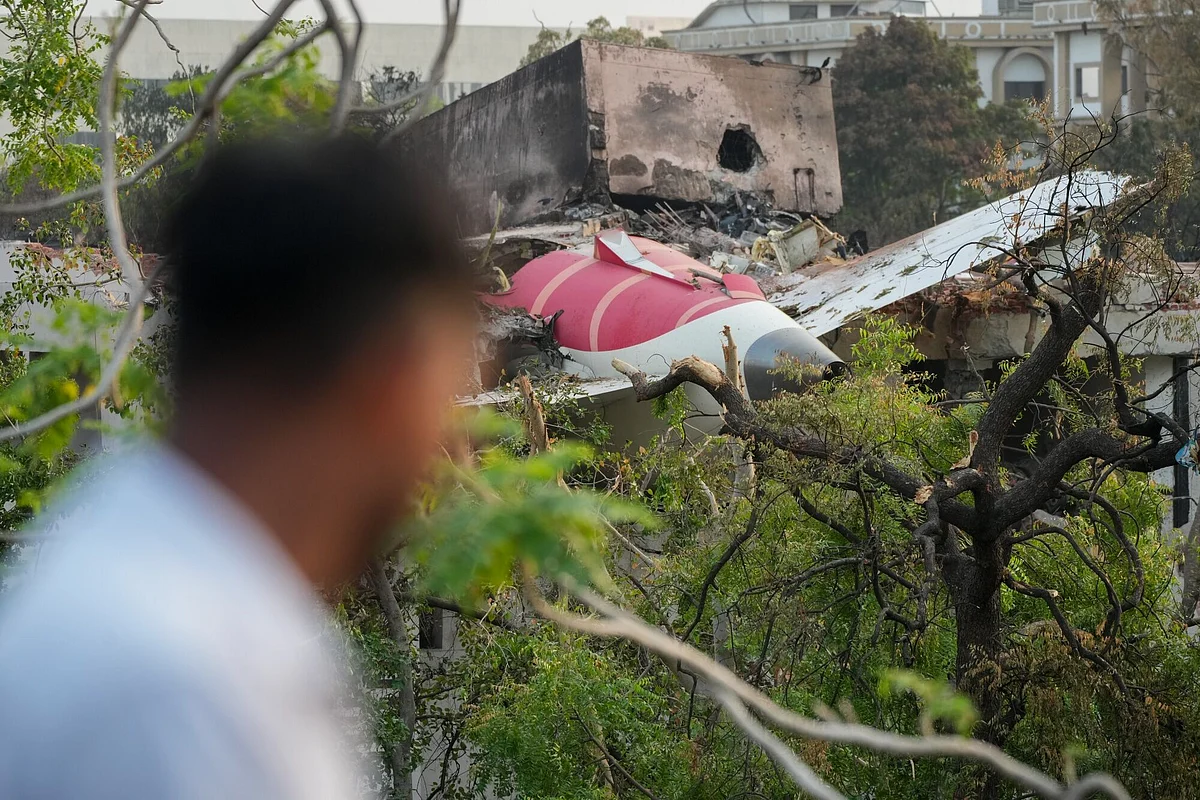
Dubai: Air India is heading for its largest annual loss on record as the financial fallout from last year’s deadly Boeing 787 crash collides with higher operating costs from regional airspace restrictions, people familiar with the matter told Bloomberg.
The airline expects a loss of at least Rs150 billion ($1.6 billion) for the year ending March 31, Bloomberg reported. The projection comes as investigators continue probing the June crash of a London-bound Dreamliner from Ahmedabad that killed about 260 people, an accident that the BBC said has drawn renewed attention to the aircraft’s technical history.
Pakistan’s closure of its airspace to Indian airlines after a military clash forced longer routes to Europe and the US, driving up fuel burn and crew costs, according to people cited by Bloomberg. The cost pressure has mounted even as questions around the crash remain unresolved.
Recovery plan derailed
Before the accident, Air India had been edging closer to financial stability after years of losses. Management had targeted operating break-even this fiscal year. That goal slipped out of reach after the crash and the subsequent airspace shutdowns disrupted schedules and inflated costs, people familiar with the matter told Bloomberg.
With the airline’s finances deteriorating, the BBC separately reported that a US aviation safety group had alleged the aircraft involved in the crash suffered technical failures before the accident, including electrical and software problems.
Industry pressure builds
The losses come during a turbulent year for Indian aviation, marked by passenger anxiety, repeated delays, and mass cancellations at a rival carrier that have underscored pressure in a market dominated by two major players.
Inside Air India, executives recently presented a five-year business plan projecting profits only in the third year. The board rejected it and asked for a faster turnaround, Bloomberg reported.
During the same period, the Foundation for Aviation Safety had submitted material to the US Senate Permanent Subcommittee on Investigations, outlining what it described as findings based on internal documents related to the aircraft.
Owners weigh next steps
Air India’s financial strain has been building. Filings compiled by business intelligence platform Tofler show losses of about Rs322.1 billion over the past three years. The carrier sought at least Rs100 billion in fresh support last year, multiple media reported earlier.
The deepening losses are now a concern for both shareholders. Tata Group has begun searching for a new chief executive to replace Campbell Wilson, though the process may not conclude until the crash report is released.
Singapore Airlines, which holds 25.1% after merging Vistara into Air India in 2024, has seen its own earnings weighed down by the carrier’s performance, even as it helps bring aircraft maintenance in-house under the restructuring.
Technical claims probed
The US safety group also alleged the aircraft experienced repeated electronics and software faults, including circuit breakers tripping, wiring damage, short circuits, loss of electrical current, and overheating of power system components.
It also claims that in January 2022 the jet suffered a fire in a power distribution panel during a descent into Frankfurt, with damage severe enough to require the entire unit to be replaced, the BBC reported.
Those allegations have surfaced as India’s Aircraft Accident Investigation Bureau continues to lead the crash investigation, with US officials participating because the aircraft and engines were designed and built in the United States.
Broader safety concerns
A preliminary report released weeks after the crash said the fuel control switches were moved from “run” to “cut-off” shortly after takeoff, depriving the engines of fuel. The report cited a cockpit recording in which one pilot asked why the switches were cut, with the other responding that he had not done so.
This detail triggered speculation about pilot action, prompting pushback from victims’ lawyers, safety campaigners, pilots’ groups, and some technical experts who say focusing too early on pilot error could divert attention from possible technical causes.
The Foundation, led by former Boeing manager Ed Pierson, has described the preliminary report as inadequate and said its concerns extend beyond the Air India jet to roughly 2,000 failure reports involving other Dreamliners in the United States, Canada, and Australia, some involving water leaks into wiring bays previously flagged by regulators, the BBC said.
Boeing has said the 787 remains a safe aircraft with a strong operating record. Before the Ahmedabad crash, the Dreamliner fleet had flown for nearly 15 years without a fatal accident.

Sign up for the Daily Briefing
Get the latest news and updates straight to your inbox
Network Links
GN StoreDownload our app
© Al Nisr Publishing LLC 2026. All rights reserved.