A millisecond software glitch led to more than 2,000 cancelled UK flights
Tiny coding defect caused six hours of UK restrictions and disrupted UAE services
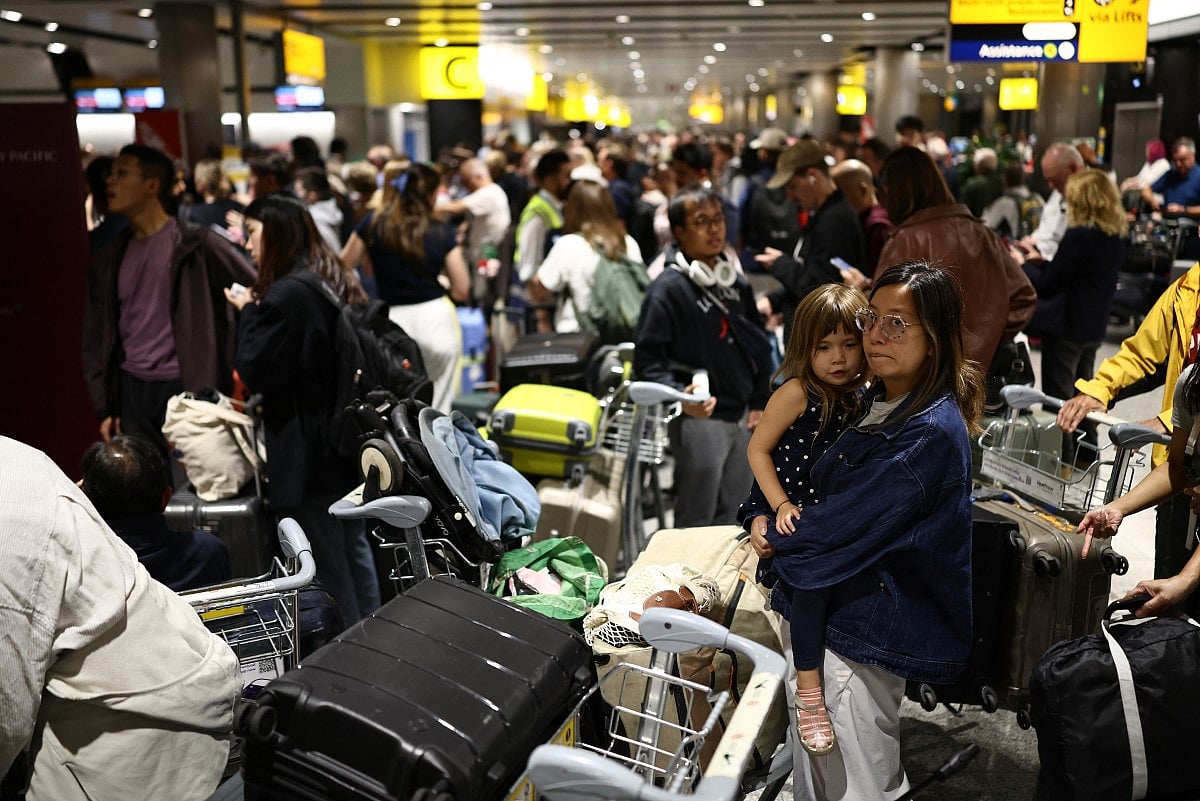
A software defect triggered in a millisecond led to an air traffic control failure that ultimately contributed to more than 2,000 flight cancellations across the UK, investigators have found.
The September 8 disruption affected hundreds of thousands of passengers. It caused delays and cancellations at major airports across Britain, with the impact also reaching travellers flying between the UK and the UAE.
Get updated faster and for FREE: Download the Gulf News app now - simply click here.
Britain’s National Air Traffic Services (NATS) has now traced the failure to a tiny section of computer code.
What went wrong?
According to NATS’ preliminary investigation, the problem originated in a small part of the National Airspace System, which underpins UK airspace management.
The affected software allocates identification codes to individual aircraft when staff make manual requests. These codes allow flights to be identified on radar once airborne.
NATS said it was processing a manual request for an aircraft code when the system received a message related to a higher-priority activity.
That temporarily paused the aircraft-code request.
When processing resumed, a software defect meant it did not restart correctly. The resulting output became corrupted and affected some subsequent flight-data updates.
The critical sequence happened “in the space of a millisecond”, NATS said.
The millisecond reference does not mean the resulting disruption lasted only a fraction of a second.
With less information available to air traffic controllers, NATS imposed restrictions on aircraft movements to maintain safety while it restarted its systems and reloaded flight data.
Those restrictions remained in place for around six hours.
Although NATS operations returned to normal later that evening, the organisation said it took more than two days for the resulting passenger backlog to clear.
More than 2,000 flights cancelled
The disruption quickly spread through Britain’s aviation network.
According to aviation analytics company Cirium, 1,746 flights were cancelled on September 8, followed by another 399 on September 9.
That brought the total to 2,145 cancellations over the two days.
Industry body Airlines UK said more than 330,000 passengers were affected, with around 155,000 facing cancellations and approximately 180,000 experiencing delays.
British Airways alone cancelled nearly 550 flights over the two days, affecting about 85,000 customers.
Even after NATS restored normal operations, airlines faced knock-on disruption as aircraft and crews were left out of position.
How did the disruption affect UAE travellers?
The impact extended to passengers travelling between the UAE and the UK.
Etihad Airways said that the UK air traffic control problem disrupted several London Heathrow-Abu Dhabi services on September 8.
Flight EY64 from London Heathrow to Abu Dhabi was cancelled, while EY66 was delayed.
EY68 faced an extended delay after its inbound service, EY67, was diverted to Paris Charles de Gaulle.
Etihad said its teams assisted affected passengers with hotel accommodation and rebooking their onward travel.
Some disruption continued the following day. Etihad’s EY77 from Abu Dhabi to Manchester and EY61 from Abu Dhabi to London Heathrow departed late, Gulf News reported.
Emirates also confirmed that flights arriving at and departing from UK airports were being affected by the NATS technical issue.
The Dubai-based airline advised passengers to regularly check their flight status and operational updates before heading to the airport and to monitor their email for notifications about delays, changes or cancellations.
Was it a cyberattack?
NATS has ruled out a cyberattack.
Its preliminary investigation instead identified a software defect in a specific part of its flight-data system and traced it to “a small subsection of coding”.
NATS chief executive Martin Rolfe also dismissed speculation that military intervention was responsible.
The company said the September 8 failure was unrelated to the major UK air traffic control outage in August 2023.
NATS said flight safety was never compromised during the latest incident.
Independent review ordered
The findings are preliminary and will now face independent scrutiny.
UK Transport Secretary Heidi Alexander ordered an independent review into the disruption, including its cause and the resilience of Britain’s air traffic control infrastructure.
NATS said mitigation measures are already in place while it safety-tests and deploys a permanent software fix.
The episode demonstrates how an error occurring within a fraction of a second can cascade through a tightly connected aviation network: the software defect was triggered in a millisecond, restrictions lasted around six hours, and it took more than two days to clear the resulting disruption.
Network Links
GN StoreDownload our app
© Al Nisr Publishing LLC 2026. All rights reserved.