When we speak of critical minerals, the conversation almost always turns to the energy transition and advanced technology. Lithium, cobalt, coltan, and the three Ts (tantalum, tin, and tungsten) dominate the headlines. They are the materials behind artificial intelligence, electric vehicles, and defence systems. Yet this focus often overlooks something more basic: global food security.
Potash and phosphate rock supply the potassium and phosphorus that no farm can do without. Sulphur does two jobs. It is a plant nutrient, and it is the feedstock for the sulphuric acid that turns phosphate rock into fertiliser. Nitrogen completes the picture. Most nitrogen fertiliser is made from ammonia. Green ammonia, made with renewable hydrogen, offers a way to produce it with far lower emissions.
In November 2025, the United States added potash and phosphate to its official list of critical minerals. This confirmed what agronomists and traders have long understood. Without mined phosphorus and potassium, yields fall, and food systems inherit a supply risk that technology alone cannot hedge.
Africa shows why these connections matter. The continent supplies much of the world’s cobalt and coltan. Yet, according to the African Union, its farmers apply only around 18 kg of fertiliser nutrients per hectare, roughly 13 percent of the global average. At the same time, the African Union estimates that around 70 percent of the fertiliser produced on the continent is not used there. The geology and the harvest are not in the same place. The trade between them remains too thin, too opaque, and too easily broken.
Behind these figures are millions of smallholder farmers. When they cannot obtain affordable fertiliser, harvests shrink and food prices rise. Some of the world’s most vulnerable communities pay the price. This is not only a market failure. It is also a humanitarian one.
Governments have responded on several fronts. Alongside the United States, the European Union lists phosphate rock and phosphorus as critical raw materials. This year, G7 finance and development ministers, together with Brazil, India, Kenya, and the Republic of Korea, adopted an action plan on fertiliser shocks and food system resilience. It covers the flow of agricultural inputs, key logistics corridors, working capital for farmers, and investment in local and regional fertiliser production. In November 2025, the G20 in Johannesburg called for critical minerals to drive value addition in the countries that produce them. BRICS, of which the UAE has been a full member since 2024, has taken up the same themes. Its agriculture ministers agreed a framework on agricultural inputs in June, and its leaders in New Delhi named fertiliser shortages among the supply crises that threaten food security.
Each of these agendas needs a place where the trade can actually happen, with secure storage, financing, and verified provenance, under rules that buyers and lenders trust. DMCC is a Dubai government authority operating within UAE federal law and regulation. Its member companies have direct access to the DIFC Courts. It has agreements with the Virtual Assets Regulatory Authority, and it works closely with the Central Bank of the UAE and with the Capital Market Authority, which regulates DGCX. That framework is what allows producers and buyers from every market to trade here with confidence.
DMCC’s critical minerals vertical is designed to help close the gap. Dubai’s role is not to own the resource. It is to be the trusted place where the resource can be sold, stored, financed, and returned to the farm as an input. Minerals flow out of producing countries through Dubai. Potash, phosphate, sulphur, and nitrogen flow back in. They arrive with the liquidity and risk management tools that let buyers hold cargo rather than chase it.
The infrastructure is already in place. DMCC Tradeflow registers ownership and warehouse warrants over commodities stored in the UAE, turning a stockpile into financeable inventory. DMCC FinX connects that trade with capital. The DMCC Maritime Centre brings shipping, insurance, and chartering expertise into the same jurisdiction as the contract, so the value does not leave with the vessel. By working with port partners, DMCC can connect African production directly to these services. This matters because fertiliser that cannot be kept dry, and concentrates that cannot be kept segregated, do not make a viable market.
The UAE also brings a domestic anchor that few trading hubs can match. It is the world’s leading exporter of sulphur, recovered largely from gas processing. Before this year’s disruption, CRU projected that UAE exports would rise from 7 million tonnes in 2024 to 11.4 million tonnes a year by 2029. Sulphuric acid is essential to phosphate fertiliser, and equally to the processing of battery-grade nickel and cobalt. So a phosphate trade booked in Dubai sits next to the sulphur that processes it, at the crossroads of battery chemistry and agricultural yield. This year’s shortage showed how much the world depends on that link.
On the market side, DMCC’s commercial base is already here. It includes 363 organic and chemical fertiliser businesses, alongside a deep community of financial, logistics, and maritime service providers. The task now is to give that activity the same standards the rest of the vertical requires. OECD-aligned due diligence and the proposed Dubai Critical Minerals Standard should apply to fertiliser minerals just as they do to cobalt and the three Ts. A clean chain of custody matters as much to a national food reserve as it does to a battery maker.
Food security begins long before food reaches the market. It begins with soil, water, and nutrients, and with the businesses that make them accessible. Bringing those businesses together, under standards the world can trust, is a natural extension of DMCC’s role in global trade.
It is time for the critical minerals conversation to include the minerals of food security. The infrastructure is ready. What is needed now is wider engagement from governments, producers, traders, financiers, and international institutions alike, from the G7 and the G20 to BRICS, for whom this trade is now a strategic imperative.
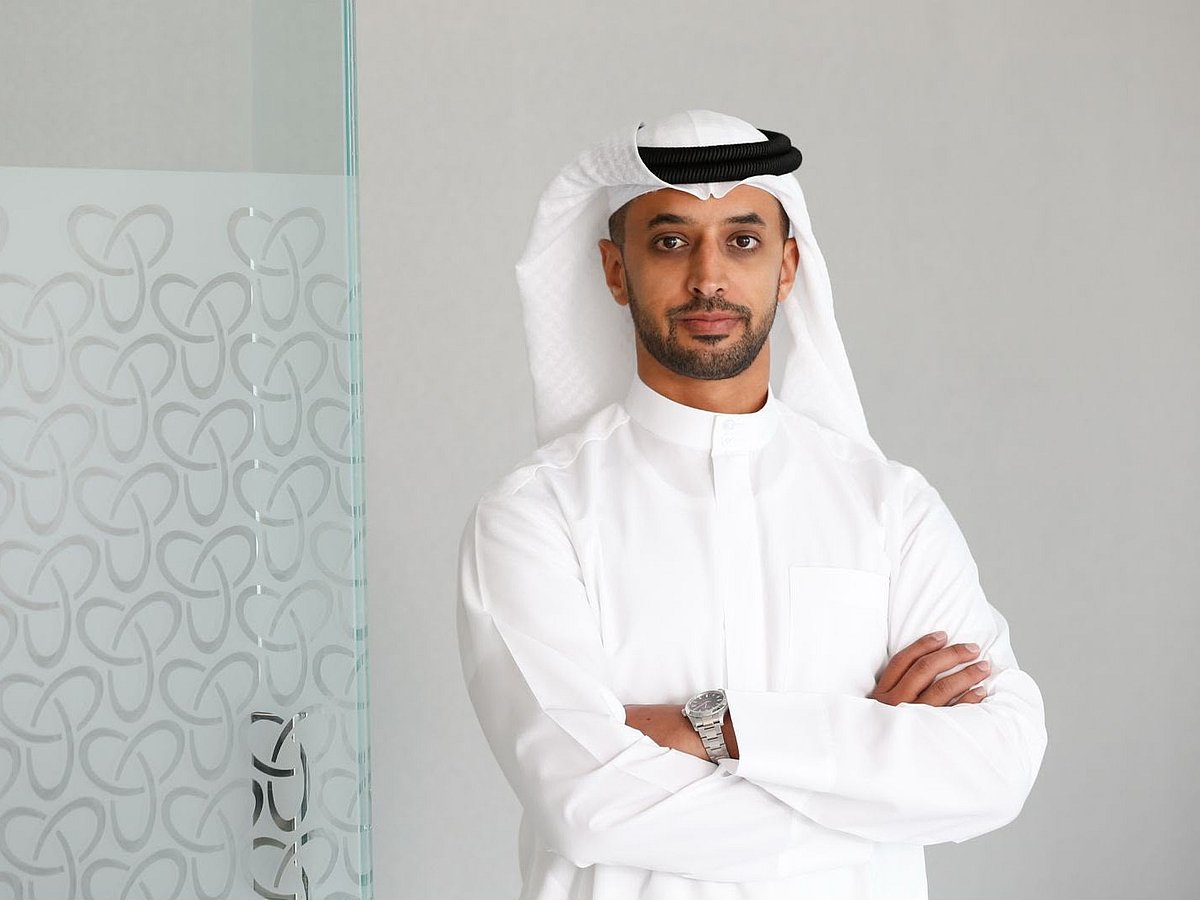
Ahmed Bin Sulayem is the Executive Chairman and Chief Executive Officer of DMCC.
Sign up for the Daily Briefing
Get the latest news and updates straight to your inbox
Network Links
GN StoreDownload our app
© Al Nisr Publishing LLC 2026. All rights reserved.