Millions of children go hungry in insurgency-hit northeast Nigeria - NGO
Attacks by militants have been intensifying in northeast Nigeria in recent months
Also In This Package
In photos: Meet the women heading international bodies
Violent rioting, looting erupt in South Africa
South Africa: ‘Diamond rush’ after social media claims
Escape from COVID: South Africa's luxury 'Blue Train'
Nigeria academy looks to spread ballet among Lagos poor
Tunisians on the margins find escape in ram fighting
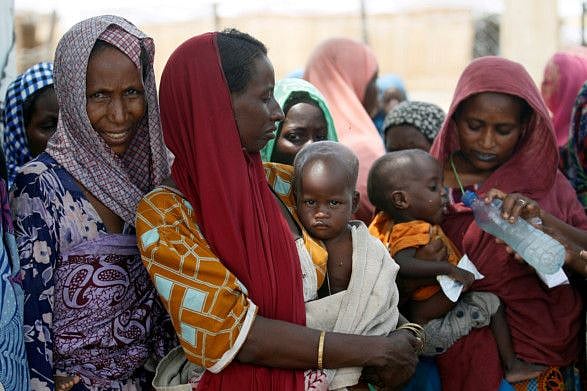
KADUNA, Nigeria: At least 2.3 million children and youth are going hungry in northeast Nigeria where an Islamist insurgency has forced farmers to flee their fields and put the region on the brink of critical food shortages, humanitarian groups have warned.
Attacks by Islamist militants have been intensifying in northeast Nigeria in recent months, with dozens of soldiers and civilians killed and farmers targeted in some attacks.
The more than decade-long conflict has killed hundreds of thousands and displaced millions, but it is now joined by food inflation across Nigeria that has meant millions nationwide can no longer reliably feed themselves or their families.
Save the Children estimated that 700,000 children under five are among the 2.3 million children affected, and called on the government to protect farmers and dedicate more resources to the region.
“We are extremely worried that this will lead to an even bigger food crisis in the northeast of the country,” Shannon Ward, Save the Children’s acting country director for Nigeria, said in a statement.
Meanwhile, the United Nations Office for the Coordination of Humanitarian Affairs said the combination of climate change, insecurity and COVID-19 had put the region on the brink of “catastrophic” food insecurity.
Edward Kallon, the U.N. humanitarian coordinator for Nigeria, said about 4.4 million people were at risk of critical food shortages and that the “growing threat of catastrophic food insecurity” was at its worst in five years.
Kallon said that without humanitarian assistance in Borno, Adamawa and Yobe states, millions would struggle to feed themselves.
“Parents are taking their children out of school to beg in order to survive,” Kallon said, adding: “Women have shared that they resort to eating grass.”
Sign up for the Daily Briefing
Get the latest news and updates straight to your inbox
Network Links
GN StoreDownload our app
© Al Nisr Publishing LLC 2026. All rights reserved.