Baghdad, Geneva: US forces backing Iraqi troops retaking Mosul from Daesh carried out an air strike on a bridge spanning the Tigris river, restricting militant movements between western and eastern parts of the city, a US official said on Tuesday.
US-trained Iraqi Counter-Terrorism Service forces are pushing deeper into east of Mosul, the last major city under control of the hard-line group in Iraq, while army and police units, Shiite militias and Kurdish fighters surround it to the west, south and north.
Militants have steadily retreated from areas around Mosul into the city. But the army’s early advances have slowed as militants dig in, using the more than 1 million civilians inside the city as a shield, moving through tunnels, and hitting advancing troops with suicide bombers, snipers and mortar fire.
Five bridges span the Tigris that runs through Mosul. They have all been mined and booby-trapped by militants who took over the city two years ago as they swept through northern Iraq and declared a caliphate in parts of Iraq and neighbouring Syria.
Despite planting mines on them, the militants have so far been able to continue using bridges which have not yet been destroyed in air strikes.
US Air Force Colonel John Dorrian, a Baghdad-based spokesman for the US-led coalition, on Tuesday said an air strike has taken out the number four bridge, the southernmost, in the past 48 hours.
“This effort impedes Daesh’s freedom of movement in Mosul, it inhibits their ability to resupply or reinforce their fighters throughout the city,” he said.
Iraqi Brigadier general Yahya Rasool, spokesman for the military’s joint operations command, said he could not confirm the air strike. But he said all the bridges across the river are mined by Daesh.
A month ago, a US air strike destroyed the No. 2 bridge in the centre of the city and two weeks later another strike took out the No. 5 bridge to the north.
But the United Nations’ International Organisation for Migration (IOM) expressed concern that the destruction of the bridges could obstruct the evacuation of civilians.
“That is a concern of IOM because this is going to leave hundreds of thousands without a quick way out of the combat,” spokesman Joel Millman told reporters in Geneva.
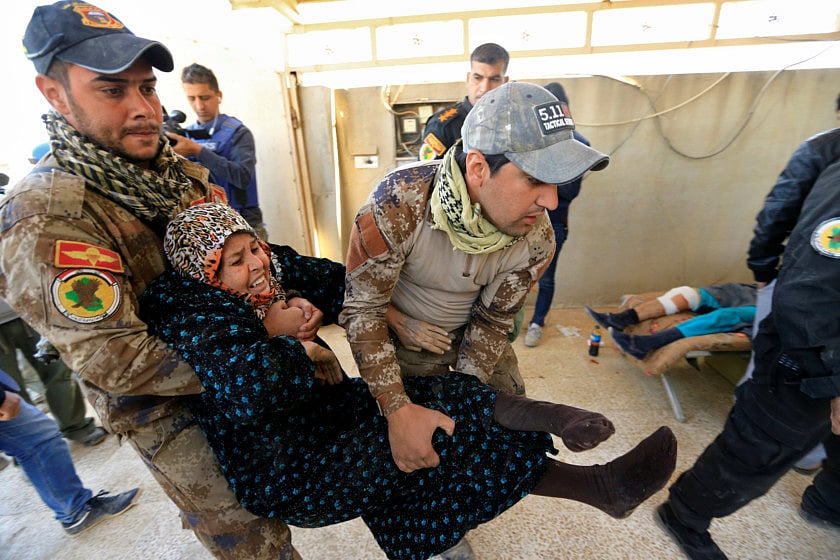
Meanwhile, the US said Tuesday that more than 68,000 people have fled their homes since Iraqi forces launched the offensive against Daesh.
The figure increased significantly over the past week as forces battled deep into the densely populated city, but it falls short of pre-offensive predictions.
“68,550 people are currently displaced and in need of humanitarian assistance,” the United Nations’ Office for the Coordination of Humanitarian Affairs (OCHA) said in a statement.
OCHA said the aid response to the offensive launched against the terrorists on October 17 was growing in complexity, with varying needs for different categories of civilians.
Sign up for the Daily Briefing
Get the latest news and updates straight to your inbox
Network Links
GN StoreDownload our app
© Al Nisr Publishing LLC 2026. All rights reserved.