US mine-clearing operation in Strait of Hormuz: How it works and why it matters
Advanced naval tech to reopen key energy corridor as tensions with Iran remain high
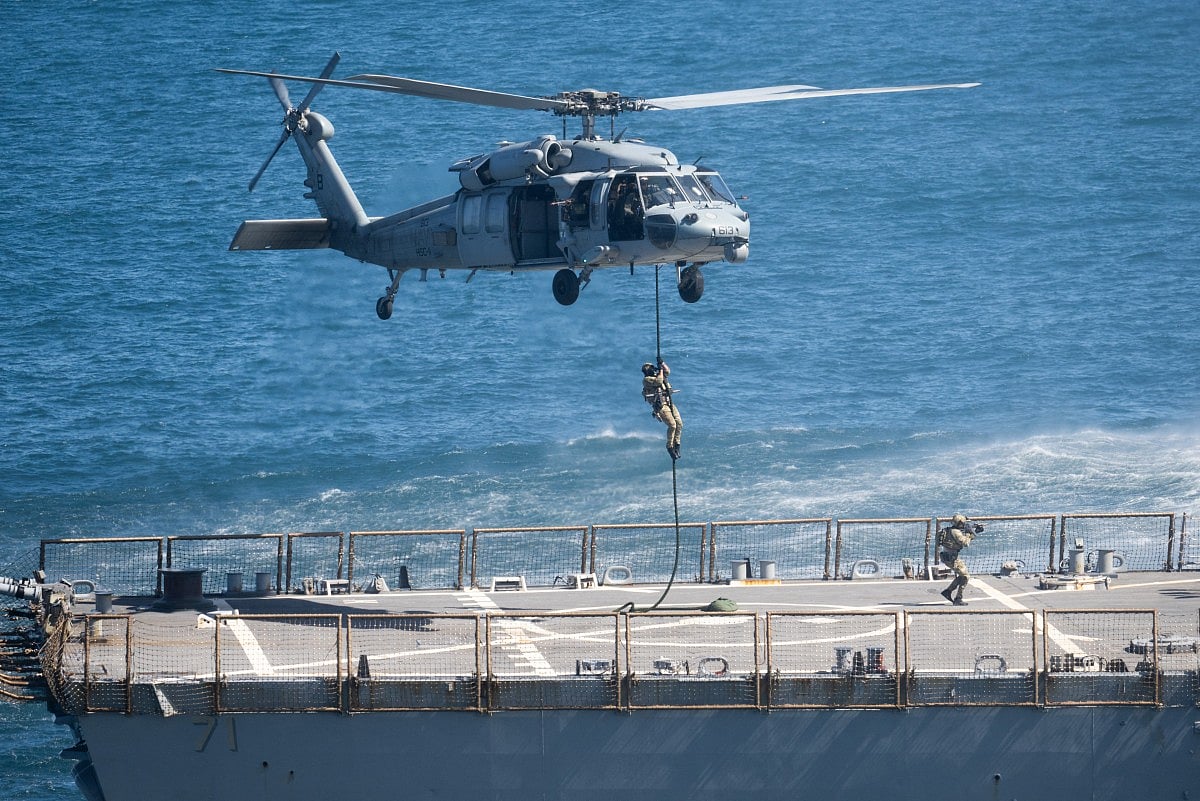
Dubai: The United States has begun a high-stakes operation to clear suspected Iranian sea mines in the Strait of Hormuz, deploying warships, underwater drones and specialised helicopters to reopen one of the world’s most critical energy routes.
Two US Navy guided-missile destroyers — the USS Frank E. Peterson and USS Michael Murphy — have transited the strategic waterway as part of the first such operation since the Iran war began, US Central Command said.
The move comes as Washington seeks to restore safe passage through the narrow chokepoint, which handles nearly 20 per cent of global oil and gas supplies but has been effectively blocked by Iran in recent weeks.
However, Tehran rejected the US claim, with military officials insisting no American vessels had entered the strait and warning that any such attempt would be met with a “severe” response.
How the US is clearing mines
US President Donald Trump said the operation would involve both advanced and traditional mine-clearing systems, with support from allies.
“We have minesweepers there… highly sophisticated underwater minesweepers… but we’re also bringing in more traditional minesweepers,” he said in an interview on Fox News’ Sunday Morning Futures.
“And I understand the UK and a couple of other countries are sending minesweepers.”
Trump said the effort to secure the strait “will take a little while, but it’ll be effective pretty soon,” adding that Gulf states were also assisting, though he did not specify which.
Rather than sending ships directly into dangerous waters, the US Navy is relying on advanced remote systems to detect and neutralise mines.
Unmanned underwater vehicles (UUVs), including torpedo-shaped drones, are being used to scan the seabed with high-resolution sonar to locate hidden explosives.
How mine-clearing works
Underwater drones: Unmanned vehicles scan seabed using sonar to detect hidden mines
Helicopter detection: MH-60S choppers use laser systems to spot floating mines
Remote neutralisation: Robotic devices approach and destroy mines safely
Warship protection: Destroyers provide air and missile defence cover
Safe corridor plan: US aims to create a secure shipping lane for tankers
From above, MH-60S helicopters equipped with laser-based detection systems sweep the surface to identify floating or shallow mines.
Once a mine is detected, it is destroyed using remote-controlled devices that approach the explosive and detonate it safely, minimising risk to personnel.
The destroyers provide cover for these operations, using advanced radar and missile systems to guard against potential threats from Iran’s Revolutionary Guards.
US officials say the goal is to establish a “safe passage” for commercial shipping and gradually restore normal traffic through the strait.
Why Hormuz matters
20% of global oil: One-fifth of world energy supplies pass through the strait
Prices surge: Oil has crossed $100 per barrel amid disruption
Hundreds of ships stuck: Tankers stranded waiting for safe passage
Strategic chokepoint: Only narrow lanes for inbound and outbound traffic
Global ripple effect: Impacts fuel costs, inflation and supply chains worldwide
Shipping resumes — cautiously
Even as tensions persist, some movement has resumed.
Three fully laden supertankers carrying up to 2 million barrels of oil each transited the strait on Saturday — among the first to exit the Gulf since a fragile ceasefire.
However, hundreds of vessels remain stranded, with many operators still seeking clearance from Iran before attempting passage.
The partial reopening highlights both the strategic importance of the strait and the continued uncertainty surrounding its security.
High stakes for global markets
The disruption has already sent oil prices soaring above $100 per barrel and rattled global supply chains.
US President Donald Trump said Washington had begun “clearing out” the strait, calling it essential to restore global trade flows, even as he warned that Iranian mines remain a serious threat.
For now, the situation remains volatile — with military operations, fragile diplomacy and commercial pressures all converging in a narrow stretch of water that underpins the global energy system.
-- With AFP inputs

Sign up for the Daily Briefing
Get the latest news and updates straight to your inbox
Network Links
GN StoreDownload our app
© Al Nisr Publishing LLC 2026. All rights reserved.