Heightened maritime security, air travel disruptions and uncertainty over regional stability remain key concerns for Gulf countries as the military confrontation between the US and Iran continues.
Although daily life in the UAE remains largely unaffected, the conflict is continuing to disrupt regional aviation, commercial shipping through the Strait of Hormuz and global energy markets. Airlines, shipping companies and governments across the Gulf are closely monitoring the situation as tensions remain high.
Several airlines have extended flight cancellations, rerouted aircraft or suspended services to avoid airspace over Iran, Iraq and other conflict-affected areas, while shipping operators are keeping a close watch on developments in one of the world's busiest energy corridors.
Get updated faster and for FREE: Download the Gulf News app now - simply click here.
Strait of Hormuz remains a flashpoint
Fresh concerns emerged on Friday after Iran's Islamic Revolutionary Guard Corps (IRGC) claimed it had struck two oil tankers attempting to pass through the Strait of Hormuz under what it described as US military air escort.
According to the IRGC, the vessels were using what it called an "undeclared route" backed by the United States instead of the designated Iranian shipping channel. The group said the two tankers were brought to a halt, while four others changed course and turned back.
The claims have not been independently verified, but they highlight the growing risks facing commercial shipping through the strategic waterway, which handles a significant share of global oil exports, including supplies from Gulf producers.
Kuwait reports drone attack
Kuwait said its armed forces intercepted and destroyed several hostile drones that entered its airspace early on Friday, marking another escalation in regional tensions. The Ministry of Defence said the drones targeted military and strategic facilities, with falling debris causing minor material damage but no casualties.
Military spokesman Brigadier General Saud Abdulaziz Al Otaibi attributed the attack to Iran and said Kuwait remains on high alert while coordinating with relevant authorities to protect the country's security.
Soon afterwards, Iran's military claimed it had launched drone strikes against US military facilities in Kuwait, including aircraft shelters, satellite communication systems and equipment storage facilities at Ahmad Al Jaber Air Base.
Tehran said the operation was retaliation for recent US attacks, including an alleged strike on a residential home on Qeshm Island. US Central Command (CENTCOM) had not responded to Iran's claims at the time of publication.
US tightens maritime operations
Meanwhile, the US says it is continuing to enforce its naval blockade against Iran, with US Central Command (CENTCOM) reporting that its forces have redirected 24 commercial vessels, boarded two ships and disabled another two as part of ongoing maritime operations.
The US military also released images showing surveillance aircraft monitoring regional waters, saying its naval and air assets remain deployed to enforce the blockade. Conflicting claims emerged over the commercial tanker M/T Nora. Iranian state media said the vessel had successfully broken through the blockade, calling it a symbolic victory for Tehran.
Washington dismissed the claim, with CENTCOM insisting the tanker never breached the blockade. It said US warships, military aircraft and thousands of personnel remain stationed across the region to maintain what it calls a "steel wall" around Iranian ports and coastal waters.
Fresh US sanctions target Iran-linked networks
The United States has also stepped up economic pressure on Tehran.
The US Treasury Department announced fresh sanctions against six entities and individuals in China, India, Russia and Iran accused of providing financial, commercial and logistical support to Mahan Air, the Iranian airline long alleged by Washington to assist the IRGC.
The sanctions target sales agents and facilitators linked to the airline.
US Treasury Secretary Scott Bessent said those supporting Mahan Air or the IRGC would continue to face financial restrictions aimed at cutting them off from the US financial system.
UAE flights continue, with some disruptions
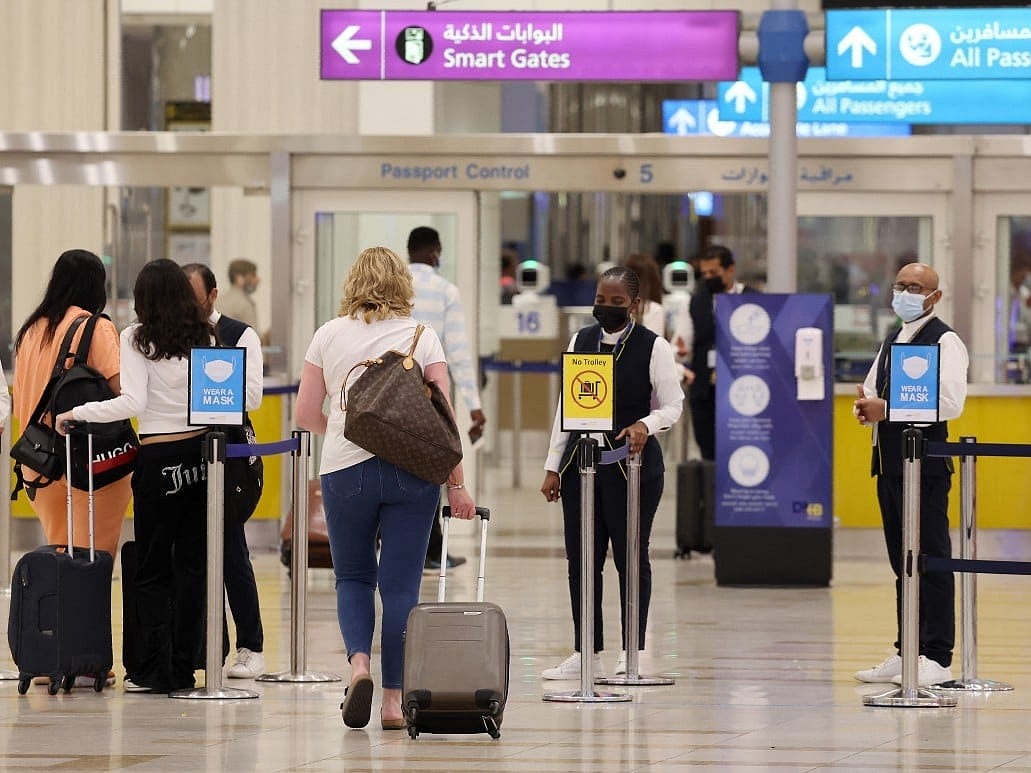
For UAE travellers, the most noticeable impact remains on air travel. Etihad Airways and Air Arabia cancelled several flights to Bahrain, Kuwait and Saudi Arabia on Friday because of operational reasons linked to the regional situation.
Emirates and flydubai have not announced major schedule changes and continue to operate most services as normal. However, airlines continue to review routes and flight schedules based on evolving security conditions.
Passengers travelling from UAE airports are advised to check their flight status before leaving for the airport, arrive earlier than usual and allow extra time for security and check-in procedures.
What UAE residents should know
For most UAE residents, daily life continues as normal despite heightened regional tensions. However, travellers should remain prepared for possible flight delays, cancellations or rerouting as airlines continue to prioritise safety.
Those working in shipping, logistics and international trade may also face delays as tighter maritime security measures and higher insurance costs continue to affect freight operations.
While there has been no direct impact on the UAE, developments in the Strait of Hormuz remain particularly significant because of the waterway's central role in global energy exports and regional trade.
With diplomatic efforts continuing alongside military action, Gulf countries remain on alert, while airlines, ports and businesses continue to adapt to a rapidly changing security environment.
Sign up for the Daily Briefing
Get the latest news and updates straight to your inbox
Network Links
GN StoreDownload our app
© Al Nisr Publishing LLC 2026. All rights reserved.