Dr. Majed al-Ansari, Advisor to the Prime Minister of Quatar and Official Spokesperson for the Ministry of Foreign Affairs. File photo taken on September 24, 2025 in New York City.
US-Iran deal takes shape as Qatar says draft agreement is 'circulating'
Strait of Hormuz reopening, ceasefire seen as gateway to renewed US-Iran talks
Last updated:
2 MIN READ
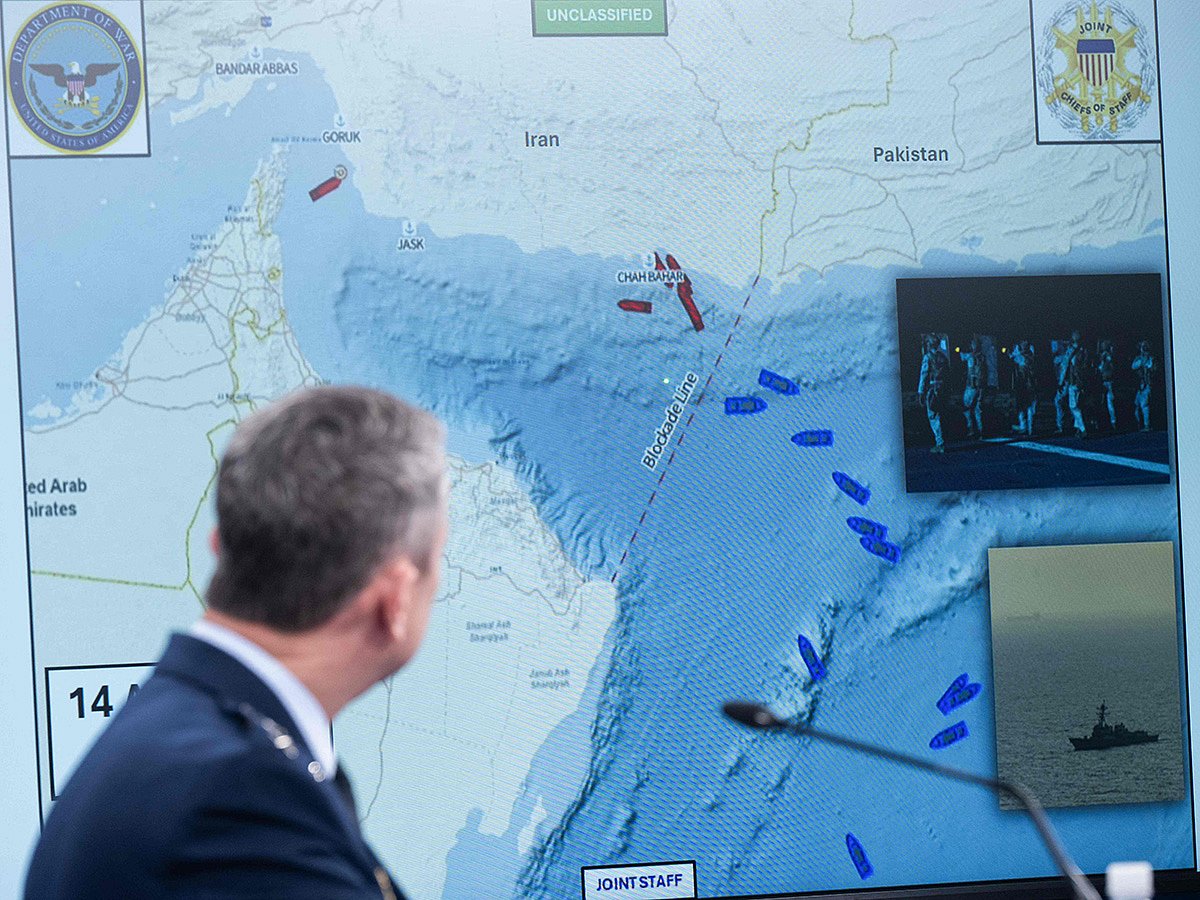
US Chairman of the Joint Chiefs of Staff General Dan Caine speaks as a map of the Strait of Hormuz is displayed during a press briefing at the Pentagon in Washington, DC. File photo taken on April 16, 2026.
AFP
Draft language for a potential agreement between the US and Iran is being circulated among mediators as diplomatic efforts intensify to halt the conflict and reopen the strategically vital Strait of Hormuz.
Qatar’s Foreign Ministry spokesman Majed Al-Ansari told CNN that negotiations were entering what he described as “very progressive stages,” with Qatar, Pakistan and Oman working to exchange proposals between Washington and Tehran.
The development marks one of the clearest signs in recent days that mediators may be trying to build a short-term arrangement that could bring the United States and Iran back to direct negotiations.
Get it: Fast, verified news for FREE ... download the Gulf News app — simply click here
Qatar has said that a ceasefire and reopening of the Strait of Hormuz would be essential to restarting formal US-Iran negotiations.
US Secretary of State Marco Rubio said late on Tuesday that talks had made progress.
"There has been progress in talks to reopen the Strait of Hormuz, but no final agreement has been reached yet. We are hopeful that an agreement will be finalised very shortly," Rubio was quoted as saying.
Rubio said reopening Hormuz emerged as the immediate issue, while a broader agreement aimed at preventing Iran from developing a nuclear weapon remains the longer-term objective.
President Donald Trump has also indicated that the Strait of Hormuz is at the centre of the current diplomatic push and suggested the waterway could reopen quickly if an understanding is reached.
Still, major differences remain. Tehran has previously insisted that its security and control over its nuclear program must be respected, while Washington has pushed for restrictions aimed at preventing Iran from acquiring a nuclear weapon.
The two sides have also disagreed over the future of US military forces in the region, sanctions and the terms governing maritime traffic through Hormuz.
No final agreement has been reached and there is no firm timetable for a deal.
Network Links
GN StoreAbout Gulf NewsTerms & ConditionsReach by GNSitemapContact usPrivacy PolicyGN FocusHave your sayWork with usAdvertise with usGulf News epaperPrinting Services
Download our app
© Al Nisr Publishing LLC 2026. All rights reserved.