US Admiral Cooper's message to IRGC: 'Shoot at two of our ships, lose three of yours'
What US commander told Revolutionary Guards about Iran's oil fleet after naval attacks
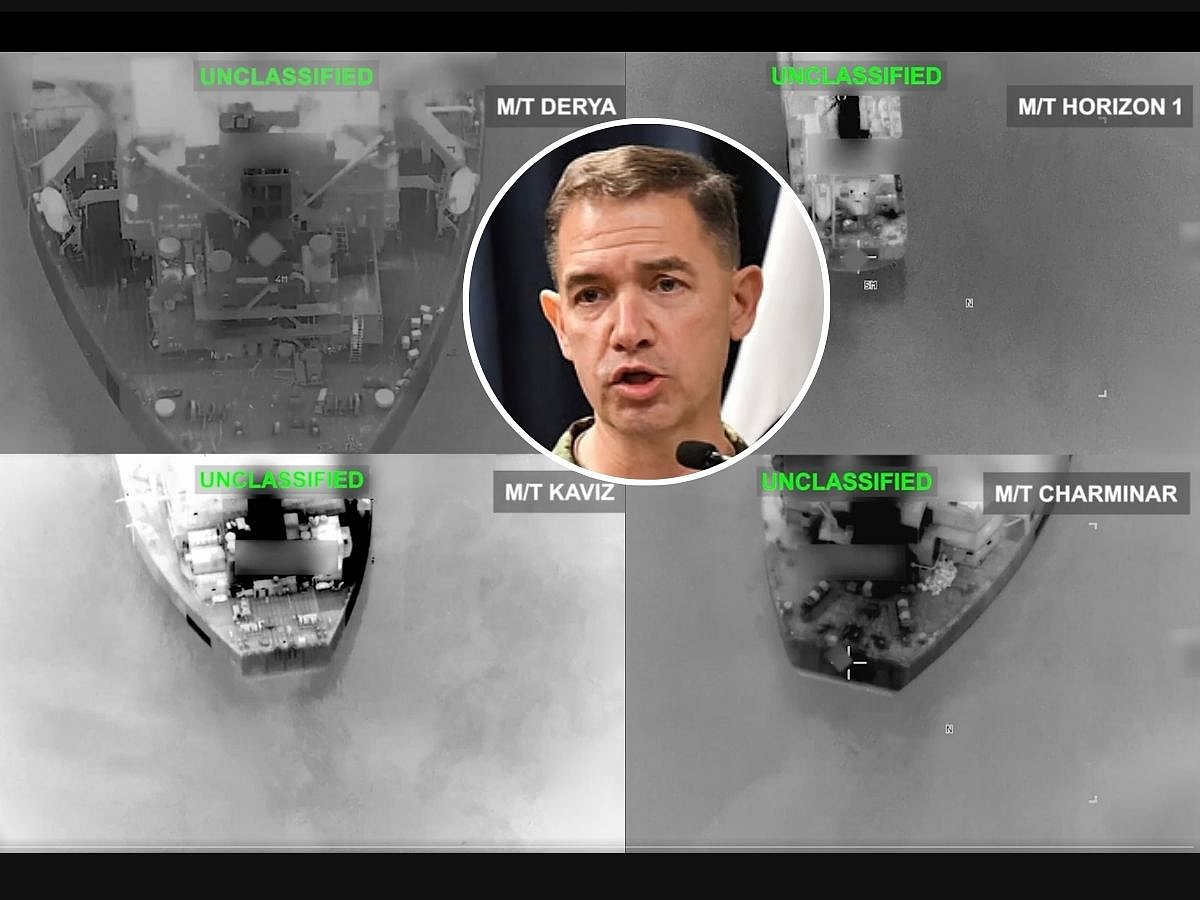
The head of US Central Command warned Iran’s paramilitary Islamic Revolutionary Guard Corps that further attacks on American naval forces could bring a larger economic retaliation, including strikes on Iranian oil carriers.
“Let the message to the IRGC be clear: If you shoot at two of our ships, we will impose an even higher economic cost — taking out three of yours,” Adm. Brad Cooper, the commander of US Central Command (CentCom), said in a statement.
“We will not hesitate to defend American forces, and if necessary, destroy Iran’s limited and exposed oil fleet.”
Cooper made the remarks after US forces said they struck three Iranian crude oil tankers near the key Iranian export hub of Kharg Island and near Jask, following ballistic-missile attacks targeting US Navy vessels.
US officials said an aircraft carrier and a guided-missile destroyer evaded the attacks and that no US personnel were harmed.
In the early hours of Wednesday (Sept. 9) CentCom state their forces destroyed give Iranian crude oil tankers.
The total of eight Iran-linked tankers hit by the US military and Cooper's statement marked a significant escalation in Washington’s effort to deter Iranian attacks by imposing costs on Tehran’s oil-export network, an important source of government revenue.
US officials said the targeted vessels were linked to a multibillion-dollar network that supports the IRGC and Iran-aligned groups in the region.
Iran has characterised US attacks against its ships as aggression and has warned that it would respond more rapidly and forcefully to further strikes.
The exchange has heightened risks around the Strait of Hormuz and the Gulf of Oman, major routes for oil exports and commercial shipping.
Why Cooper’s warning matters
Cooper’s language deliberately frames the U.S. response as an economic deterrence strategy, rather than solely a conventional military reprisal.
The message is that an attack on US warships would not necessarily lead only to a strike against the launcher, naval unit or missile site involved.
Instead, Washington is signaling it may target the economic assets that sustain Iran’s military establishment—particularly oil carriers that U.S. officials say are connected to the IRGC’s financing network.
US Secretary of State Marco Rubio said Iran "keeps trying" to hit US naval ships, and Washington’s response is simple: every attempt costs Tehran another tanker.
“For every time they do that or try to do that, they’re going to lose tankers. And I think you’ll see that again today.”
But the cost is piling up on the US side too. Jordan and the US reportedly fired more than 60 Patriot interceptors during the latest Iranian missile attack, burning through a stockpile Washington already has limited capacity to replace quickly.
That approach could raise the direct cost to Tehran of naval action, but it also risks shifting the conflict closer to commercial maritime infrastructure.
Experts cited by The Associated Press described the initial tanker strikes as a dangerous escalation, especially after earlier Iranian actions had targeted commercial shipping.
Kharg Island and oil exports
Kharg Island is Iran’s principal crude-export terminal and a crucial node in its oil trade. Targeting tankers near the island therefore carries importance beyond the loss or damage to individual vessels: it signals that ships supporting Iran’s export system could remain vulnerable.
The US strikes occurred amid a wider campaign to squeeze Iranian oil revenue. Washington’s broader objective appears to be to raise the financial cost of attacks on its forces and constrain Iran’s capacity to fund military operations and regional partners.cnbc+2
But this strategy creates a difficult balance.
If Iran judges the economic costs as intolerable, it could seek negotiations or reduce attacks on US targets.
If it views the strikes as a threat to national survival or regime security, it may instead retaliate by putting more pressure on regional shipping, energy facilities or US-linked assets.
What to watch
Further missile, drone or maritime attacks involving U.S. Navy ships.
U.S. operations against Iranian tankers, oil terminals or other petroleum-export infrastructure.
Iranian threats or actions affecting commercial vessels near the Strait of Hormuz.
Changes in tanker routes, war-risk insurance premiums and Gulf crude prices.
Whether Oman- or other third-party-mediated contacts lead to a de-escalation arrangement.
Network Links
GN StoreDownload our app
© Al Nisr Publishing LLC 2026. All rights reserved.