UN condemns drone attacks off Libya, urges investigation
UN warns Libya risks becoming Russia-Ukraine war front after drone attacks on ships
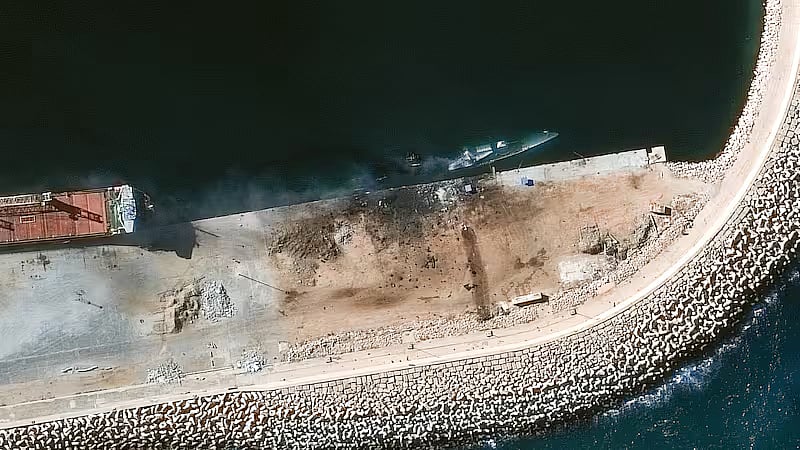
Suspected maritime drone strikes hit a Russian warship and a commercial vessel off Benghazi, raising fears that the Ukraine conflict is spreading into the Mediterranean.
The UN has expressed serious concern after two ships were targeted in suspected drone attacks near Benghazi, eastern Libya, on Sunday, November 22, warning that the country must not become a battleground for foreign conflicts.
The UN Support Mission in Libya (UNSMIL) called for an immediate, independent and transparent investigation into the attacks, which targeted a Russian naval vessel docked at Benghazi's naval base and a second commercial ship off the city's Mediterranean coast.
Get it: Fast, verified news for FREE ... download the Gulf News app — simply click here
In a statement posted on X on Monday, November 23, UNSMIL stressed that Libya's sovereignty, territorial integrity and the safety of its citizens and assets must be respected.
The mission urged all parties to exercise restraint, avoid spreading unverified information and refrain from actions that could escalate tensions.
"Libya cannot afford, and must not become a battleground for foreign conflicts," the UN mission warned.
The incidents are particularly sensitive because they could represent a further geographical expansion of the Russia-Ukraine war, which has increasingly involved attacks on naval vessels, energy infrastructure and commercial shipping far beyond the battlefield.
What happened in Benghazi?
The first incident involved the Russian Navy corvette Merkury, which was docked at Benghazi's naval base for refuelling and resupply before returning to Russia.
Libya's eastern-based administration said preliminary findings suggested that explosive drones had struck the vessel, triggering an explosion and fire.
Satellite imagery examined by Vantor indicated that the ship had largely capsized and sunk, leaving part of its bow visible above the water.
Medical sources reported that 10 Russians and Libyans suffered minor injuries.
Later on Sunday, a second attack targeted a Maltese-flagged commercial vessel off Benghazi using explosive-laden unmanned surface vessels, also known as naval drones.
Libyan forces reportedly rescued the crew, with some sustaining minor injuries.
Local military sources also reported intercepting more than 20 additional drone boats approaching the coastal area.
No organisation has claimed responsibility for either attack. Ukraine and Russia had not publicly commented on the incidents in the initial reports.
Russia's involvement in eastern Libya
The attacks have exposed Libya's complicated position in the Russia-Ukraine conflict.
Libya has remained politically divided since the 2011 NATO-backed uprising that toppled longtime leader Muammar Gaddafi.
There are two principal centres of power:
Eastern Libya: Controlled militarily by forces loyal to Khalifa Haftar, with a rival administration based in the east and led by Osama Hamad.
Western Libya: Governed from Tripoli by the internationally recognised, UN-supported government led by Prime Minister Abdulhamid Dbeibah.
Russia has cultivated close military and political ties with Haftar's eastern forces, using Libya as part of its broader strategic presence in North Africa and the Mediterranean.
Benghazi's naval facilities have consequently become strategically important for Russian maritime operations.
The eastern administration said the Merkury was in port under maritime cooperation arrangements with Russia. It condemned the attack as a violation of Libyan sovereignty and announced a joint investigation with Moscow.
Two Libyan military officials told the Associated Press that an initial investigation suggested Ukrainian sea drones had been launched from a facility operated by Ukrainian forces in western Libya.
They said at least four drones were intercepted and destroyed, while two struck the Russian warship.
These allegations have not been independently established.
There is also a relevant precedent: In March 2026, a Russian liquefied natural gas (LNG) carrier sank off the Libyan coast following an attack involving suspected naval drones. Moscow blamed Ukraine.
The incident highlighted how Russia-linked shipping operating in the Mediterranean could become a target in the wider war.
Network Links
GN StoreDownload our app
© Al Nisr Publishing LLC 2026. All rights reserved.