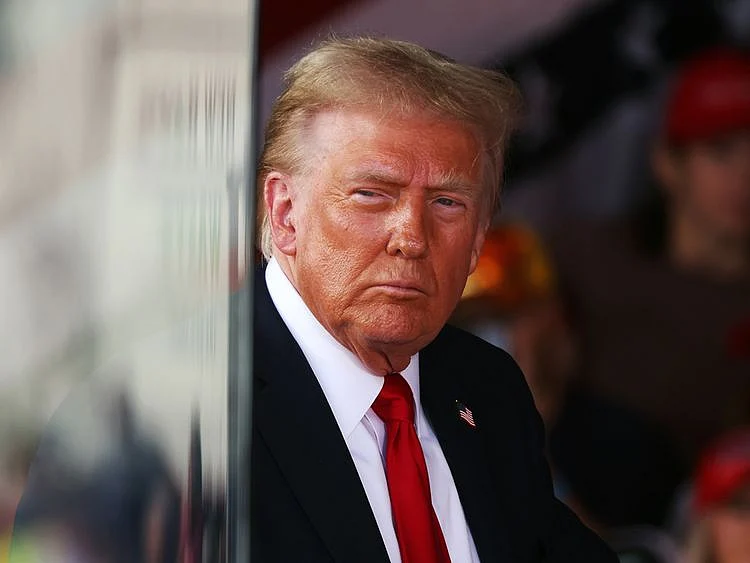
US President Donald Trump said Sunday that "very positive discussions" were under way with Iran on finding a solution to the crisis, but nevertheless added that the United States will soon start escorting ships through the blocked Strait of Hormuz.
Flipping the switch
Iran’s latest offer is not just a peace plan but an attempt to reset the terms of the talks.
It calls for a permanent end to the conflict within 30 days, guarantees against future US or Israeli attacks, the withdrawal of US forces from around Iran, and the lifting of sanctions alongside the release of billions of dollars in frozen assets.
It also seeks compensation for war damage and an end to hostilities across all fronts, including Lebanon.
Tehran insists these conditions be finalised before it engages in formal talks regarding its nuclear program, specifically asserting its right to enrich uranium as provided under the Nuclear Non-Proliferation Treaty.
In contrast, Washington maintains that limiting Iran's nuclear capabilities is a non-negotiable prerequisite, demanding absolute assurance that Tehran will remain unable to advance toward nuclear weapons development.
Iran's 14-point plan to end war
Earlier, a spokesman for Iran's foreign ministry, Esmaeil Baqaei, told state television that Tehran had submitted a 14-point plan "focused on ending the war," and that Washington had responded to it in a message to Pakistani mediators.
"I am fully aware that my Representatives are having very positive discussions with the Country of Iran, and that these discussions could lead to something very positive for all," Trump said on his Truth Social platform.
The US-Israel alliance launched attacks on Iran on February 28, killing the Islamic republic's supreme leader. Tehran responded with strikes on US military bases and Israeli targets in the region.
Ceasefire
A ceasefire came into effect April 8, and there has been one round of direct peace talks in Islamabad since, with the two countries deadlocked.
Iran has maintained a stranglehold on the Strait of Hormuz since the war began, choking off major flows of oil, gas and fertilizer to the world economy, while the United States has imposed a counter-blockade on Iranian ports.
Trump said "countries from all over the world" had requested American aid in navigating through the key waterway and out of the Gulf.
"For the good of Iran, the Middle East, and the United States, we have told these Countries that we will guide their Ships safely out of these restricted Waterways, so that they can freely and ably get on with their business," Trump said.
Project Freedom
"This process, Project Freedom, will begin Monday morning, Middle East time."
He called it a "humanitarian gesture," saying many of the marooned ships were "running low on food, and everything else necessary for largescale crews to stay on board in a healthy and sanitary manner."
As of April 29, more than 900 commercial vessels were located in the Gulf, according to maritime intelligence firm AXSMarine. There had been more than 1,100 at the start of the conflict.
Network Links
GN StoreDownload our app
© Al Nisr Publishing LLC 2026. All rights reserved.