Here is how Iraq, Syria, its neighbours and international powers reacted to US president Barack Obama’s announcement of an international coalition to combat the Islamic State of Iraq and the Levant:
Iraq
Iraqi Prime Minister Haidar Al Abadi welcomed US President Barack Obama’s strategy of air strikes and support for Baghdad’s forces to defeat Isil, his office said Thursday.
“Iraq welcomes Obama’s strategy about standing with it in its war against [Isil] and the terrorist groups,” the statement from Al Abadi’s office said.
Kurdish politicians in Iraq similarly praised Obama’s announcement of wider air strikes and assistance to Iraqi forces.
“We welcome this new strategy,” said Hoshyar Zebari, a Kurdish politician and one of Iraq’s newly-appointed deputy prime ministers. “We think it will work with the cooperation of the indigenous local forces like Iraqi Security Forces, the Kurdish peshmerga and other forces.”
“There is an urgent need for action. People cannot sit on the fence. This is a mortal threat to everybody,” he told The Associated Press.
Syrian opposition
Syria’s main western-backed opposition group, the Syrian National Coalition, welcomed the decision, but also called for the removal of Bashar Al Assad’s government.
It said it was “ready and willing” with the international community to defeat militants who have seized control of parts of Syria and Iraq.
“The Syrian Coalition stands ready and willing to partner with the international community not only to defeat Isis but als rid the Syrian people of the tyranny of the Assad regime,” said Hadi Al Bahra, head of the coalition.
Syrian regime
Syrian minister of national reconciliation affairs Ali Haidar said any foreign intervention in Syria would be an act of aggression unless it is approved by Damascus.
“Any action of any type without the approval of Syrian government is an aggression against Syria,” he said.
“There must be cooperation with Syria and coordination with Syria and there must be a Syrian approval of any action whether it is military or not.” Foreign countries could use Isil simply as a pretext for attacking Syria, Haidar said.
Iran
Iran cast doubt on the “seriousness and sincerity” of the international coalition the US is building.
“There are uncertainties about the so-called international coalition against [Isil] that was announced after the Nato summit in Wales” last week, foreign ministry spokeswoman Marzieh Afkham said.
“Its seriousness and sincerity to tackle the root causes of terrorism is fundamentally questionable,” she said.
“Some of the countries in this coalition are among the ones who provided financial and security support for terrorists in Iraq and Syria,” she said.
“Others are hoping to bring about political change in Iraq and Syria in favour of their own interests.”
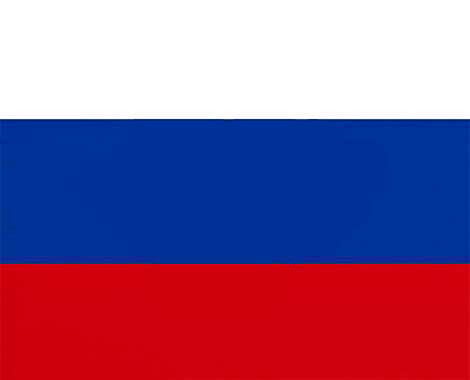
Russia
Russia said that unilateral US air strikes on Islamist militants in Syria would be a crude violation of international law.
“The US President has directly announced the possibility of strikes by American armed forces against positions of the Islamic State [of Iraq and the Levant] in Syria without the consent of its legal government,” said Alexander Lukashevich, a spokesman for the Russian foreign ministry.
“In the absence of an appropriate decision of the UN Security Council, such a step would become an act of aggression, a crude violation of the norms of international law,” Lukashevich said in televised remarks.
UK and Germany:
Britain won’t join the United States in air strikes against Isil fighters in Syria, Foreign Secretary Philip Hammond said Thursday, without ruling out similar action in Iraq.
“Let me be clear Britain will not be taking part in any air strikes in Syria,” he said in Berlin.
Regarding the wider US military campaign against Isil militants across the area they have captured in Syria and Iraq, he said that “we are clear that we will make a contribution”.
Speaking after talks with his German counterpart Frank-Walter Steinmeier, Hammond said Britain won’t be “revisiting” the issue after Parliament decided last year against participating in air strikes.
Germany often shuns taking part in combat operations and Steinmeier said his country also wouldn’t join in any air strikes.
China:
Chinese foreign ministry spokeswoman Hua Chunying called for respect for the sovereignty, independence and territorial integrity of the countries concerned.
“We hold that in the international struggle against terrorism, the international law should be respected, as well as the sovereignty, independence and territorial integrity of the countries concerned,” Hua said.
Hua said China firmly opposed any form of terrorism. She said the international community should jointly fight against terrorism and support the effort that the countries concerned made to maintain internal security and stability.
Hua said at present, the international fight against terrorism was in a grim and complex situation. Since the rise of international terrorism was yet to be stemmed, chronic disturbance in certain regions has provided opportunities for activities by international terrorist forces, Hua said.
She said these factors have brought about new threats to international security and stability and new challenges to the international fight against terrorism.
Turkey
Turkey will not allow a US-led coalition to attack militants in neighbouring Iraq and Syria from its air bases, nor will it take part in combat operations against militants, a government official said Thursday.
“Turkey will not be involved in any armed operation but will entirely concentrate on humanitarian operations,” the official said on condition of anonymity.
“Incirlik will be used only for logistical purposes and humanitarian assistance”, the source, referring to a southern air base used for US and Nato operations in Iraq.
The decision echoes Turkey’s refusal in 2003 to abet the US offensive to oust Saddam Hussain, which triggered a crisis between the allies.
Ankara refused to allow Washington to station 60,000 troops in the country to invade Iraq from the north, then denied permission for Washington to use its air bases as a staging post for attacks.
Sign up for the Daily Briefing
Get the latest news and updates straight to your inbox
Network Links
GN StoreDownload our app
© Al Nisr Publishing LLC 2026. All rights reserved.