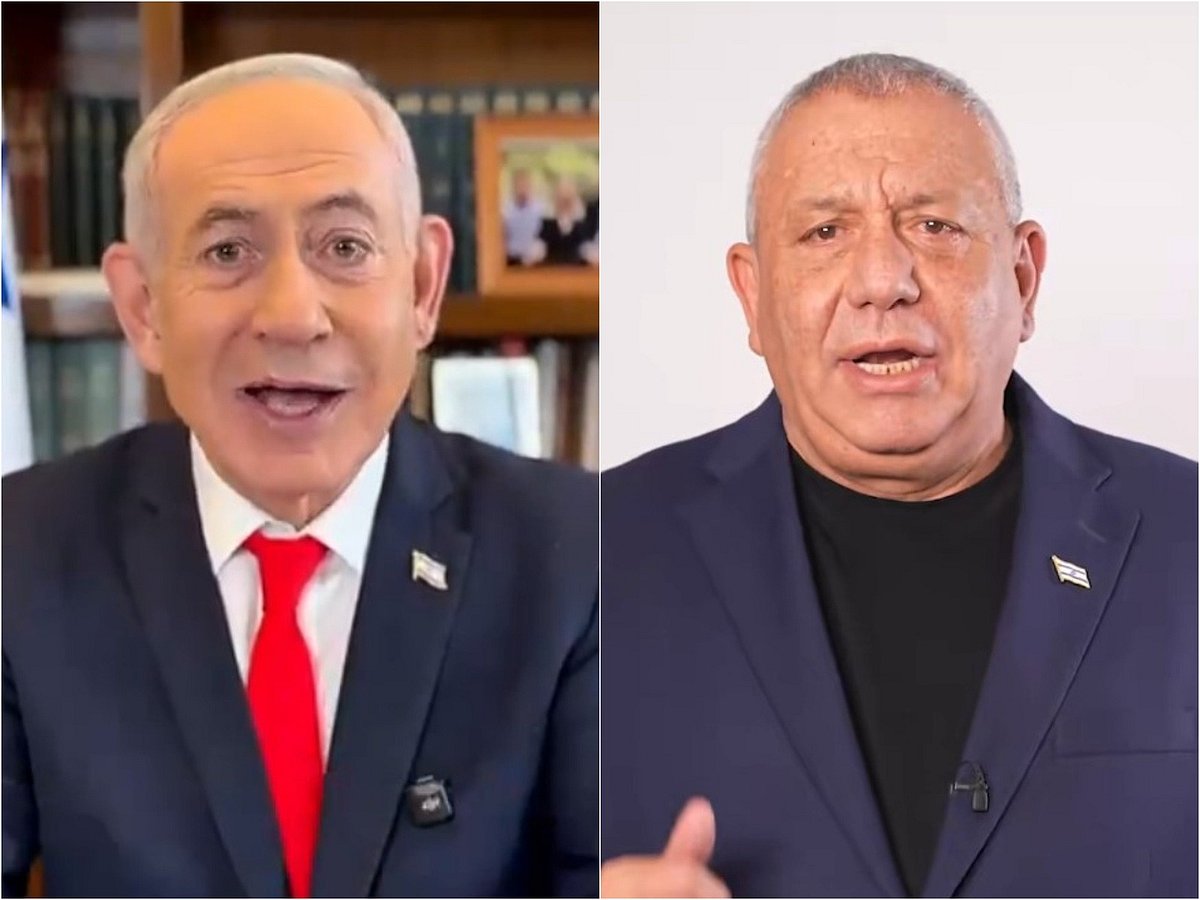
Talks between Israeli caretaker prime minister Benjamin Netanyahu and his rival, Gadi Eisenkot, ended without an agreement Sunday to bridge their "profound differences", despite a last-minute offer from the incumbent for a rotating premiership.
During two hours of talks in Tel Aviv, the two men tried to tackle their deep divide after last month's inconclusive elections. Eisenkot, tasked with forming the next government, has pledged to do so by the December 6 deadline.
After a security briefing, "the two then turned to discuss the formation of a national unity government", Netanyahu's Likud party and Eisenkot's Yashar party said in a joint statement.
Get updated faster and for FREE: Download the Gulf News app now - simply click here.
The meeting "took place in a serious atmosphere, with both sides striving to overcome the profound differences separating them," they added.
But they made no mention of any progress nor indicated plans for a follow-up meeting.
According to Israeli media, Eisenkot told Netanyahu that he would not abandon members of his bloc to form a coalition with him, but invited him to join them later if he wished.
The parties' negotiating teams also cancelled a scheduled meeting, Israeli media said.
Netanyahu's coalition offer constitutes an about-face from Israel's longest-serving leader, who has previously rejected such an option. Some of his opponents dismissed the proposal.
But Eisenkot offered to hold the meeting on Sunday to see if Likud was "serious".
The elections in late October left neither of Israel's two main political blocs with a majority, but Eisenkot was requested to form a government by Israeli President Isaac Herzog.
Since then, Eisenkot has been trying to cobble together a coalition to oust Netanyahu, but he is hemmed in by opposition to relying on Arab-Israeli parties and the compromises required to bring ultra-Orthodox parties on board.
Corruption charges questioned
Netanyahu's proposal came after Eisenkot vowed to announce the formation of a new government by the December 6 deadline, without using the option of a 14-day extension.
"My responsibility as a leader requires me to set everything aside... and agree that Gadi Eisenkot will serve first as prime minister, while I will serve as alternate prime minister," Netanyahu posted on social media late on Saturday.
Eisenkot had been expected to form a coalition with anti-Netanyahu parties, but has instructed his centrist Yashar party to conduct negotiations with Likud.
On Friday, however, the former military chief accused Likud of stalling coalition talks in a bid to bring about new elections. Then on Saturday, he said the party had not responded to a "detailed proposal" put forward earlier.
His broad bloc has faced divisions over whether to forge alliances with ultra-Orthodox parties, Arab-majority lists or form a unity government with Likud.
Netanyahu's other opponents on Saturday scoffed at his offer of a rotating premiership.
Youssef Jabareen, leader of the Arab-majority Joint List, which is expected to support an Eisenkot-led government without joining it, said "this bloodstained, neglectful government must go", referring to the outgoing Netanyahu-led administration.
Yair Lapid, a former prime minister and co-chair of the centrist Beyachad party, called Netanyahu's offer "yet another transparent con by a serial fraudster who has deceived every partner and violated every agreement".
Netanyahu is currently standing trial on three corruption charges. However, Herzog on Sunday offered to host negotiations to end the process, after judges this week cast doubt over the charges.
Network Links
GN StoreDownload our app
© Al Nisr Publishing LLC 2026. All rights reserved.