Is the Iran war depleting US weapons too fast?
Missile stockpile strain raises risks beyond the Middle East
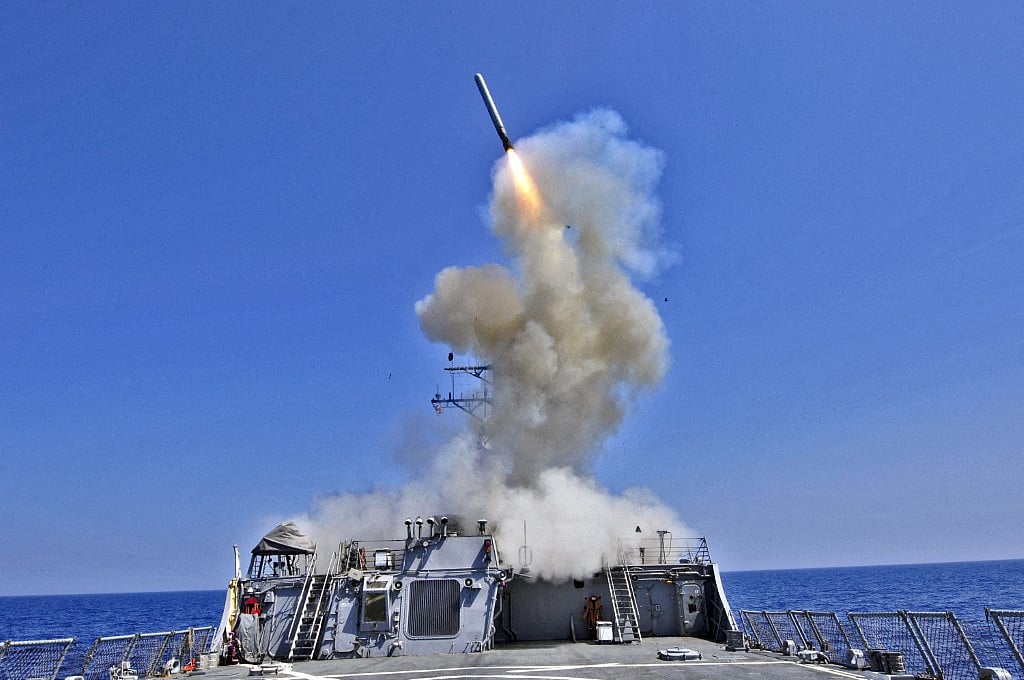
The United States’ war effort against Iran is reshaping more than just the Middle East battlefield — it is beginning to test the limits of Washington’s global military readiness.
In just over a month of fighting, the US has burned through thousands of high-end missiles and munitions, raising concerns about its ability to sustain deterrence in other critical regions, particularly in Asia and Europe, according to reporting by The New York Times and CNN.
The scale of the drawdown is striking. More than 1,000 long-range cruise missiles, over 1,200 Patriot interceptors, and hundreds of precision strike weapons have been used in weeks of combat — a pace that analysts say could take years to replenish.
The implications stretch far beyond Iran. As Washington pours resources into one conflict, it is simultaneously recalibrating its ability to confront adversaries such as China and Russia — forcing difficult trade-offs that could shape global security in the years ahead.
How fast is the US burning through weapons?
The numbers emerging from the conflict underscore the intensity of the campaign.
According to The New York Times, the US has used roughly 1,100 Joint Air-to-Surface Standoff Missiles (JASSM-ER) — stealth cruise missiles designed for high-end conflict — along with more than 1,000 Tomahawk missiles.
These are not routine battlefield tools. They are among the most advanced and expensive weapons in the US arsenal, originally designed for potential conflicts with near-peer adversaries such as China.
Air defence systems have also been heavily deployed. More than 1,200 Patriot interceptor missiles — each costing millions of dollars — have been fired during the conflict, far exceeding annual production levels.
While the Pentagon has not officially disclosed total usage, officials acknowledge that more than 13,000 targets were struck during the campaign — often requiring multiple munitions per target.
Key numbers: The cost of the Iran war
1,100+
Long-range stealth cruise missiles used
High-end weapons designed for conflicts with major powers1,000+
Tomahawk missiles fired
Roughly 10 times the US annual procurement rate1,200+
Patriot interceptor missiles deployed
Each costing about $4 million, far exceeding yearly production13,000+
Targets struck by US forces
Often requiring multiple munitions per target$28bn–$35 billion
Estimated total cost of the war so far
Approaching $1 billion per day at peak intensity$5.6 billion
Value of munitions used in the first two days
Reflecting the scale of early strikes
Why are stockpiles now a concern?
The speed and scale of the drawdown are exposing a longstanding challenge: the gap between wartime consumption and peacetime production.
“At current production rates, reconstituting what we have expended could take years,” Senator Jack Reed, a senior member of the Armed Services Committee, said.
Analysts say some critical munitions were already in limited supply before the war. The conflict has only deepened those shortages.
“The United States has many munitions with adequate inventories, but some critical ground-attack and missile-defence munitions were short before the war and are even shorter now,” said Mark Cancian, a senior adviser at the Centre for Strategic and International Studies, in comments cited by The New York Times.
The issue is not simply numbers, but balance. Certain specialised weapons — particularly long-range precision missiles and air defence interceptors — are being consumed far faster than they can be replaced.
What does this mean for China and Russia deterrence?
This is where the strategic implications become sharper.
The US military has had to divert weapons, aircraft and personnel from Asia and Europe to sustain operations in the Middle East. That includes redeploying missile defence systems and carrier strike groups previously positioned to counter China in the Pacific.
According to The New York Times, Patriot and THAAD missile interceptors have been moved from Asia — including South Korea — to bolster defences against Iranian attacks.
At the same time, European commanders are dealing with reduced stockpiles that are critical for NATO’s eastern flank.
Even senior military officials have acknowledged the constraints. “There are finite limits to the magazine,” a US commander said during congressional testimony, highlighting the reality that even the world’s most powerful military operates within material limits.
The concern among analysts is that prolonged engagement in one theatre could create vulnerabilities elsewhere — particularly in a scenario involving simultaneous crises.
How does cost factor into the equation?
The financial toll is equally significant.
Independent estimates cited by The New York Times put the cost of the war between $28 billion and $35 billion so far — approaching $1 billion per day at peak intensity.
In the first two days alone, the US military is estimated to have used $5.6 billion worth of munitions.
The heavy reliance on high-cost weapons systems — such as Tomahawk missiles and Patriot interceptors — has renewed debate within defence circles about sustainability.
The conflict has also exposed the Pentagon’s dependence on expensive, precision-guided weapons rather than lower-cost alternatives such as drones, which are being used more extensively by other militaries.
Can the US replenish its arsenal quickly?
Not easily.
The Pentagon has already moved to secure long-term agreements with defence contractors to increase production, including plans to expand output of precision-guided munitions and missile defence systems.
However, progress has been slow.
Officials say production expansion has yet to begin in earnest, in part because of delays in securing congressional funding. In the meantime, the military continues to rely on existing stockpiles to meet operational demands.
The result is a growing mismatch between consumption and replenishment — one that could persist for years.
How is the administration responding?
The Trump administration has pushed back against concerns about depleted stockpiles.
“The entire premise of this story is false,” White House press secretary Karoline Leavitt said, insisting that the US military remains fully equipped to meet any operational requirement.
Pentagon officials have also declined to provide detailed figures, citing operational security.
At the same time, there is bipartisan recognition in Washington that munitions production needs to increase — a priority that has been highlighted across multiple administrations.
What role does the Middle East play in this shift?
While the focus of the war is Iran, its ripple effects are global.
The conflict has intensified pressure on key energy routes, including the Strait of Hormuz, a critical corridor for global oil supplies. Although the primary issue is military logistics, disruptions in the region have reinforced the strategic importance of maintaining stability in the Gulf.
The US military’s high operational tempo — including extended deployments and sustained air and naval operations — has also raised concerns about long-term strain on personnel and equipment.
What does this reveal about modern warfare?
The war is highlighting a broader shift in how conflicts are fought — and sustained.
High-intensity warfare is no longer just about battlefield success. It is also about industrial capacity, supply chains, and the ability to maintain prolonged operations.
The US experience in Iran suggests that even advanced militaries face constraints when conflicts demand large volumes of precision munitions over extended periods.
It also raises a fundamental question: whether current defence production models are equipped for sustained, high-intensity conflicts involving major powers.
The bigger picture
For now, the United States retains overwhelming military capability.
But the Iran war is offering a rare glimpse into the hidden pressures beneath that strength — from shrinking stockpiles to strained supply chains and shifting global priorities.
The challenge for Washington is no longer just how to fight a war, but how to sustain one without compromising its position elsewhere.
In that sense, the conflict is not just a test of military power, but of strategic balance.
Sign up for the Daily Briefing
Get the latest news and updates straight to your inbox
Network Links
GN StoreDownload our app
© Al Nisr Publishing LLC 2026. All rights reserved.