Lebanon’s president tells Iran: Stop using us as a bargaining chip
Joseph Aoun accuses Tehran of pursuing its own interests at Lebanon’s expense
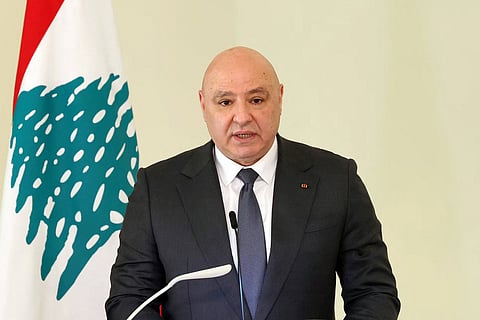
Lebanese President Joseph Aoun has sharply criticised Iran for what he described as interference in his country’s affairs, accusing Tehran of using Lebanon as leverage in its wider confrontation with the United States and Israel.
In an interview with CNN’s Christiane Amanpour, Aoun said Lebanese citizens were exhausted by years of conflict and rejected any attempt to make the country a pawn in regional power struggles.
“The people of Lebanon are paying the price,” Aoun said, arguing that Iran’s strategic interests do not align with those of Lebanon.
The unusually direct criticism comes at a sensitive moment for Lebanon, which is once again caught up in tensions stemming from the broader confrontation between Iran and Israel. The country is also trying to preserve a fragile ceasefire agreement reached this week between Israel and Lebanon.
Aoun reserved some of his strongest remarks for Iran’s Islamic Revolutionary Guard Corps (IRGC), saying decisions affecting Lebanon should be made by the Lebanese state rather than external actors, CNN reported.
“It’s not your country, it’s our country,” he said.
The Lebanese president also rejected recent comments by the IRGC linking Lebanon to discussions surrounding a broader US-Iran understanding. He accused Tehran of treating Lebanon as a negotiating tool in its dealings with Washington.
His remarks highlighted growing frustration within parts of Lebanon’s political leadership over the country’s repeated role as a battleground for regional rivalries.
The comments came just days after Israel and Lebanon agreed to implement a ceasefire arrangement aimed at reducing hostilities along their shared border. The deal remains dependent on a complete halt to Hezbollah attacks and the withdrawal of Hezbollah fighters from southern Lebanon.
Aoun described the negotiations as difficult but said they had produced an important breakthrough that could open the door to a more durable peace.
However, Hezbollah, the Iran-backed movement that was not directly involved in the negotiations, quickly rejected the agreement, arguing that it failed to guarantee a full Israeli withdrawal from southern Lebanon.
Aoun’s comments are among the clearest indications yet that Lebanon’s leadership wants to assert greater independence from outside influence as it seeks to navigate one of the most volatile periods in the region’s recent history.
- with inputs from CNN